Algarve Caves: Best Sea Caves and How to Visit
Ponta da Piedade, Praia da Marinha and the Lagoa coast. Compare boat, kayak and clifftop options, departure towns and the best season for Algarve caves.
Last updated November 2026. Algarve caves are sea caves cut into soft limestone cliffs, and the real decision is how you reach them. Ponta da Piedade at Lagos and the Praia da Marinha stretch in Lagoa are the two main areas, and the Lagoa coast also holds the region's best-known cave, Benagil. Your departure town, the sea state and your tolerance for crowds decide which one fits.
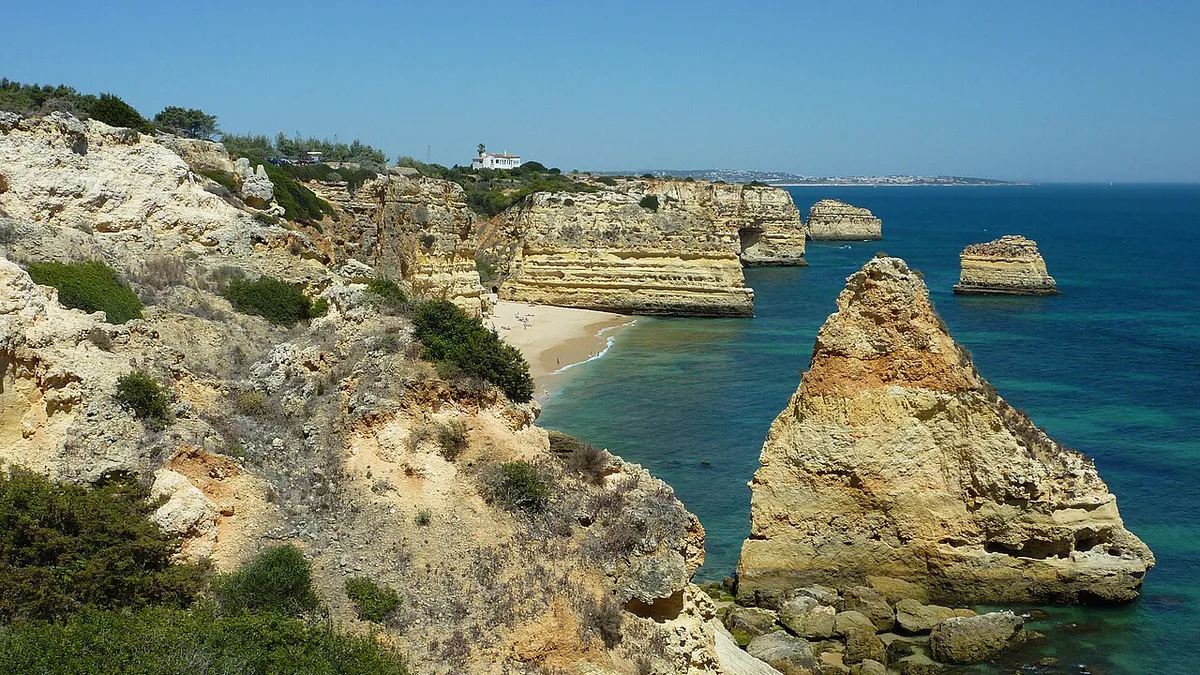
Featured image: MarkDunnell, CC BY 3.0, via Wikimedia Commons.
Algarve caves at a glance
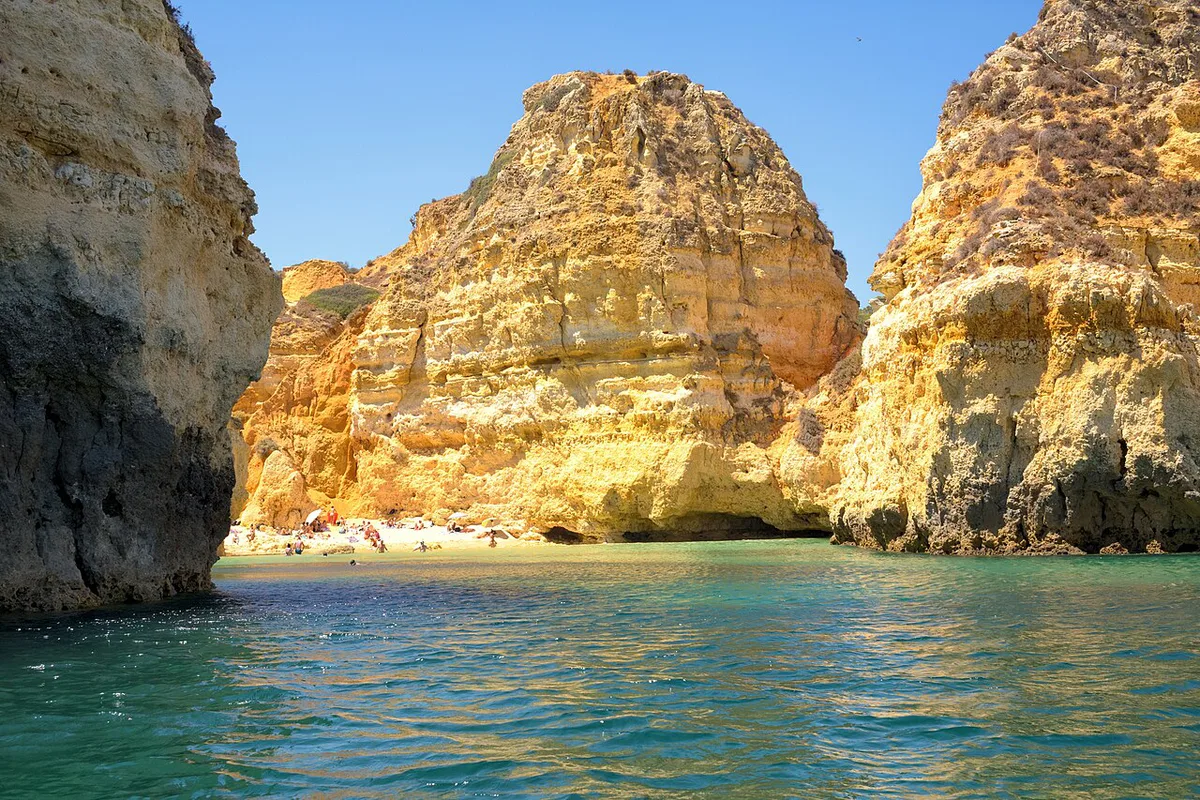
Most Algarve caves are reached from the water. A boat gives the broadest view, a kayak or SUP gives you control, and a clifftop walk gives a look from above without getting wet. Pick the area first, then the vehicle.
- Want collapsed-roof caves and guided paddles: the Lagoa coast around Carvoeiro.
- Want arches, stacks and grottoes in one compact headland: Ponta da Piedade, Lagos.
- Want a viewpoint-led visit with cliffs and beaches: Praia da Marinha, Lagoa.
- Staying near Portimão, Albufeira or Vilamoura: pick a boat departing from your own marina.
Where the Algarve caves are
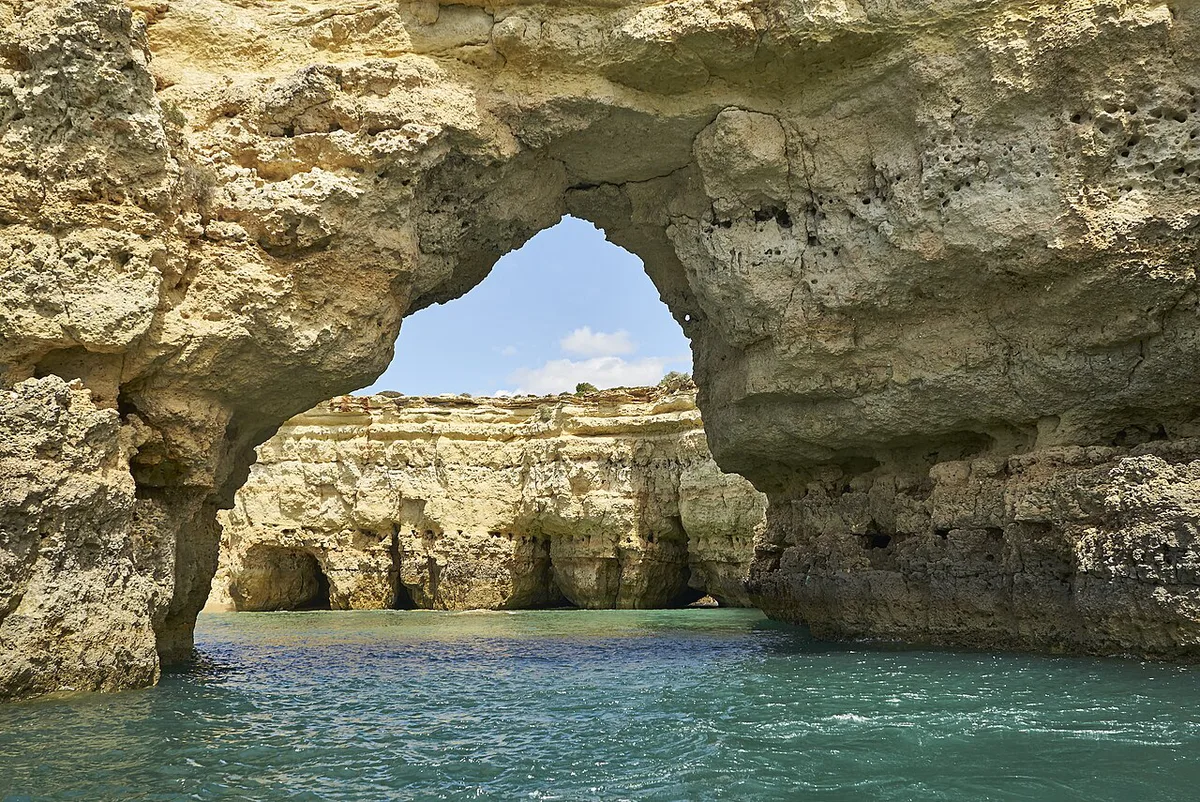
Two clusters matter most. The first sits on the Lagoa coast around Carvoeiro, where Praia da Marinha has its own cliff scenery. Our guide to Praia da Marinha Caves: How to See Them (Walk, Kayak, Boat) covers that stretch in detail. The second is Ponta da Piedade beside Lagos, where the headland breaks into sea stacks, arches and grottoes. Read more in our Lagos grottos guide.
Why the Algarve coast has so many sea caves
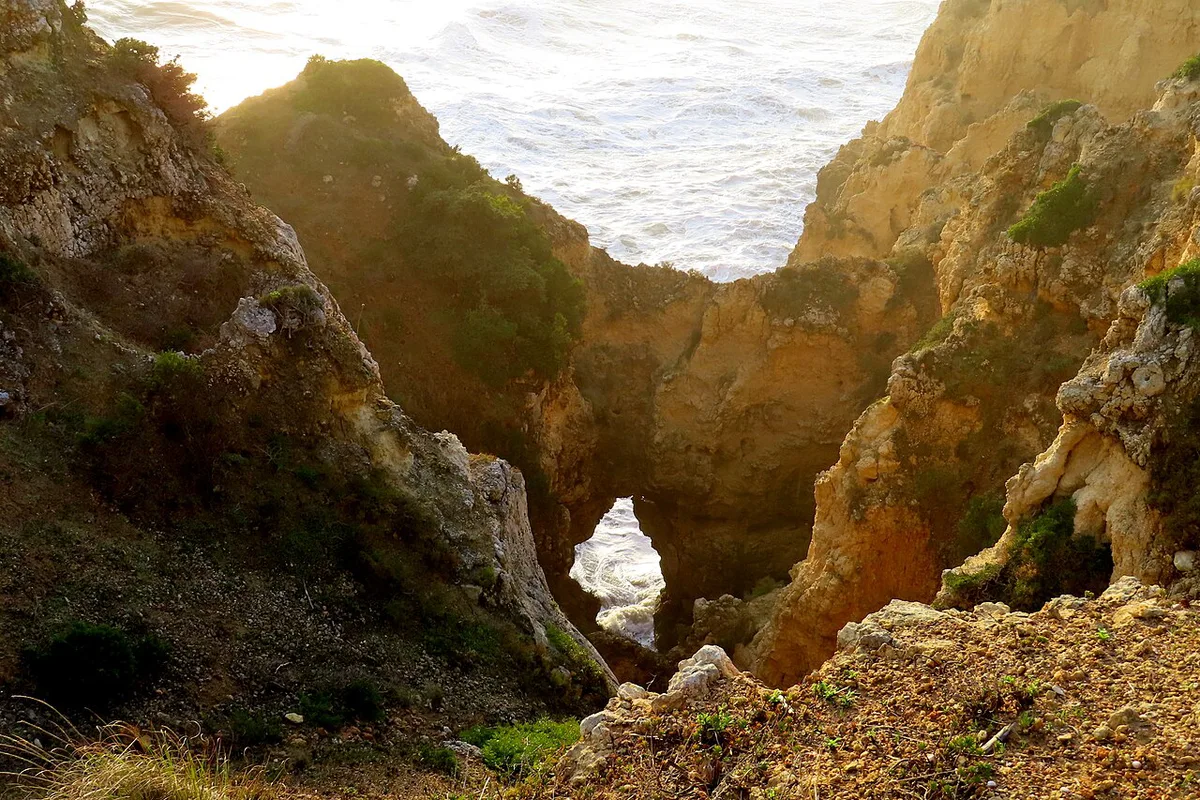
The caves exist because of the rock. Much of the central Algarve coast is soft, golden limestone and calcarenite, which the Atlantic cuts into far faster than it cuts hard granite or slate. Waves exploit joints and weak bands in the cliff, widening them into grottoes, then arches, then free-standing stacks. The same process explains why the shoreline changes shape over time.
Two different types of cave appear on this coast, and the difference explains what you see:
- Sea caves with open fronts: hollows carved straight into the cliff base, common around Ponta da Piedade, where you move through channels between stacks.
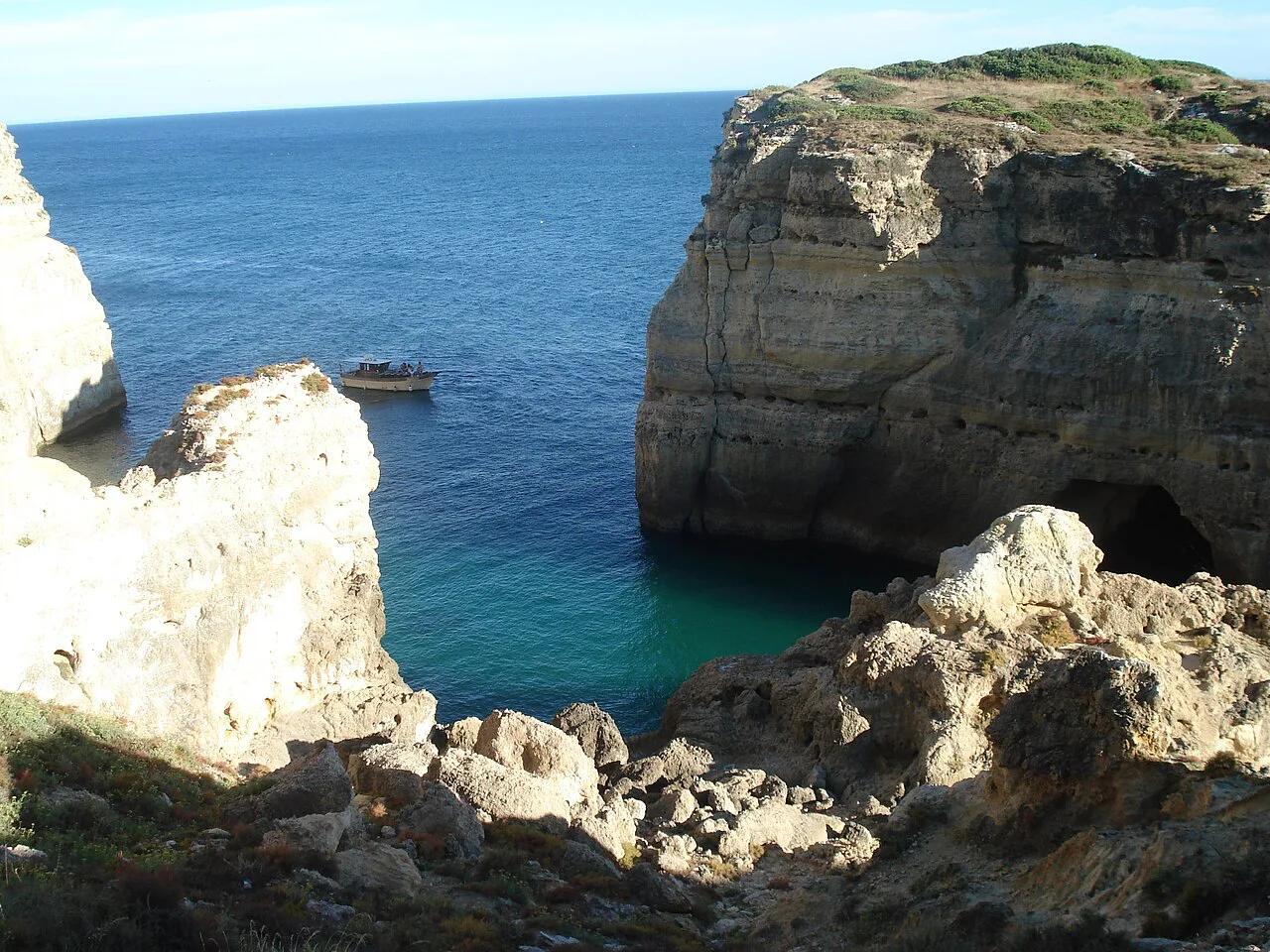
- Collapsed-roof caves (algares): The Lagoa coast has the best-known examples. Part of the roof has fallen in, leaving a round opening, and light falls onto the sand floor below.
Because the rock is soft, caves are not permanent features. Cliff falls are the reason access from above is restricted at some Lagoa caves, and the reason you should stay clear of overhangs on any beach below the cliffs.
For the mechanics behind this, our explainer on how sea caves form walks through wave action, joints and collapse. If you plan to see more of the country's coastline, sea caves in Portugal covers other stretches beyond the Algarve.
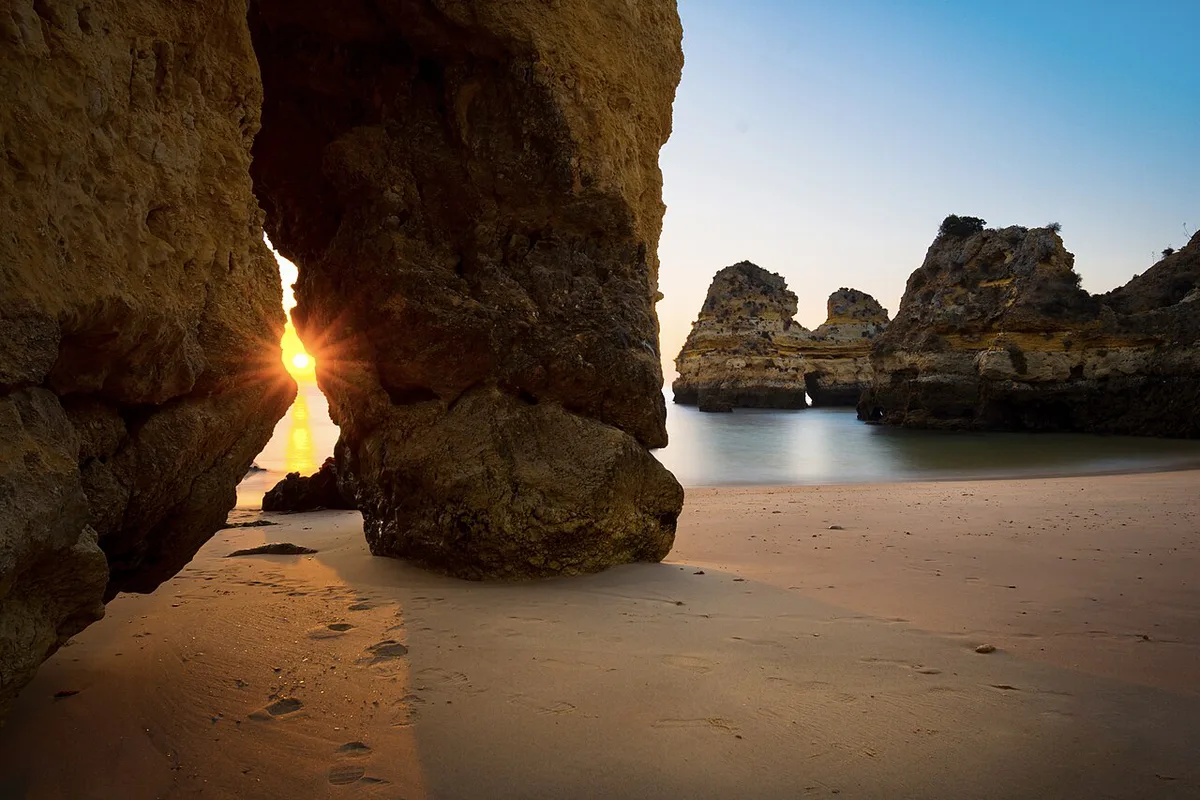
Ponta da Piedade and the Lagos grottos
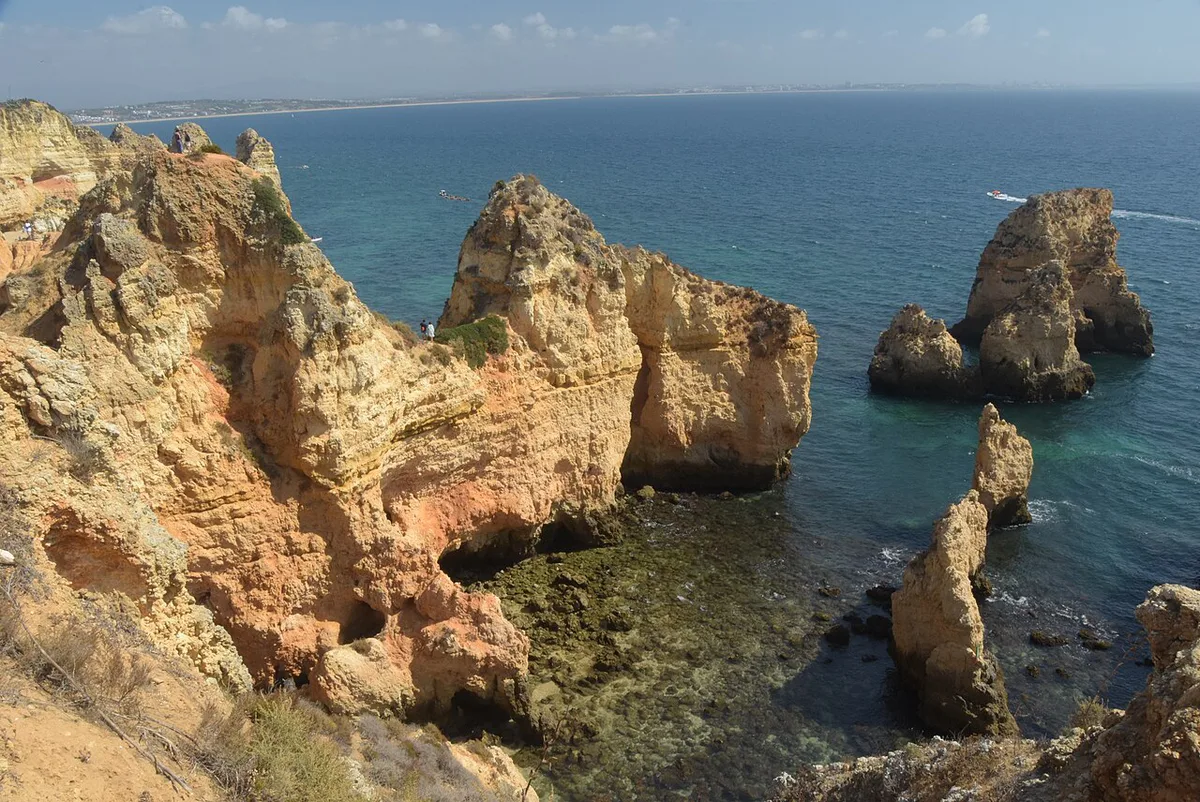
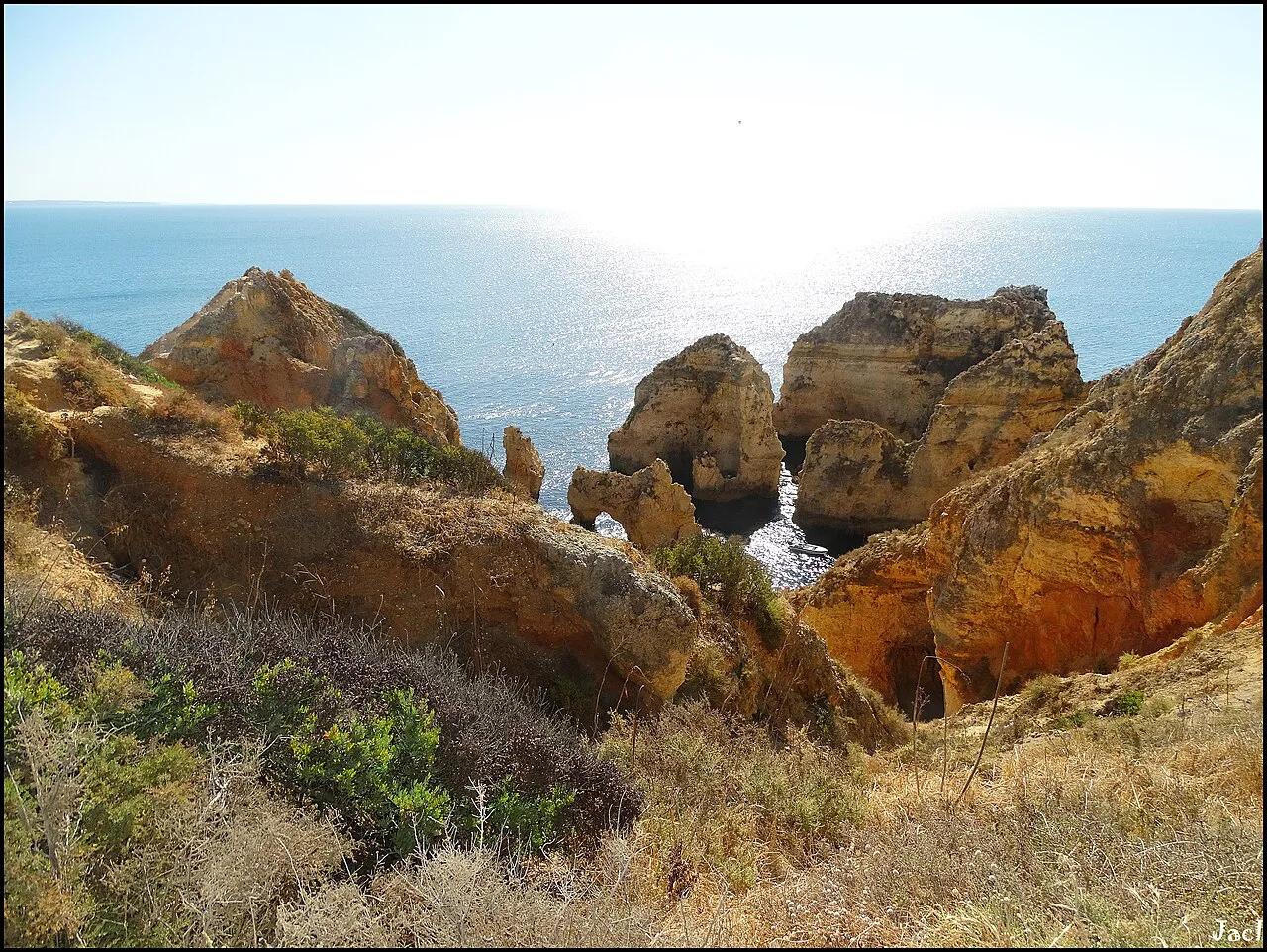
Ponta da Piedade is a golden headland where cliffs split into stacks, arches and grottoes over clear water. It feels more like a maze of rock formations than a single dome, which makes it a different trip from the Lagoa coast. Start with our Ponta da Piedade guide. For the water, see the boat tour options or the kayak routes. If you prefer to stay on land, the steps down to the water cover headland access. For light and timing, read the sunset notes. Some Lagos Marina tours also add dolphin watching. Visit Lagos tourism information through Lagos Municipality.
Boat vs kayak vs SUP vs viewpoint
Boats are the usual starting point because experienced guides judge the conditions for you. Paddling suits people who want exercise but exposes you to wind, tide and water temperature. Our comparison of Algarve Boat Tour Caves: Ports, Boats and Rules Compared goes deeper on boats. For paddling, see kayaking the Algarve caves.
| Option | Effort | Weather exposure | Cave interior | Skip if |
|---|---|---|---|---|
| Boat | Low | Moderate | Yes, on most tours | You dislike rough seas |
| Kayak | High | High | Yes, conditions permitting | You are a weak swimmer |
| SUP | High | High | Yes, conditions permitting | Balance or wind worries you |
| Clifftop viewpoint | Low | Low | No, you look down only | You want to see inside |
Choosing a departure town
Your base shapes the trip. Algarve caves from Portimão is the closest guide for that port. Durations and inclusions differ by operator, so confirm them on the booking page.
Kayak and SUP gear can be rented on the beach at Benagil, a common launch point on the Lagoa coast.
| Departure | What you see | Notes |
|---|---|---|
| Lagos Marina | Ponta da Piedade grottos; some tours add dolphin watching | Check operator for duration |
| Portimão | Lagoa coast caves | Check operator |
| Benagil beach | Lagoa coast caves by kayak or SUP | Equipment rented on the beach |
| Albufeira | Cliffs and caves to the west | Check operator |
| Vilamoura Marina | Lagoa coast caves and cliffs | One operator offers a BBQ lunch on return |
Getting to the Algarve cave coast without a car
Most visitors fly into Faro, the Algarve's main airport, and the cave areas lie to the west. As a rough guide, Lagoa is around an hour's drive from Faro, and Lagos is a little farther. Journey times vary with traffic, which is heavy on summer weekends.
Your choices depend on where you are staying:
- Hire car: the most flexible option for the Lagoa beaches and clifftops. In July and August, arrive early or expect to wait for a space.
- Train: the Algarve line runs along the coast and serves Lagos and Portimão, which are the two towns with the main cave departures. Check timetables on the operator's website before relying on it, as services are less frequent than in a city.
- Taxi or transfer: useful for the last stretch to the Lagoa beaches, which have no station. Agree the price or use the meter, and arrange the return before you go.
- Boat tour from your own marina: the simplest solution if you are staying in Lagos, Portimão, Albufeira or Vilamoura, because the operator handles the sea route and you only need to reach the marina.
If you are choosing a base mainly for the caves, Lagos suits visitors without a car because the Ponta da Piedade grottoes are close to the town and the marina is walkable. Anyone staying farther east should compare the boat departures in the table above against the cost of getting to the western coast.
Best time to go
Operators put the best months at March to June and September to October, with milder weather and fewer visitors. July and August are the busiest, so book well ahead. From November to February tours run less often and are more likely to be cancelled for wind, rain and rough seas. Early morning is reported to bring fewer crowds and better light until around lunchtime. Follow the IPMA marine forecast on the day.
- Mistake: booking late in July or August.
- Mistake: ignoring sea-state warnings and pushing on anyway.
- Mistake: packing as if the boat were dry.
Costs, booking and what to bring
Published fares change by operator and season, so read the current price on each operator's booking page. As a rule, a shared boat tour costs less than a private charter, and a charter costs more than a kayak hire. Trips that add lunch or dolphin watching sit higher still. Age limits and inclusions vary, so check them when you book.
- Waterproof bag for phones and cameras.
- Towel and swimsuit for a swim stop.
- Sunscreen, even outside summer.
- Footwear that handles wet rock and sand.
Safety, access and responsible visiting
Rules on cave entry, beach landing and swim stops come from the maritime authority and the local municipality. Check them through Visit Algarve and the municipality sites above. People with limited mobility or a fear of rough water should choose a larger boat or the clifftop. Never touch the rock walls, and take all trash back with you.
Beyond the caves (bad-weather backup)
When the sea is too rough, head to Cabo de São Vicente for its cliffs and lighthouse. The Ria Formosa lagoon is a sheltered alternative to the open coast.
Notes for your next trip underground
Optional updates when we add or revise cave and underground guides.
More guides
More guides you'll find useful