Buda Castle Labyrinth: Tickets, Tours and the Wrong-Door Trap
Buda Castle labyrinth explained: how the Úri utca 9 exhibition differs from the Dárda Street guided cave tour, what you see, how to get there and who should skip it.
Last updated November 2026: the Buda Castle labyrinth is a network of natural cavities and cellars under Castle Hill, formed by thermal waters and later used by people. Two different attractions share the name, so check which one you want before you pay. For the wider picture, see our overview of caves in Budapest.
Featured image: MOs810, CC BY 4.0, via Wikimedia Commons.
Buda Castle Labyrinth: the quick answer
The Labirintus is a short, looped walk through cellars and caves, entered through the basement of Úri utca 9. Older listings put a visit at 20–30 minutes. It suits rainy-day visitors, families and anyone after atmosphere rather than geology. Visitors who want a real cave should read the alternatives near the end of this guide. The official Labirintus site carries current details.
Labyrinth vs guided cave tour: don't book the wrong one
Castle Hill hosts two separate products. The Labirintus is an exhibition-style walk. The guided Buda Castle cave tour is a different operator with a guide and its own door. Reviewers have mixed them up and had to run to make the start time. Use the table to pick one before you book.
| Detail | Labirintus (exhibition) | Guided Buda Castle cave tour |
|---|---|---|
| Entrance | Basement of Úri utca 9 | Wooden cave door at Dárda Street 2 |
| Format | Themed installations, looped route | Guide-led walking tour |
| Typical duration | 20–30 minutes in older listings | 40 minutes |
| Group size | Check the official site | Up to 25 people |
| Accessibility | Check the official site | Not wheelchair accessible |
| Price | Check the official site | Set by the booking platform |
History in brief: wine cellars, shelters and a hospital
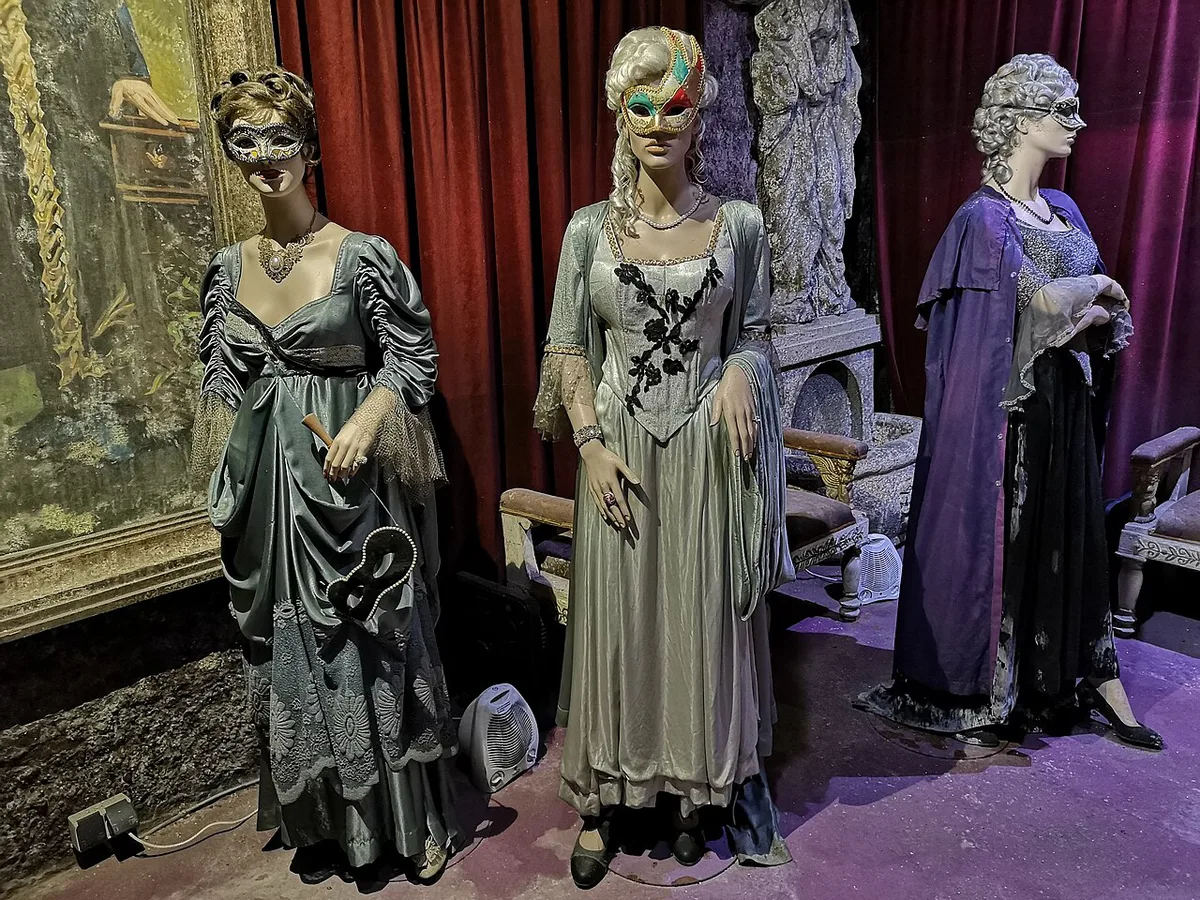
Thermal waters carved the natural cavities under Castle Hill over millions of years. People later linked them with man-made cellars, some described as 800 years old. Residents used the space as wine cellars connected to their houses. In the Second World War it served as a bunker and a military hospital. The Vlad the Impaler and Dracula stories are legend, not documented history. Treat them as folklore that the exhibition leans on.
What you will see inside
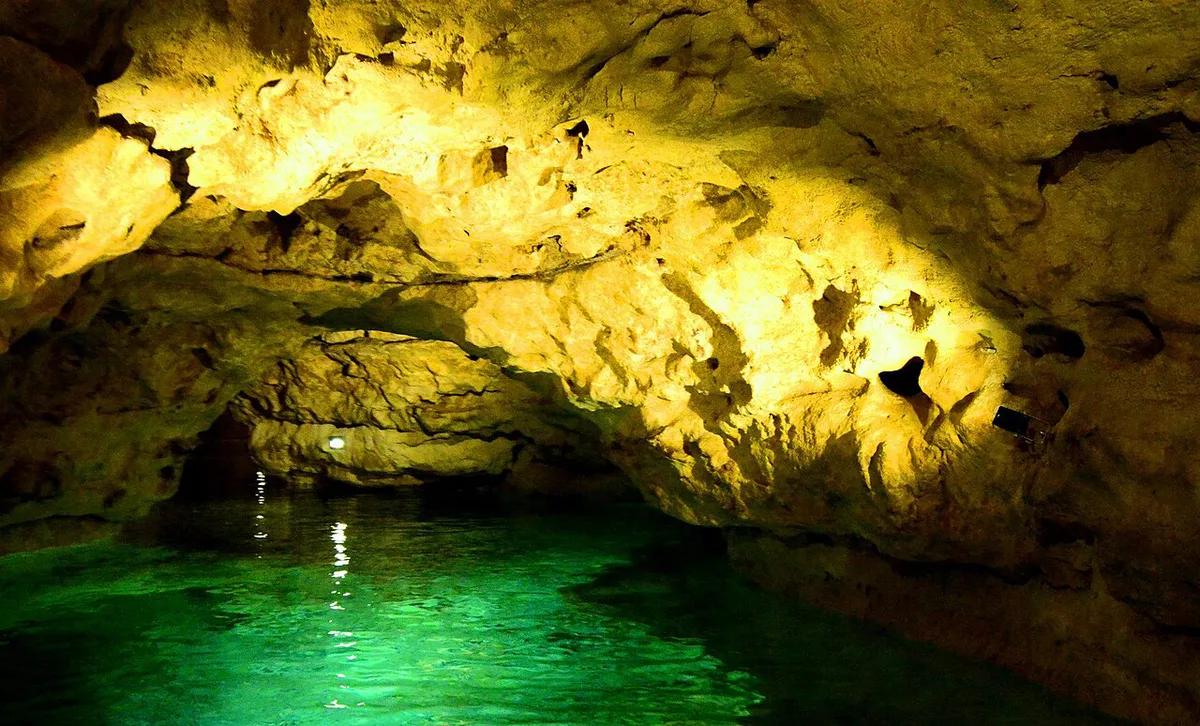
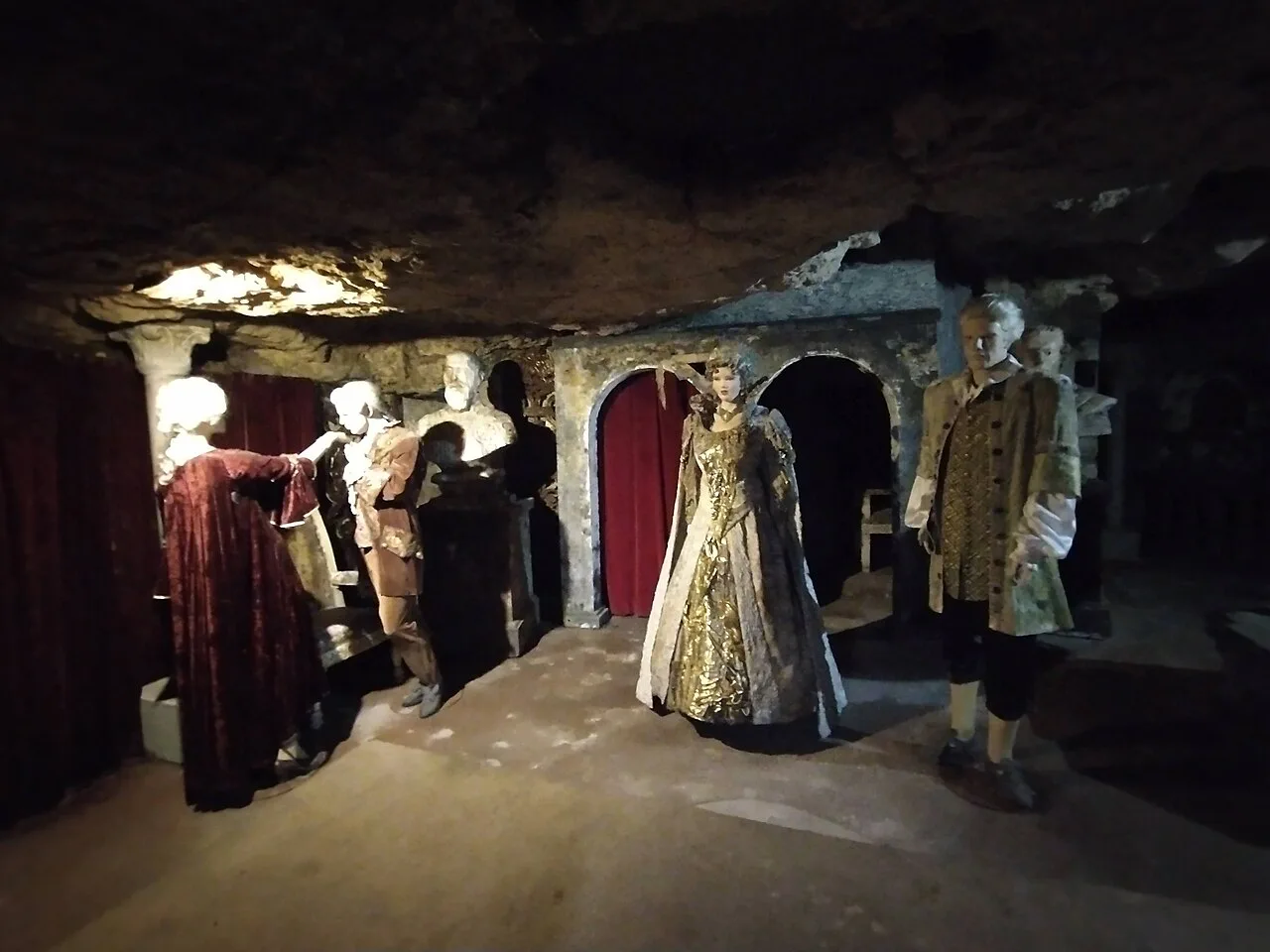
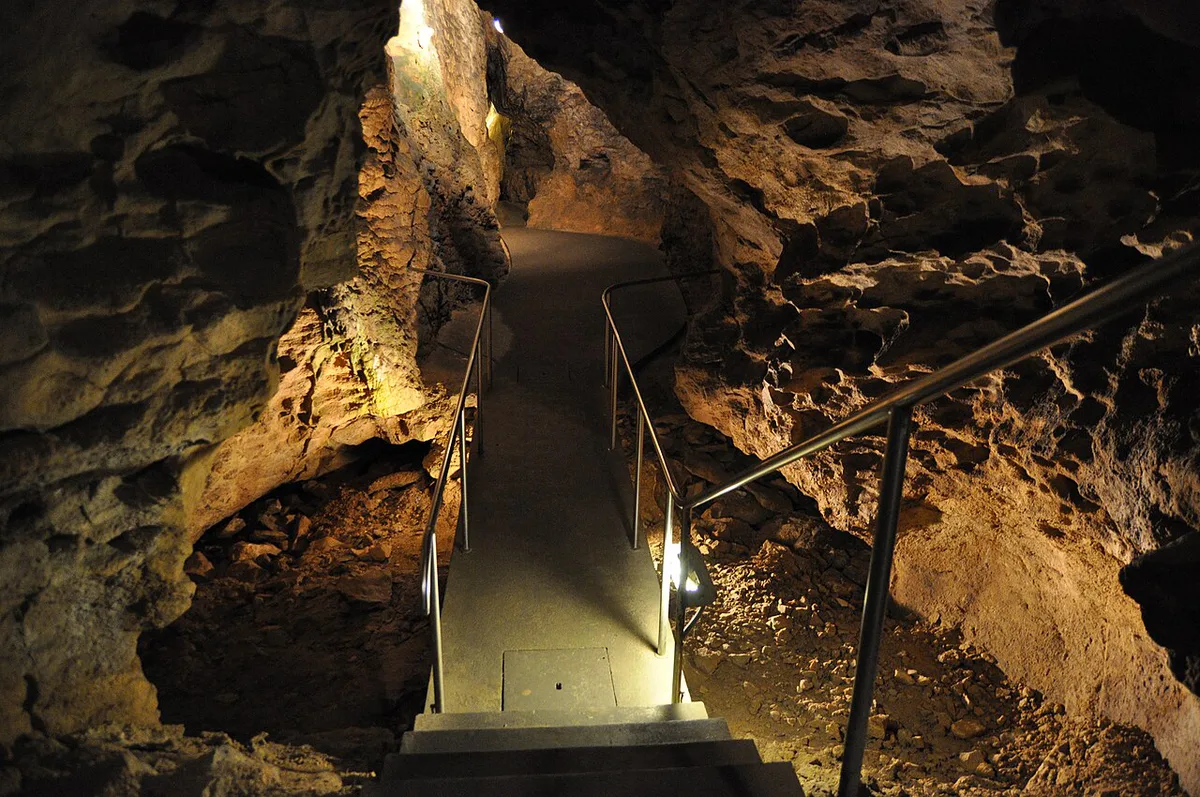
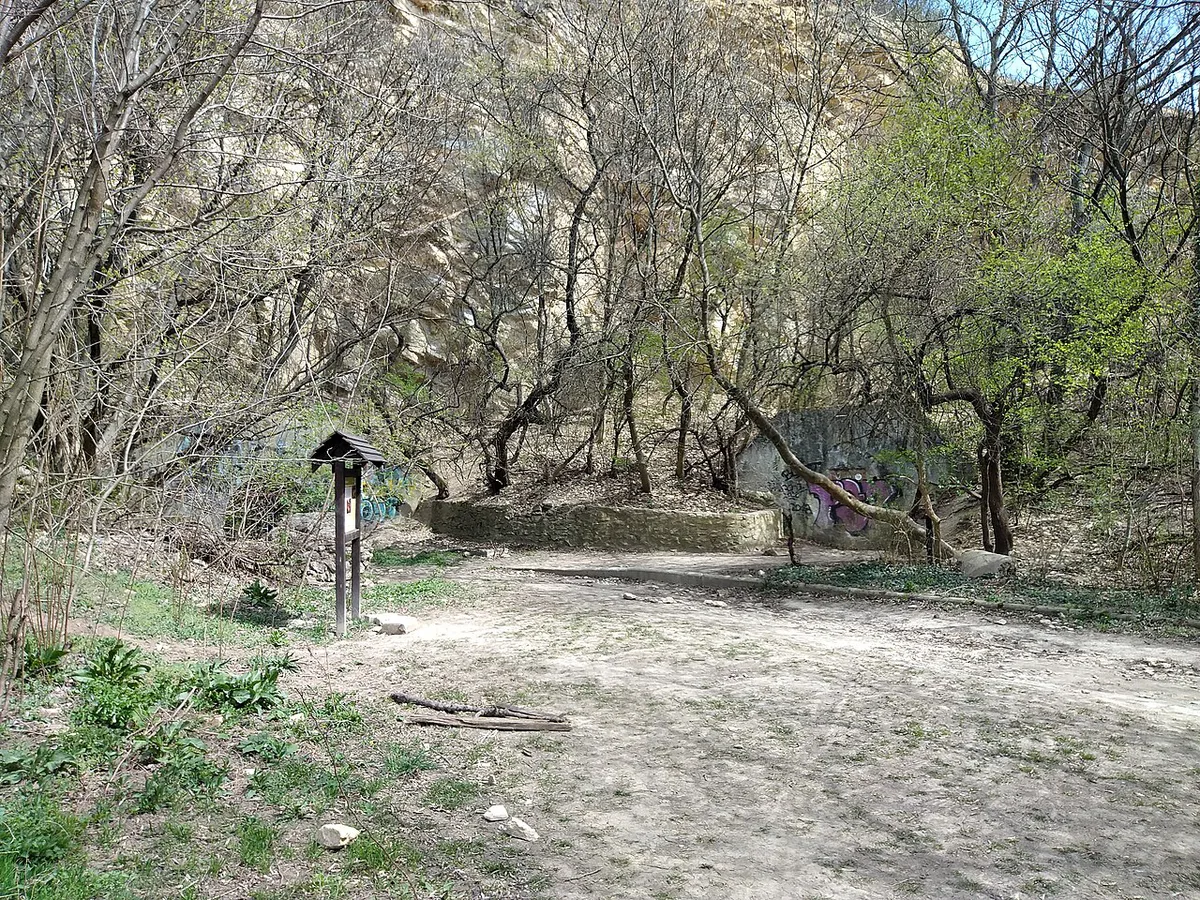
Older listings give the Labirintus as roughly 1,200 m long and about 16 m below the surface. It is not a true maze. The route loops with only a few dead ends, so you will not get lost. Expect an underground museum of themed installations rather than original artifacts. Examples include imaginary "archaeological" stones, mannequins in period costume, rock-art reproductions and a lit "hall of fear". Green lamps imitate kerosene lanterns. An 18:00 lights-off with oil lamps has been reported, but operations vary, so ask at the desk. Inside the guided tour cave, the temperature is 12°C. Dress for that, because Castle Hill can be much hotter in July and colder in January.
Tickets, hours and booking
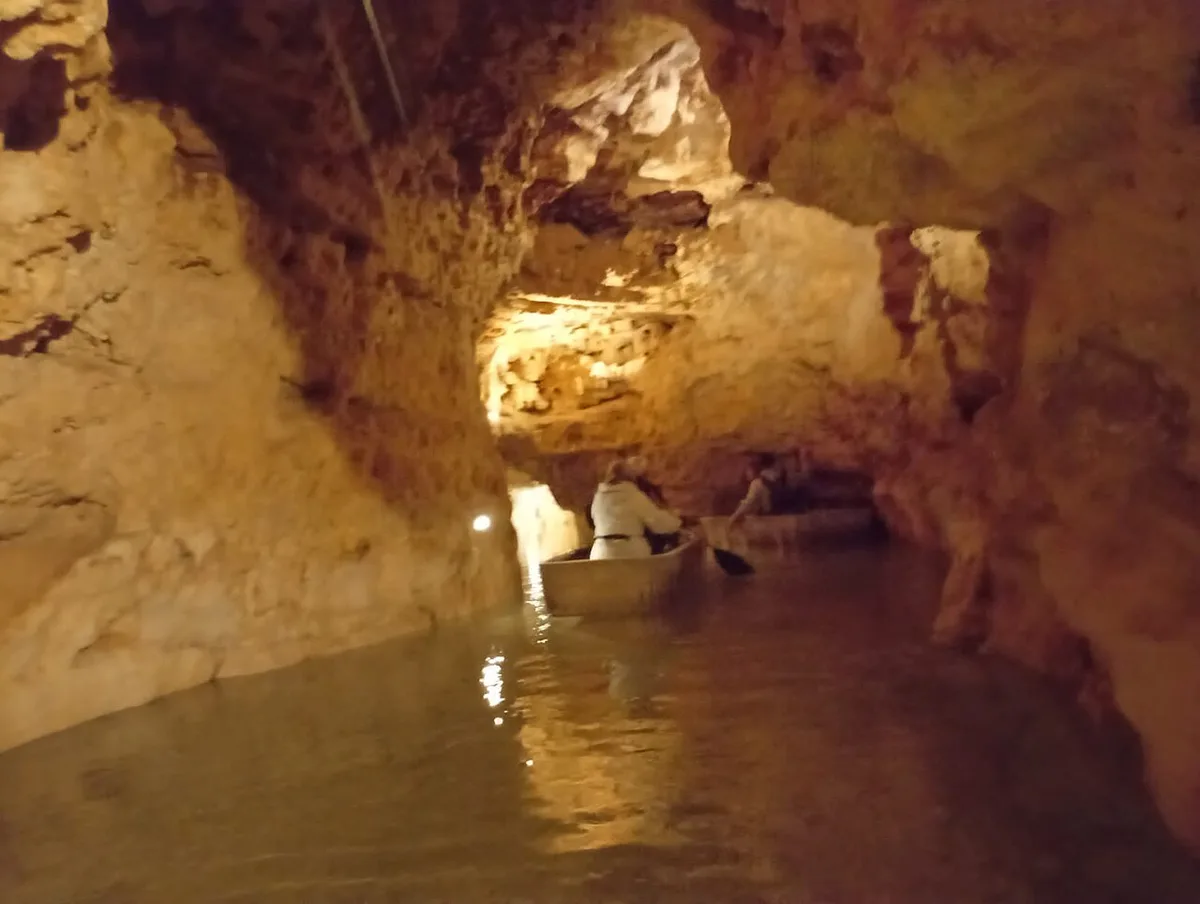
Prices and hours checked November 2026 against older listings only. Those listings give a regular Labirintus ticket of 6000 HUF and daily hours of 10:00–19:00. Cave attractions often change hours seasonally, so read the current fare and opening times on the official Labirintus page. The guided tour is stricter. Tour times are announced days or weeks ahead. Tours start on time, and a late arrival gets no refund. For Budapest-wide planning, Budapest's official tourism site is a useful starting point.
Older listings give 6000 HUF for the Labirintus, but the guided tour is a different operator, so check which voucher you hold.
How to get there and find the right door
For the Labirintus, walk to Úri utca 9 and enter the basement, where the reception desk and ticket office sit. For the guided tour, take bus 16 or 16A to Szentháromság tér. Walk back along Országház Street and take the first left onto Dárda Street. That walk takes 3–4 minutes from Matthias Church. The cave door opens 10 minutes before each tour.
Guided-tour doors open 10 minutes before each start, and tours begin on time, so a late arrival gets no refund.
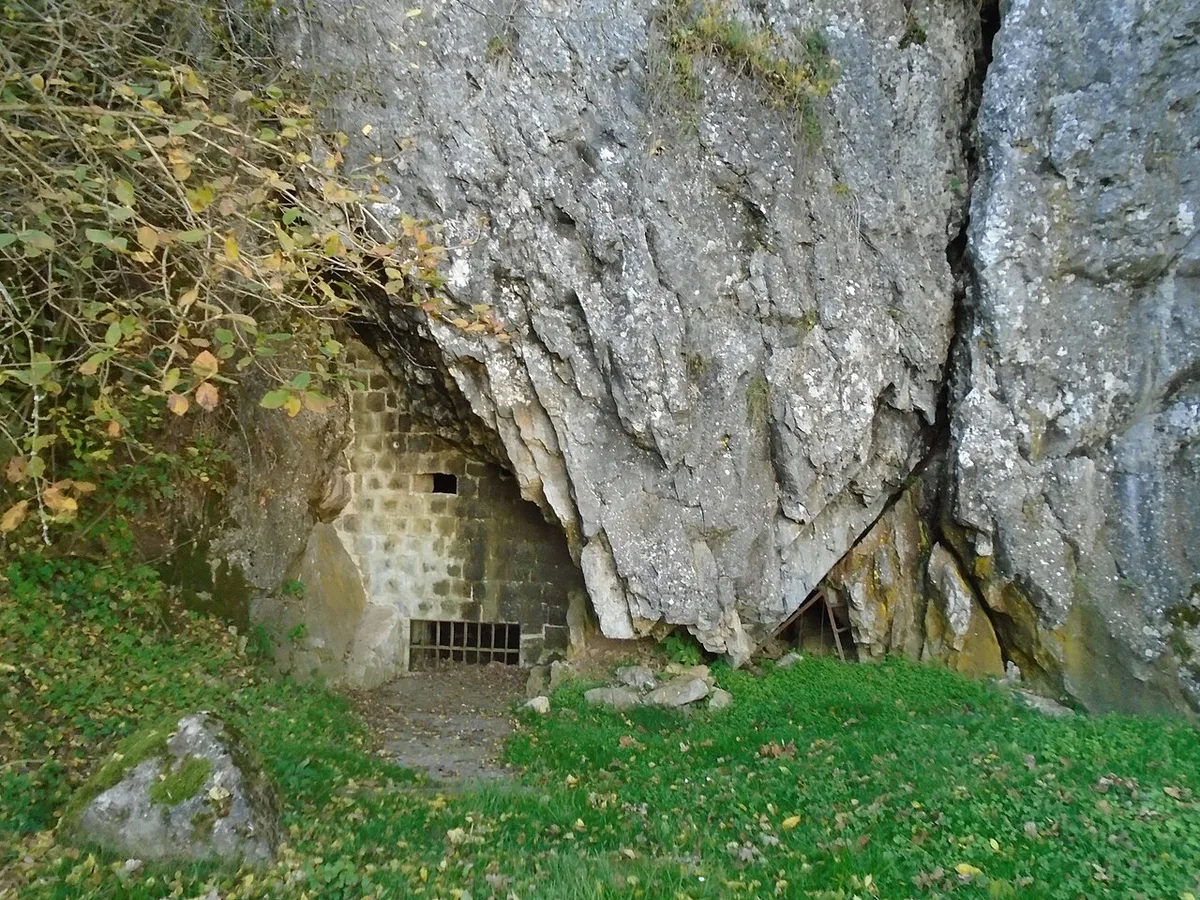
- Úri utca 9: basement entrance with a ticket desk. This is the Labirintus.
- Dárda Street 2: wooden cave door with a guide waiting. This is the guided tour.
- Guided-tour tickets say "not the Labyrinth". If your voucher says that, you are heading for Dárda Street.
- Agree a meeting point with your group first. There is no phone signal inside the guided-tour cave.
Getting up Castle Hill: funicular, bus or on foot
Both entrances sit in the Castle District, so the real question is how you reach the top of the hill. There are three practical options, and the best one depends on your legs and the weather.
Bus 16 or 16A
This is the simplest route, and the one the entrance directions above assume. The bus climbs to Szentháromság tér, beside Matthias Church. From there, Úri utca and Dárda Street are both a short walk away, so you arrive at the door without further climbing. It is the best choice with children, a pushchair or tired legs.
The Castle Hill Funicular (Budavári Sikló)
The funicular runs from the Danube side at Clark Ádám tér up to Szent György tér, beside the former royal palace. The ride is short and the views over the river are good. From the top you walk north through the Castle District toward Matthias Church, so allow extra time before a timed guided tour. Fares and operating days change, so check the current details with the Budapest transport operator, BKK, before you plan around it.
Walking up
Stepped paths and ramps climb the hill from the river side. The slope is steep, and on a hot July afternoon it takes real effort. This is a reasonable choice in cool weather if you want to see the Castle District from below. It is a poor choice if you have a start time to hit.
Which to choose
- Timed guided tour at Dárda Street 2: take the bus, and aim to be at the door well before the start.
- Labirintus at Úri utca 9: any route works, since it has no fixed tour time you must catch.
- Reduced mobility: use the bus. The paths on the hill are cobbled in places, and the guided cave is not wheelchair accessible.
Going back down is easy on foot. Many visitors take the bus up and walk down to the river afterwards.
Is it worth it, and who should skip it
It is worth it as a short, dry, cool break on Castle Hill. It works for families and for anyone who enjoys staged atmosphere. Skip the exhibition if you want authentic archaeology, since the displays are themed installations. The guided tour is not recommended for claustrophobia or mobility issues. Children under 3 are not permitted on it. Its regular route is about 1.5 km on paved, lit paths. Visitors who want a true cave should try Pál-völgyi Cave or Szemlő-hegy Cave. Those who like adventure can look at the Mátyás Cave caving tour.
Combine it with the rest of Castle Hill
Matthias Church is 3–4 minutes' walk from Dárda Street, so pair the cave tour with the church. Fisherman's Bastion is also on Castle Hill. A sensible half-day starts with the underground visit while the surface is hot or wet. Then walk up to the church and bastion once you have your bearings. Check each site's current hours before you set a sequence.
Other caves to compare
The Castle Hill caves are urban, short and exhibition-led. Natural caves farther out are longer and more physical. Our guide to caves in Hungary compares them all. The options below suit visitors who want a different kind of underground day.
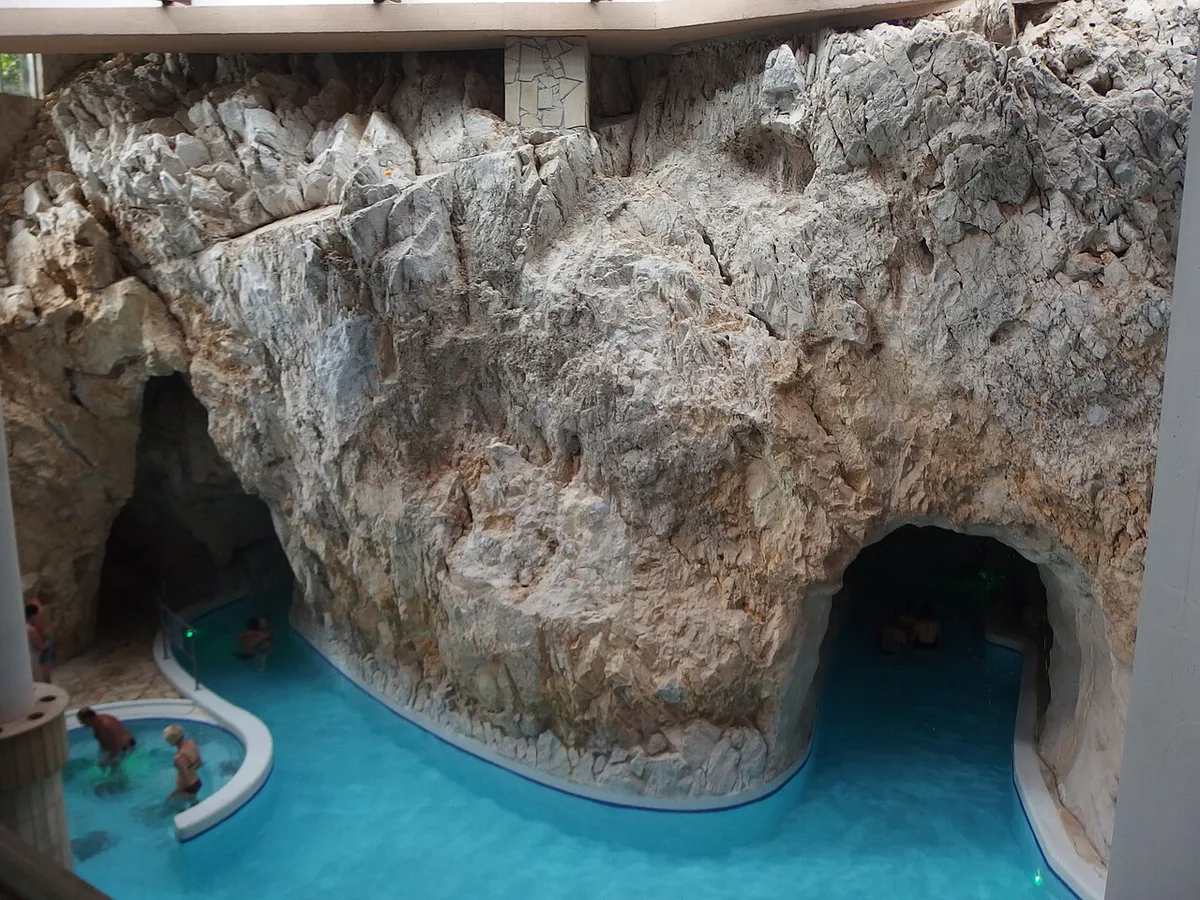
- Cave Bath Near Budapest: Where to Swim in a Cave: pair a cave setting with a soak.
- Baradla Cave Guide: Tours, Tickets and How to Visit: a long natural cave, reached by a trip out of the city.
- Tapolca Lake Cave: Boat Ride, Tickets & Visit Tips: a cave visit around a lake, in Miskolc's direction.
- Miskolctapolca Cave Bath: What It Is and Who It Suits: a soak inside a cave, outside Budapest.
Notes for your next trip underground
Optional updates when we add or revise cave and underground guides.
More guides
More guides you'll find useful