Cova des Coloms: Mallorca vs Menorca Cave Guide
Two caves share the name Cova des Coloms. Learn which is in Mallorca or Menorca, how to reach each, and how to choose land or boat access.
Last updated November 2026: Cova dels Coloms, written locally as Cova des Coloms, is a partly flooded sea cave on Mallorca's Llevant coast near Cala Varques, close to Porto Cristo. A second, unrelated cave with the same name sits in a ravine on Menorca. This guide focuses on the Mallorca cave, which belongs with the other sites in our guide to Mallorca's caves, and gives the Menorca cave its own short section.
Featured image: Andrómeda7, CC BY-SA 3.0, via Wikimedia Commons.
Which Cova des Coloms Do You Mean?
Searches for this name mix two caves on two islands. Local usage is "des" (Catalan for "of the"), so Cova des Coloms and Cova dels Coloms point to the same names. The name means "cave of the pigeons". Do not merge the two caves' facts, because the only thing they share is the name.
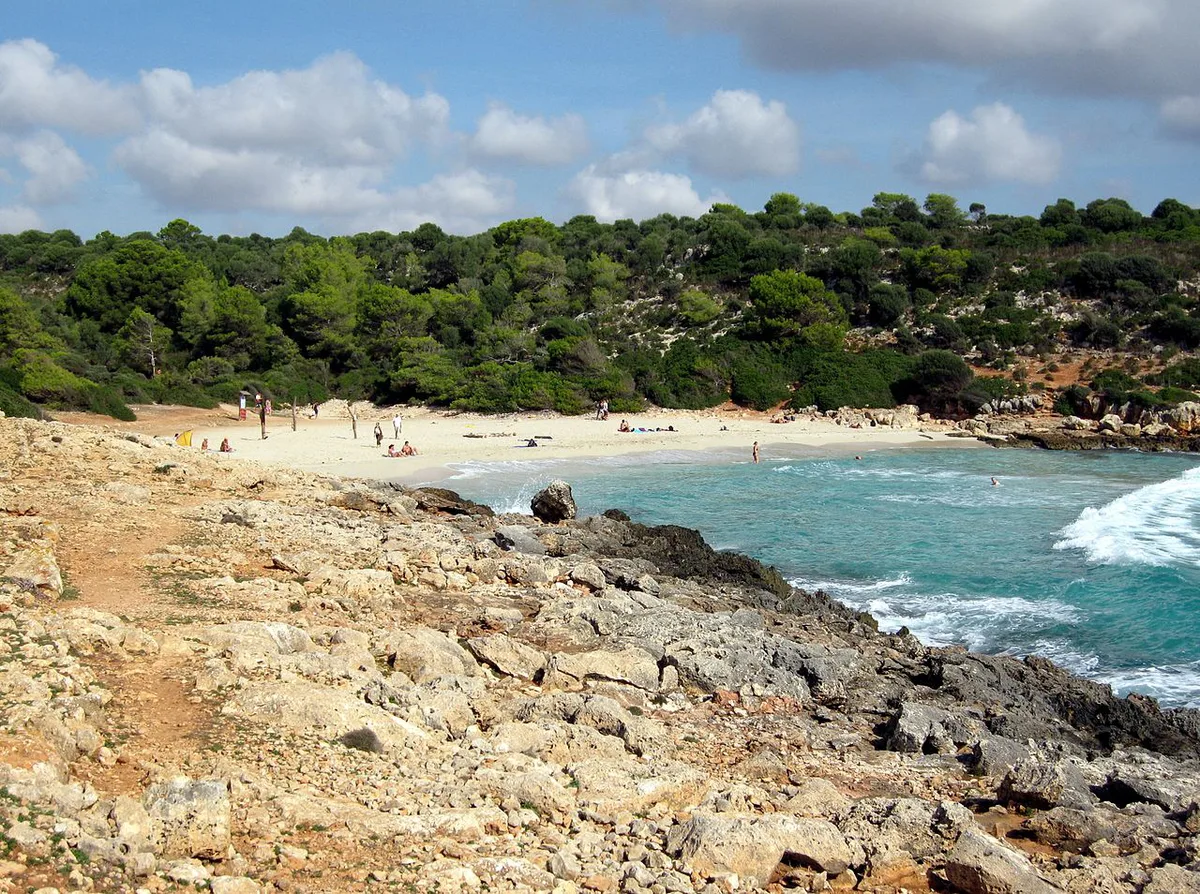
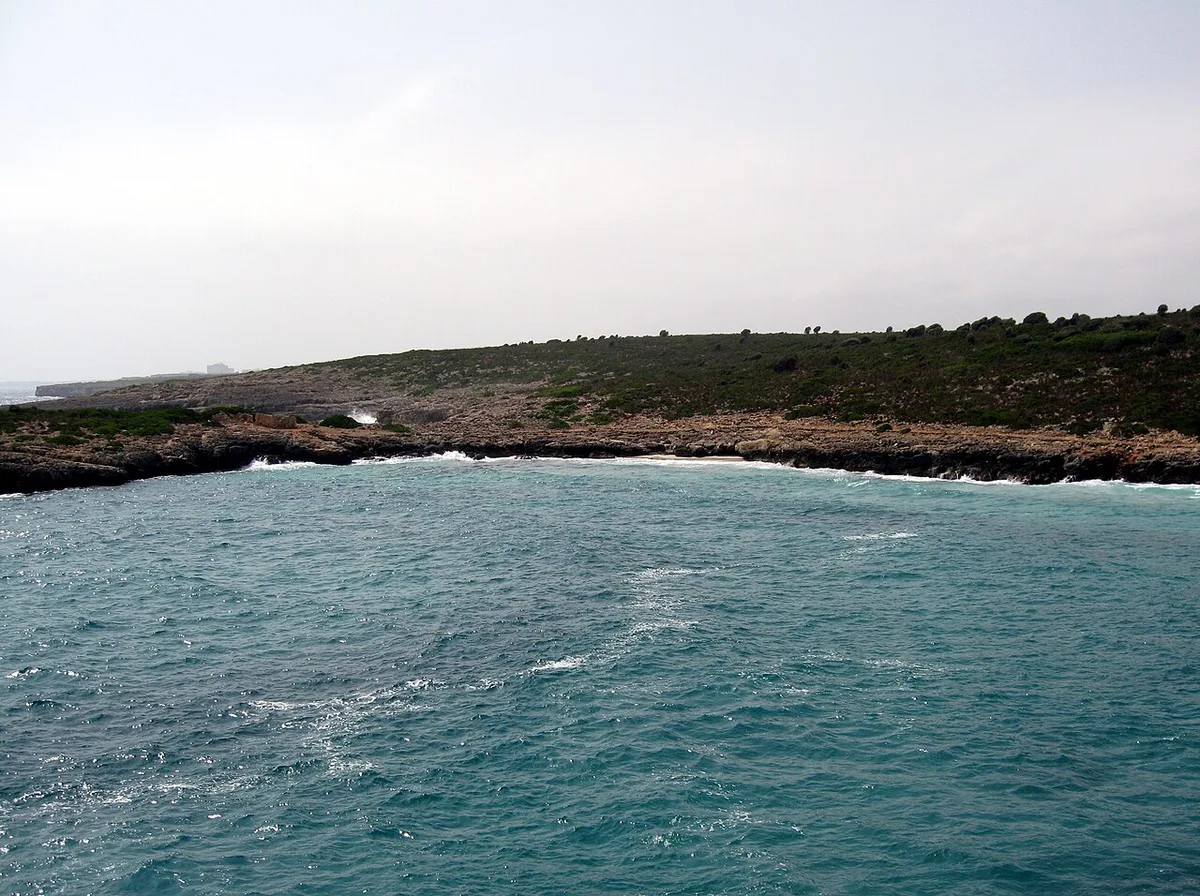
| Mallorca | Menorca | |
|---|---|---|
| Type | Partly flooded sea cave | Large dry cave |
| Location | Llevant coast near Cala Varques, close to Porto Cristo | Binigaus ravine near Es Migjorn Gran |
| Access | Walk plus open-water swim, or boat | On foot from Es Migjorn Gran; free |
| Main draw | Daylight through a roof collapse, brackish pool | Cathedral-sized chamber, Talayotic burial history |
Inside the Mallorca Sea Cave: What to Expect
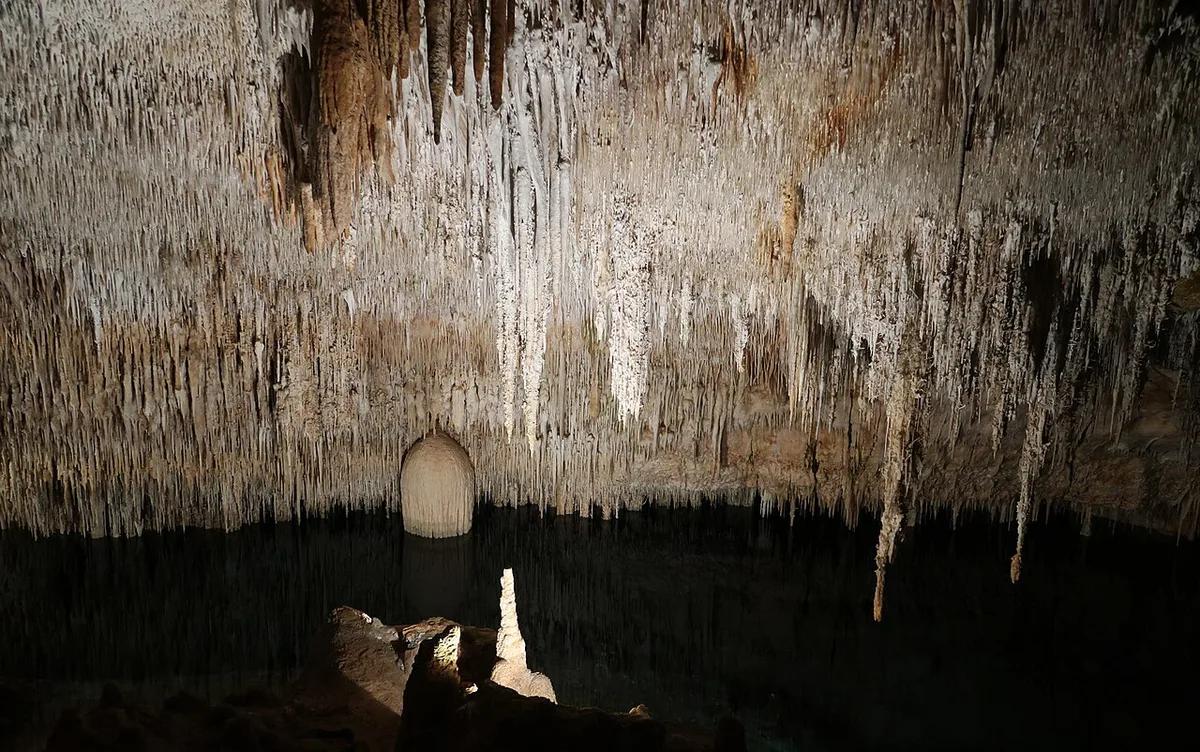
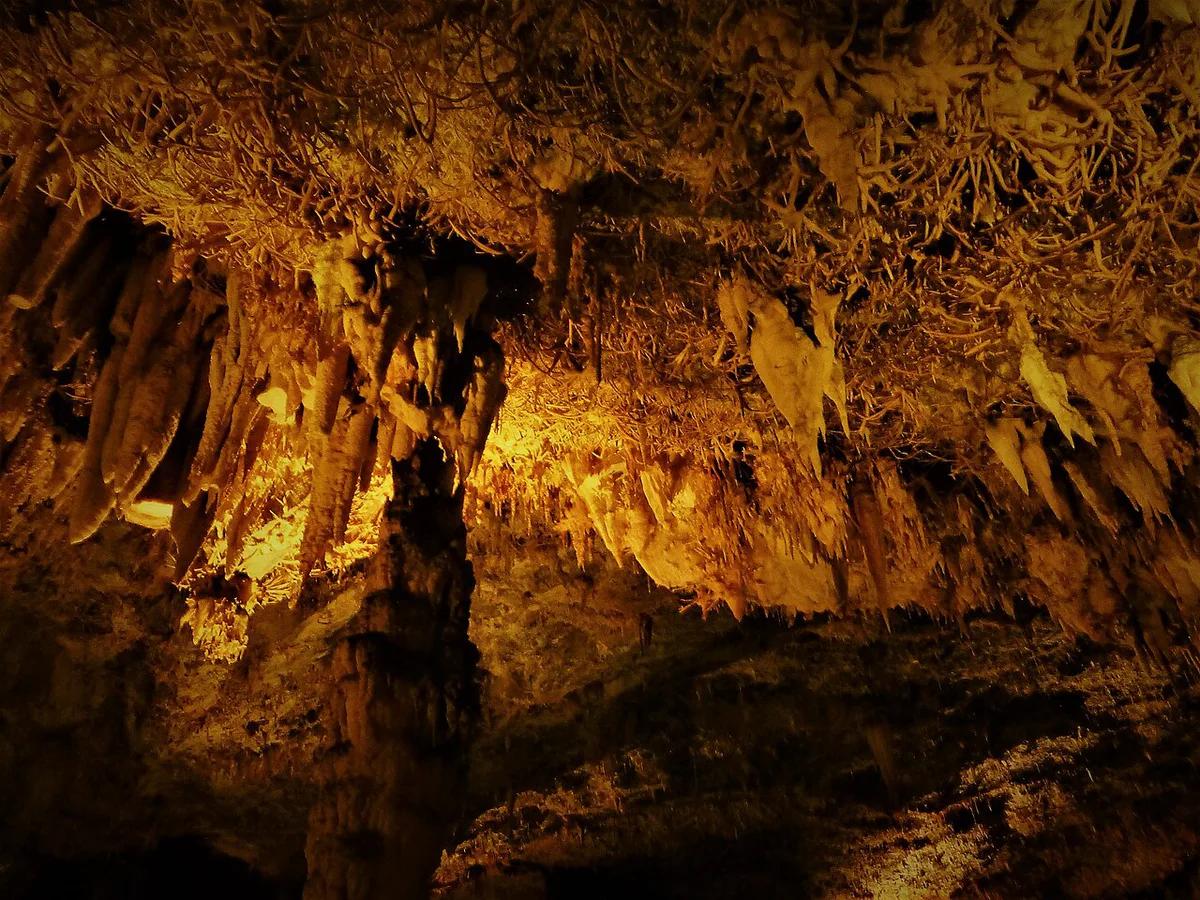
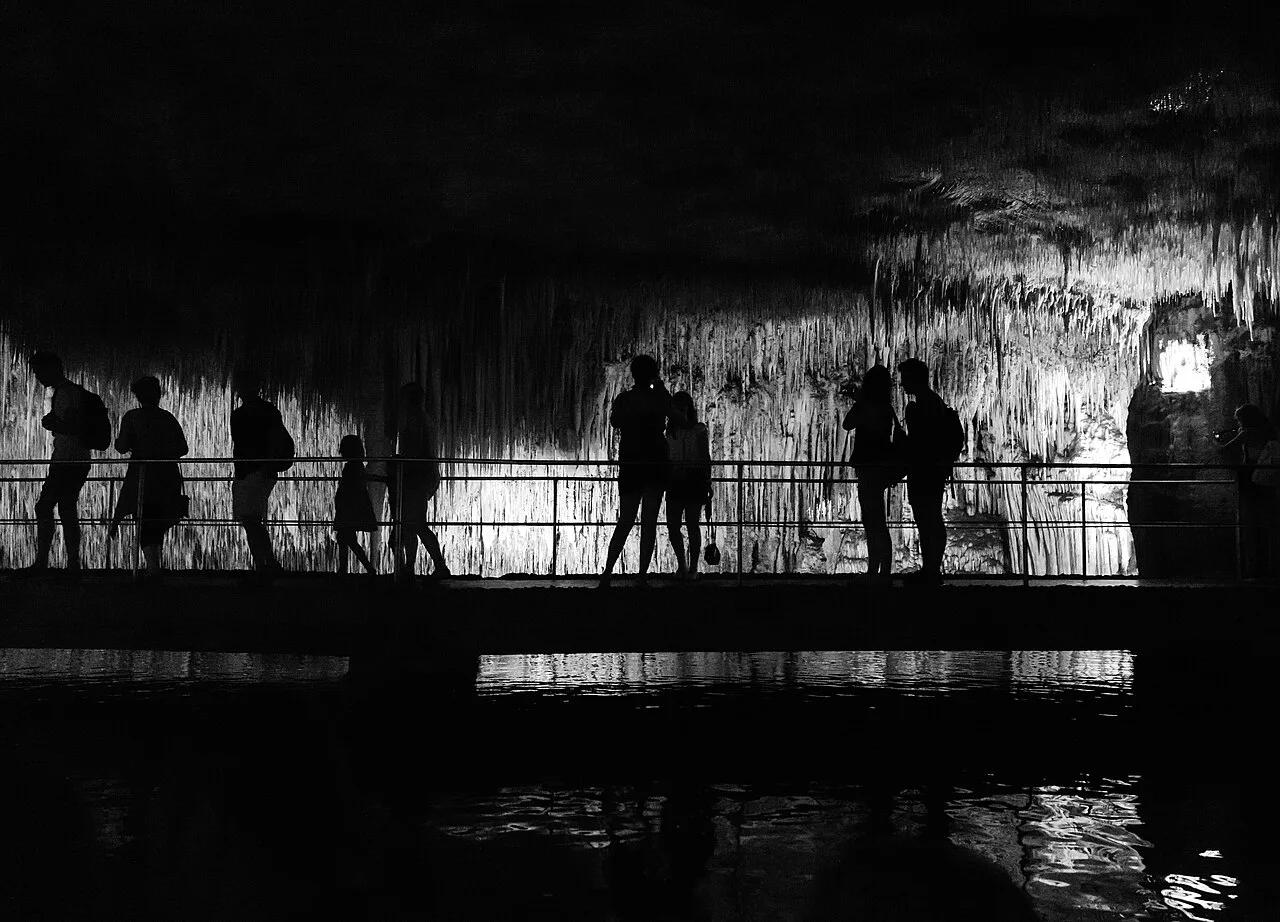
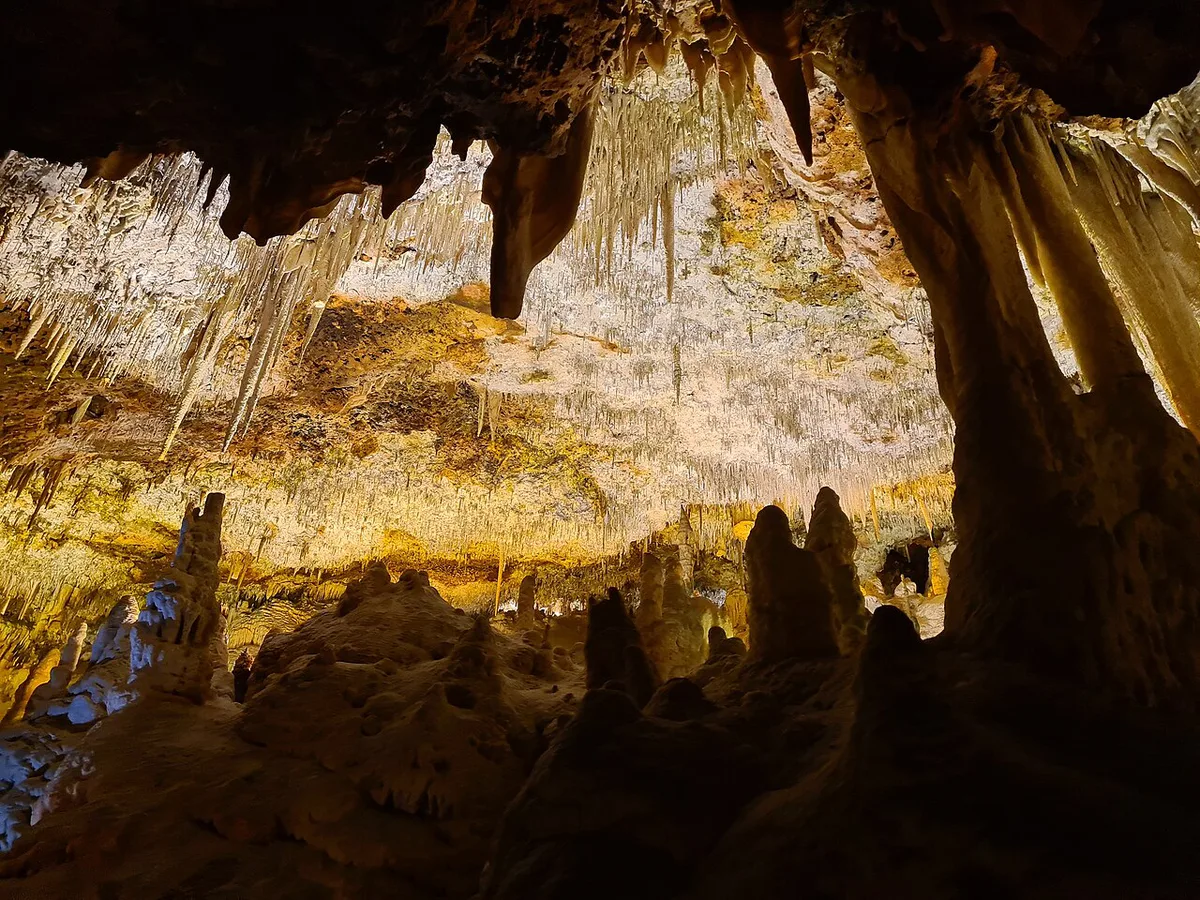
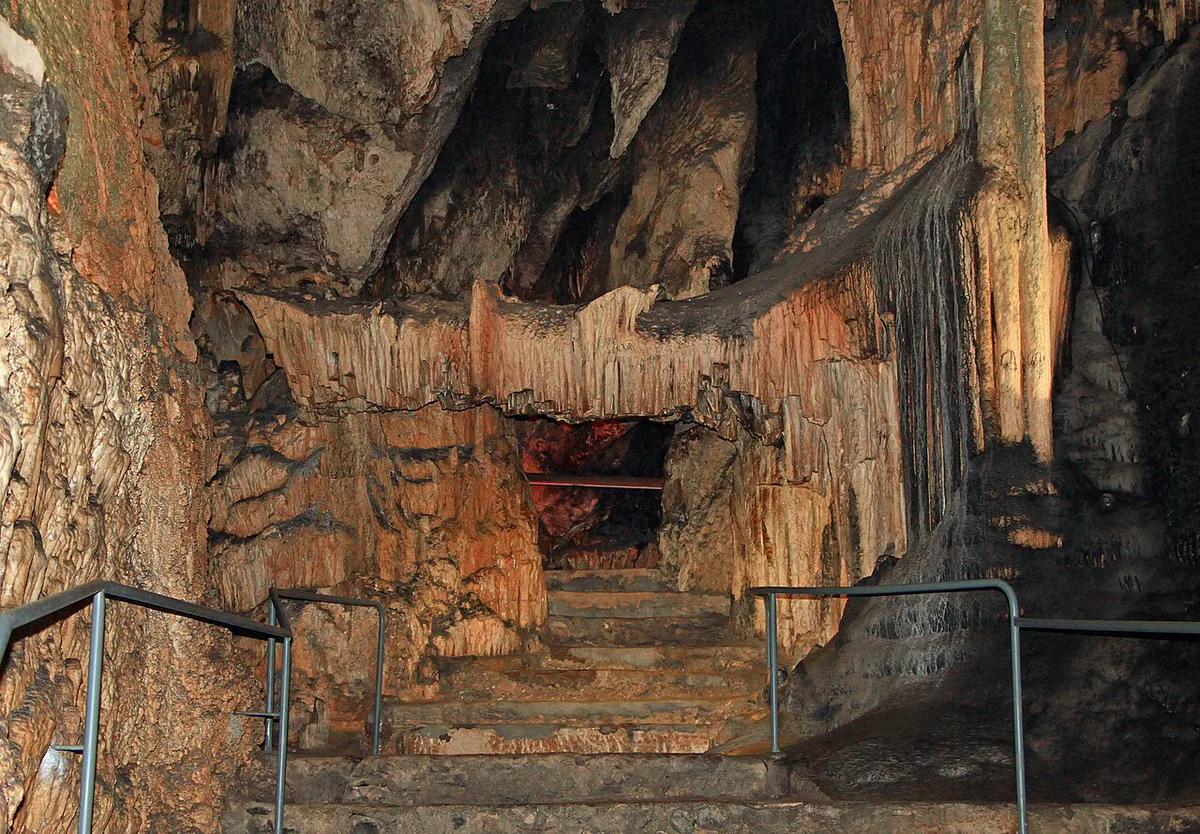
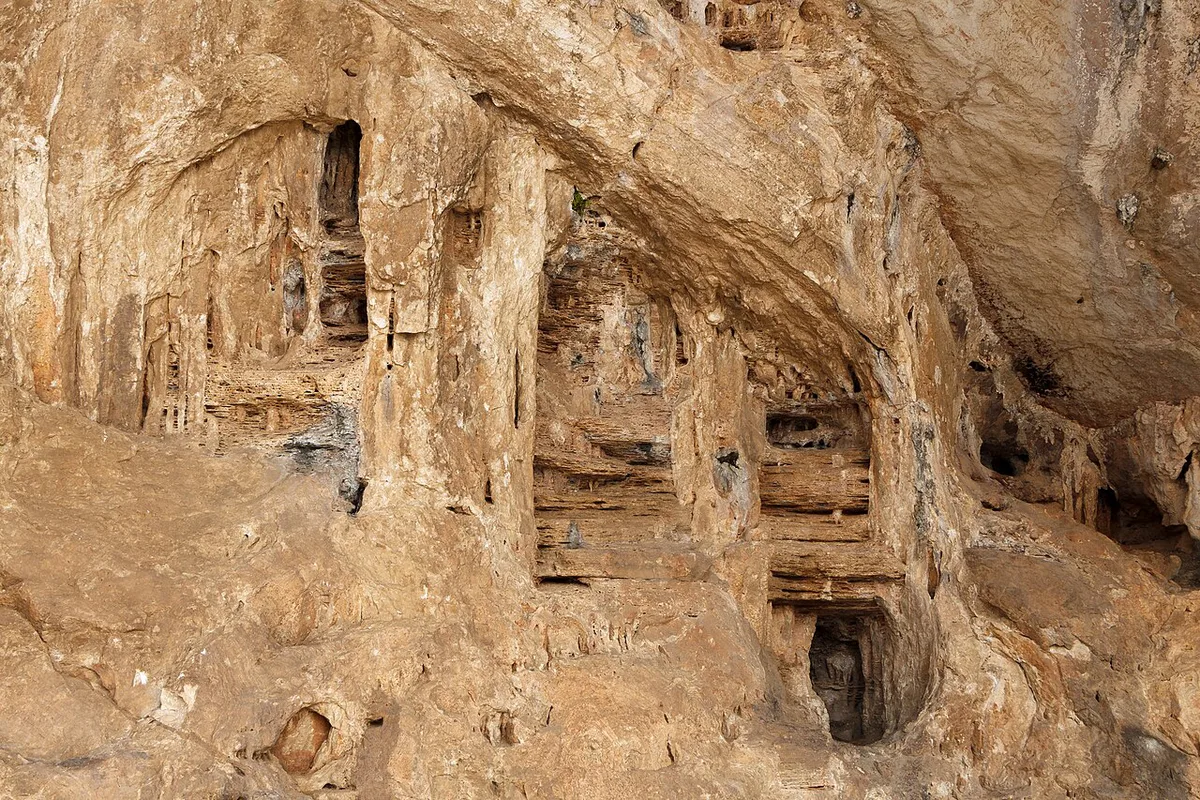
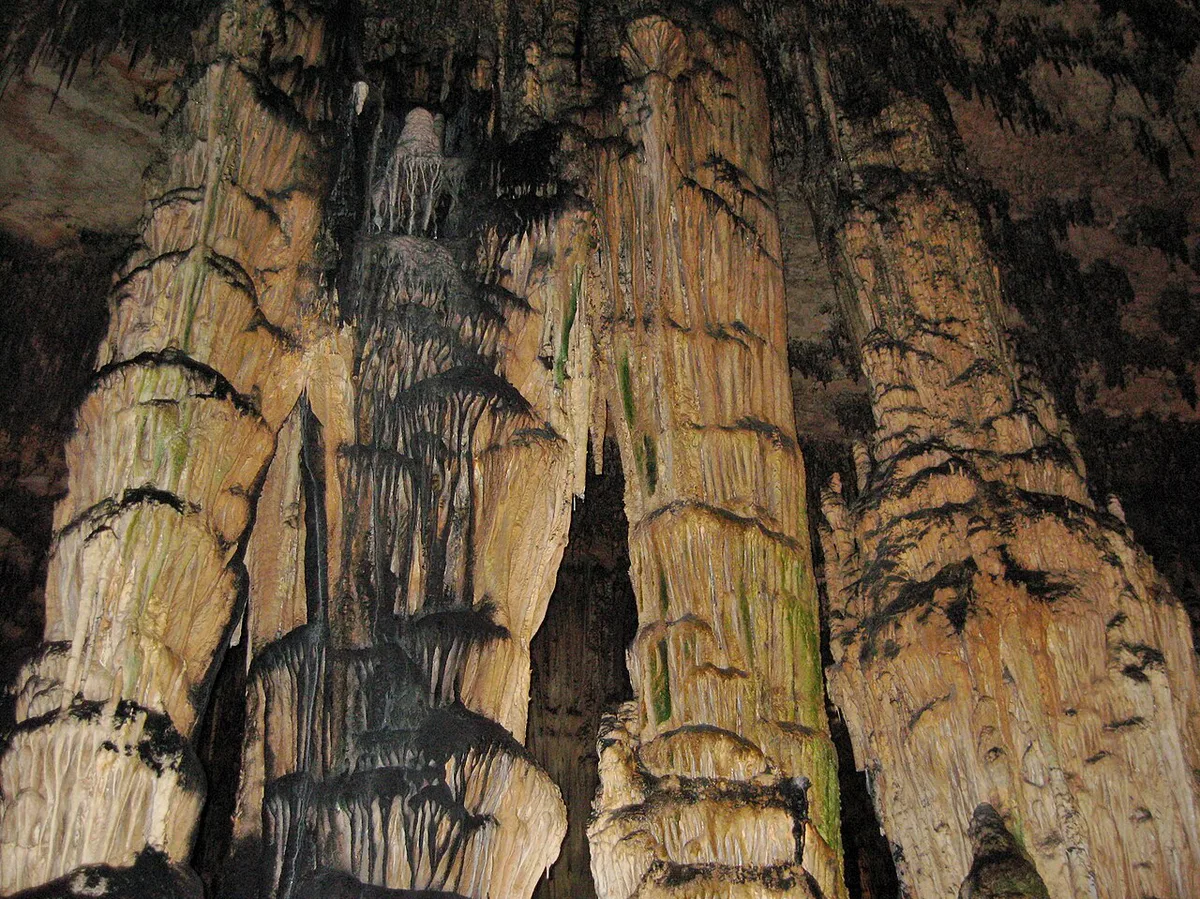
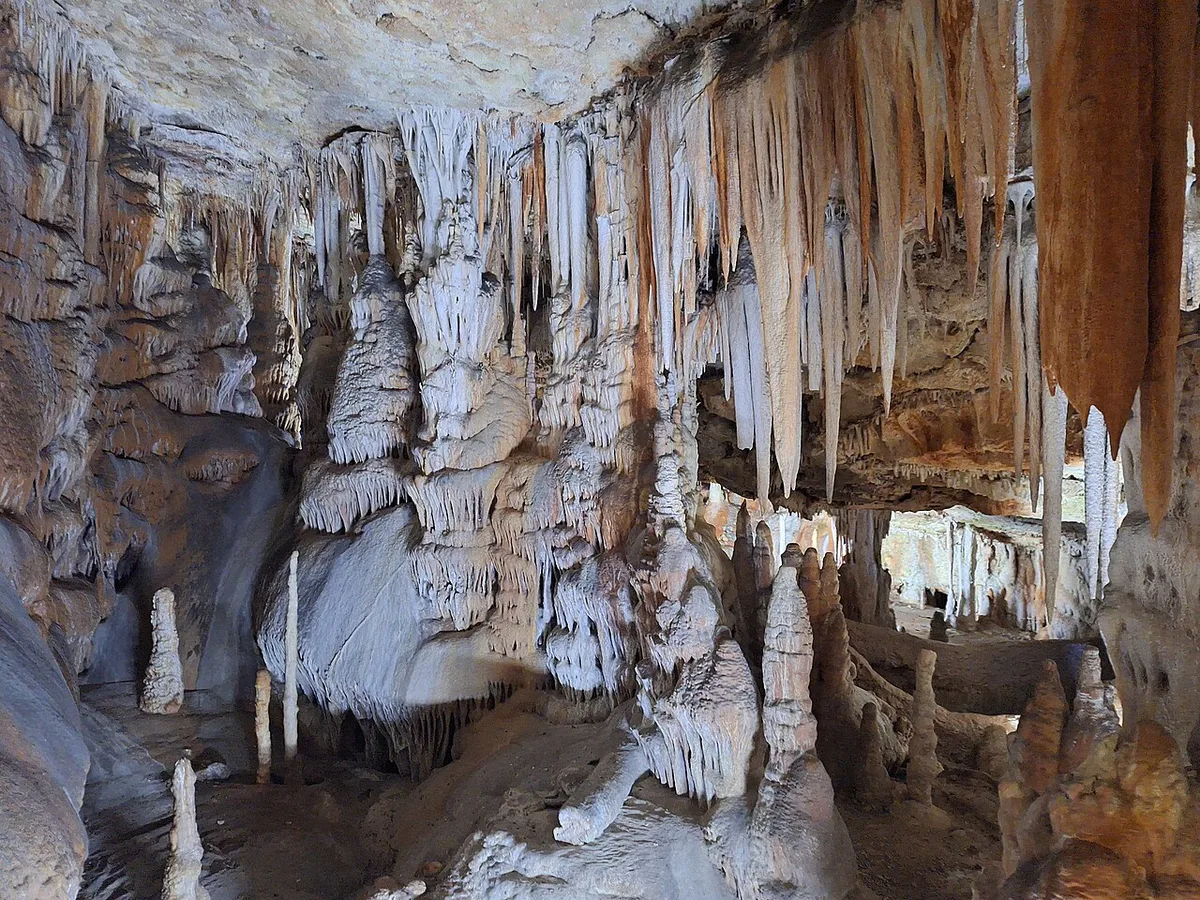
The cave opens into a large chamber. Part of its roof has collapsed, so daylight reaches the water instead of leaving the space in darkness. The floor is a pool of brackish water, a mix of seawater and fresh groundwater from the limestone. In places you can see a halocline, a faint shimmering line where the two waters meet without fully mixing. Stalactites and other mineral formations line the upper walls, some with a reddish tint. Depth varies from shallow shelves near the edges to deeper water in the middle, so guided briefings are the best way to learn where you can stand. This cave is a swim-in experience, so it is nothing like the walk-in show caves such as Mallorca's other sea caves may suggest at first glance.
How to Get to Cova des Coloms: By Land vs By Sea
Both routes are described by local tour operators, and neither is a casual outing. Check sea conditions on the day, and tell someone your plan before you set out. For current prices, schedules and booking terms, ask the operator directly, because none are published in a form we can quote here.
| Factor | By land | By sea |
|---|---|---|
| Effort | Hot walk plus open-water swim | Boat ride, short swim at the cave |
| Gear | Your own mask, fins, light | Provided on a guided trip |
| Open-water swim | About 300 m | Only at the cave |
| Shade and heat | None on the walk | Boat time on the water |
| Best for | Strong, self-reliant swimmers | Most visitors, weaker swimmers, first-timers |
| You organise | Parking, route, kit, timing | Booking; check price and schedule with the operator |
- By land: park informally near Cala Varques, where space is limited. Walk about 30–40 minutes over exposed limestone with no shade and no marked path. Then swim about 300 m (roughly 980 ft) in open water, carrying mask, fins and a waterproof light.
- By sea: join a guided boat trip from Porto Cristo marina. The boat follows the coast past Cala Varques and brings you close to the entrance. Operators supply the wetsuit, helmet and light.
- Land route heat: in summer the limestone has no shade and gets very hot underfoot. Avoid the middle of the day and carry plenty of water.
- No turn-back: once you start the swim there are no facilities, signs or easy exits.
Go or No-Go: A Quick Checklist
Answer these honestly before choosing the land route. Any "no" points you to a guided boat trip. Our Mallorca cave tour options are a good place to compare guided formats.
- Are you comfortable swimming about 300 m in open water?
- Do you own a mask, fins and a waterproof light?
- Can you handle a 30–40 minute walk on shadeless rock in summer?
- Are sea conditions calm on the day?
- Are you happy to go with no facilities and no easy way back?
- Mistakes to avoid: confusing the two islands, walking at midday in summer, going unequipped, touching formations, and assuming the swim is easy for weak swimmers.
What to Bring and Safety
A well-fitting wetsuit gives warmth and buoyancy. Bring a secure waterproof light, footwear that grips wet rock, and water for the walk. On a boat trip the operator provides the wetsuit and light. Be honest about your swimming ability, because open water and sea caves carry real risk. Weaker swimmers should choose guided access. If you want an easy cave with no swim, the walk-in Coves dels Hams near Porto Cristo is the simpler option. Its official site covers visiting details, and our Hams ticket guide covers booking. Other dry caves include Cuevas de Artà and Campanet. For a Mallorca show cave with built paths, try Cova de Gènova.
The Menorca Cova des Coloms in Brief
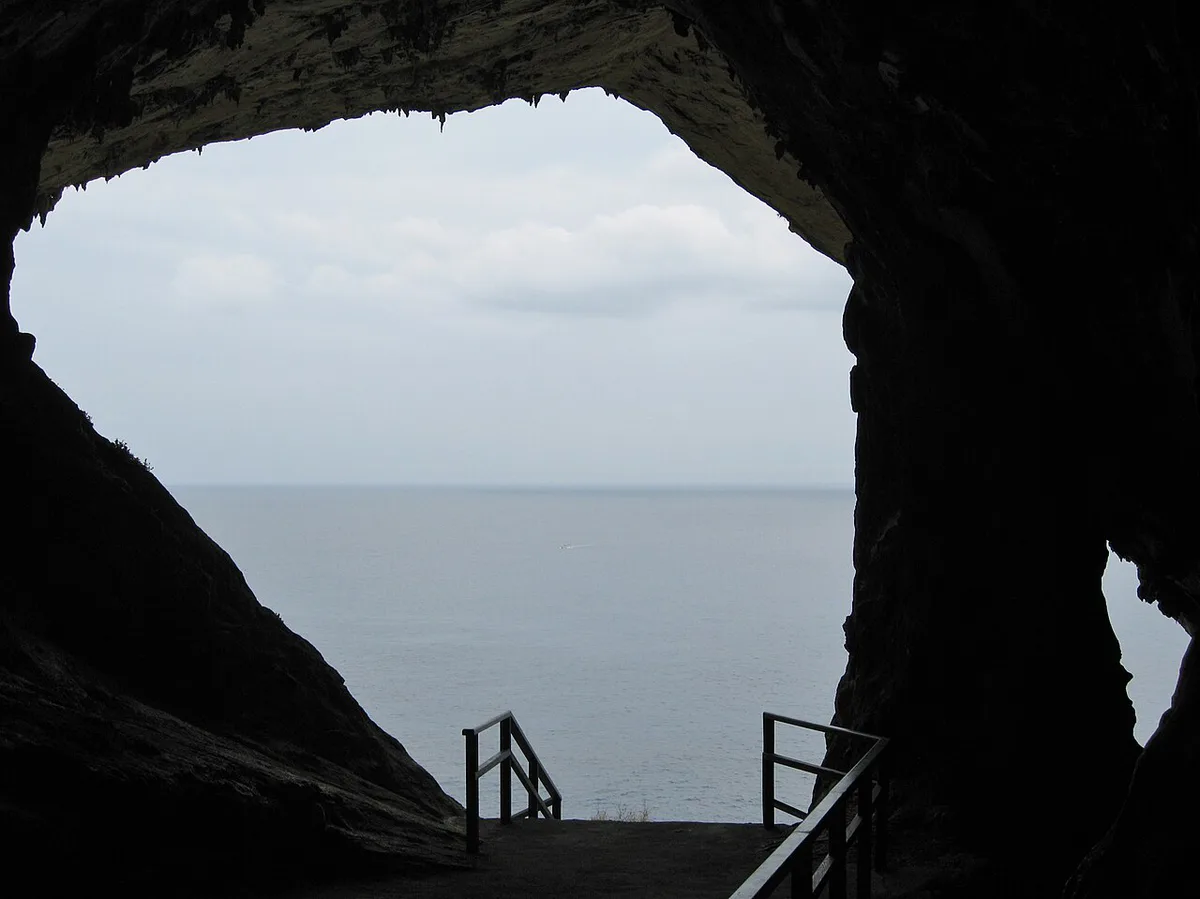
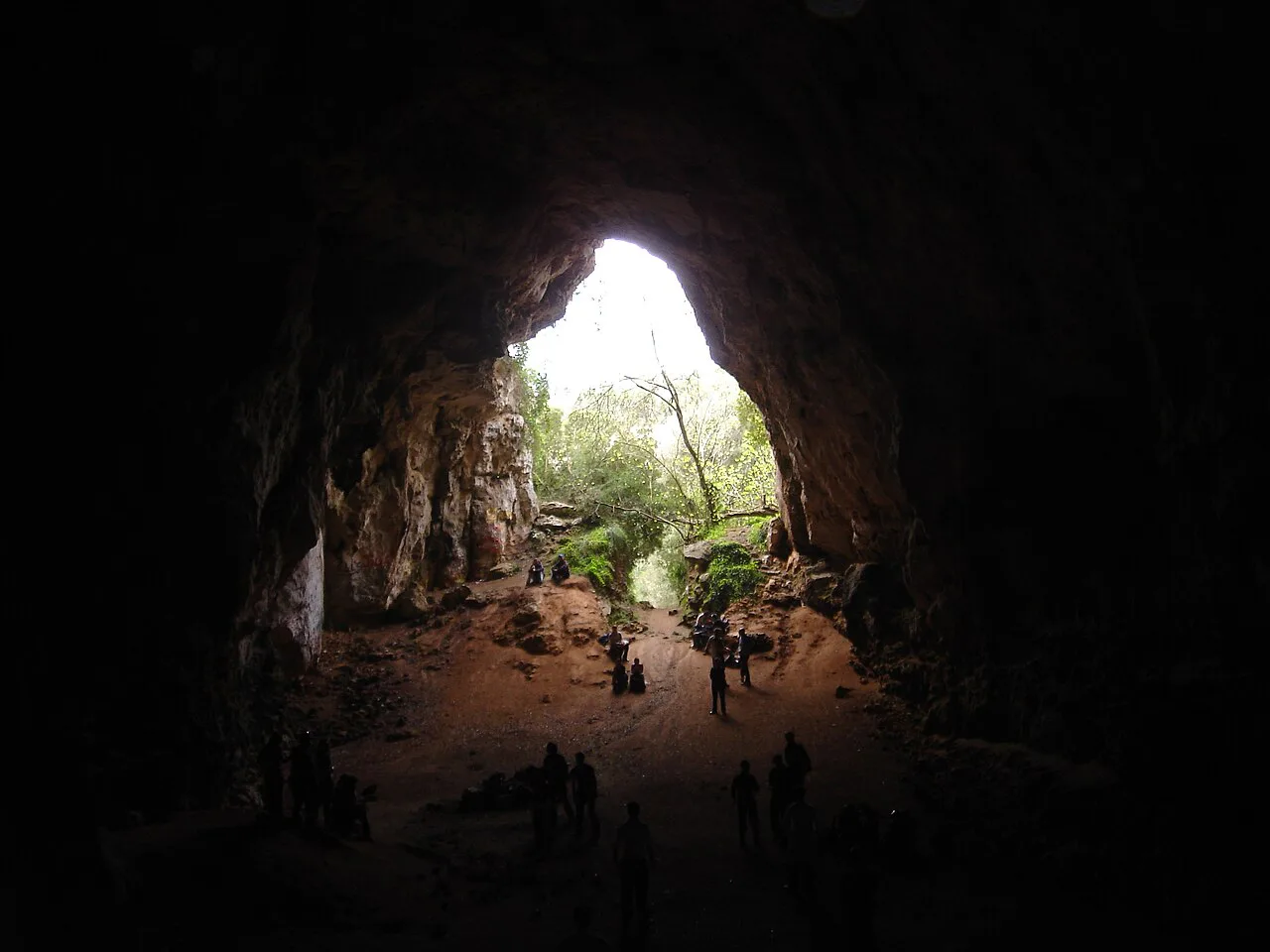
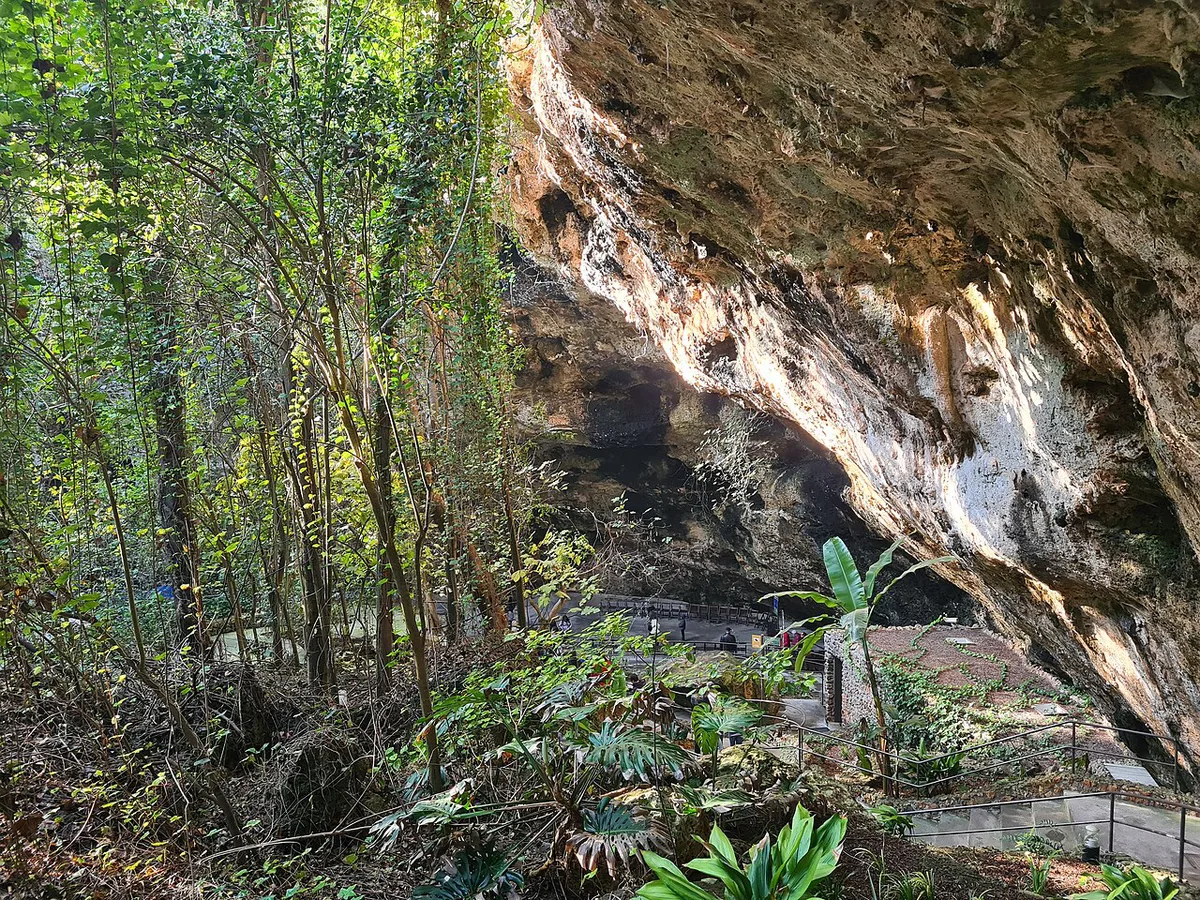
Menorca's cave sits in the Binigaus ravine, roughly a mile southeast of Es Migjorn Gran. The ceiling stands about 24 m (79 ft) above the floor, the entrance is about 15 m (49 ft) wide, and the cave runs roughly 100–110 m deep. Its size earned it the nickname "the Cathedral", and it has a central room followed by a long, narrow corridor. Access is on foot along the signposted path toward Binigaus beach, and entry is free. The closest car park is by the local cemetery. It was used for burials in the Talayotic period, roughly 550–123 BC, and has held Bien de Interés Cultural status since 1966. Talayotic Menorca was inscribed on the UNESCO World Heritage List in 2023, which is useful context. Check island tourism information or the Es Migjorn Gran town hall for current route details.
Respecting the Environment
The coast around Cala Varques lies close to areas covered by the Red Natura 2000 network, including the Cales de Manacor site. The cave itself has no confirmed formal protection, but the area is ecologically sensitive. Do not touch the formations, take every piece of litter with you, and keep noise low.
Which Option Fits You?
Match your own situation to the table below. If you want deeper water experiences once you are comfortable swimming caves, our Mallorca cave diving guide is the next step.
| Traveller | Best choice |
|---|---|
| Strong swimmer with own gear | Mallorca land route, in calm conditions |
| First-timer or no gear | Guided boat trip from Porto Cristo |
| Family with young children | Walk-in show cave instead, not the swim |
| History fan | Menorca's free walk to the Cathedral cave |
| Weak swimmer | Guided access only, or skip the swim |
Notes for your next trip underground
Optional updates when we add or revise cave and underground guides.
More guides
More guides you'll find useful