Petralona Cave Guide: Skull, Formations and How to Visit
Plan a visit to Petralona Cave in Chalkidiki: what to see, the famous skull, getting there from Thessaloniki, and what to check before you go.
Last updated November 2026: Petralona Cave is a show cave on Mount Katsika, near Petralona village in Chalkidiki, northern Greece. It is known for its stalactite chambers and for the Petralona Skull, a fossil found there in 1960. Plan it as a Chalkidiki stop or a long day trip, not as part of the southern and island circuit in our guide to caves in Greece.
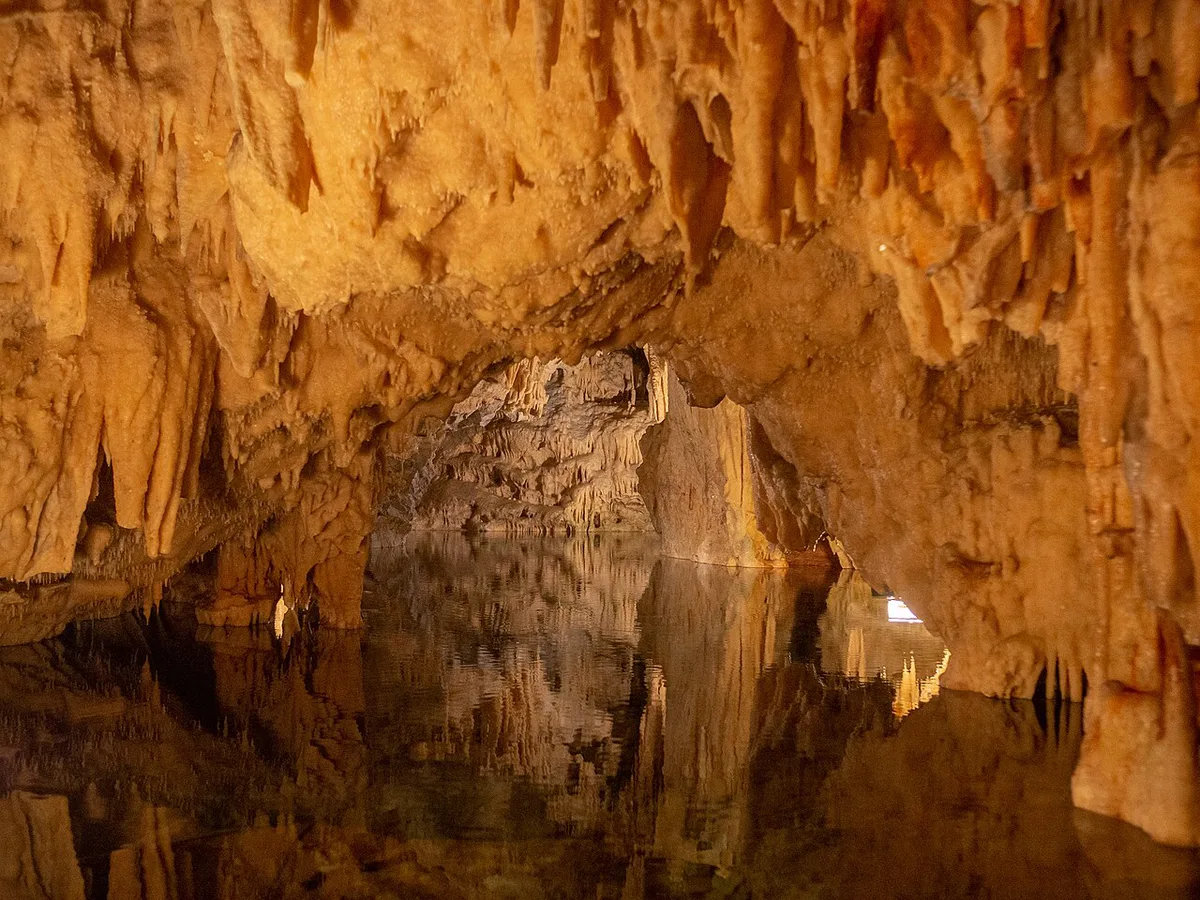
Featured image: Hombre, CC BY-SA 3.0, via Wikimedia Commons.
Petralona Cave at a glance
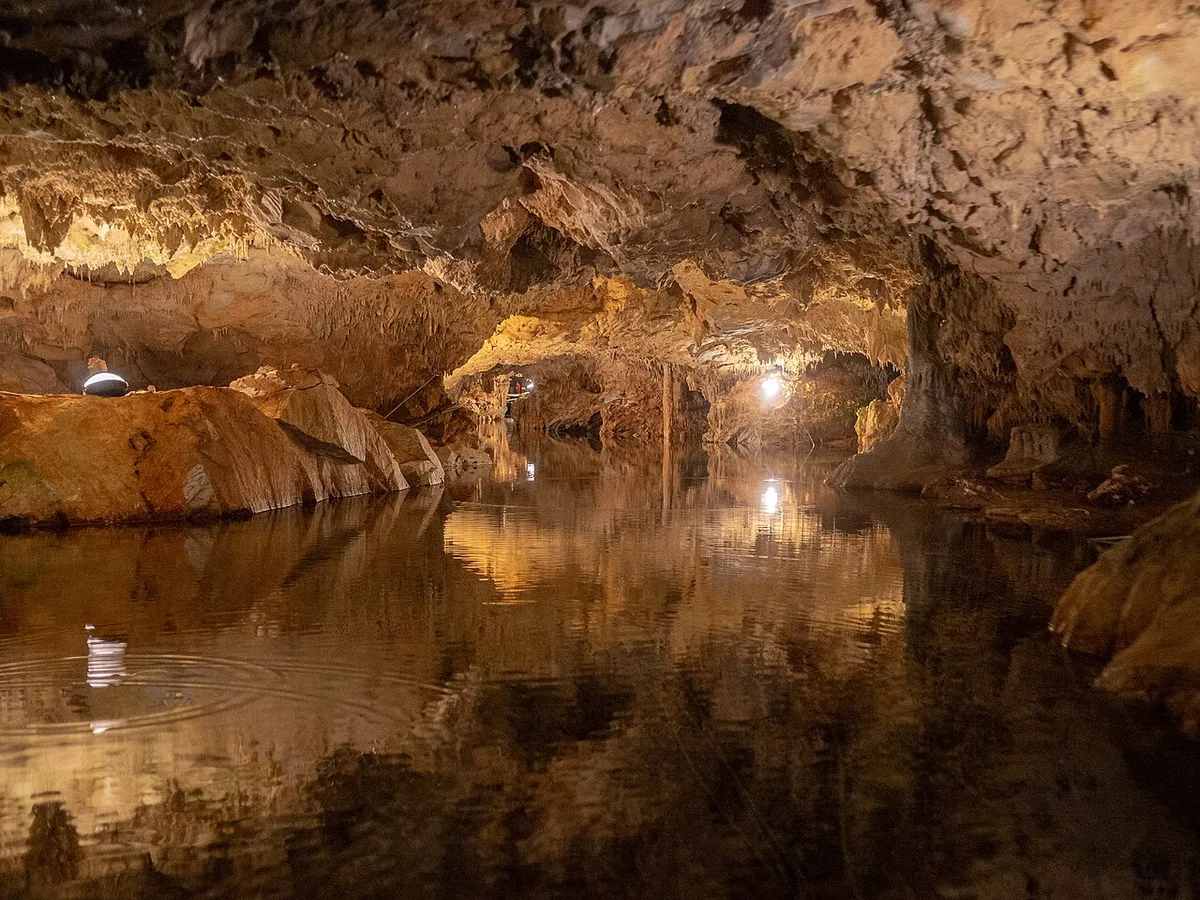
Petralona Cave sits at about 300 m (984 ft) above sea level on the western foot of Mount Katsika. Petralona village is about 1 km (0.62 mi) away. Published figures put the cave about 35 km (22 mi) south-east of Thessaloniki. It is also called the Cave of the Red Stones, and an Anthropological Museum stands beside it.
- Where: western foot of Mount Katsika, Chalkidiki, Greece
- Size: about 10,400 m² (112,000 sq ft) with about 2,000 m (6,562 ft) of corridors
- Interior temperature: about 17 °C (±1), roughly 63 °F year-round
- Discovered: 1959; skull found in 1960
- Best for: families, archaeology fans, and rainy-day or hot-day plans
- Skip if: you have no car and little time
What you'll see: formations and the Petralona Skull story
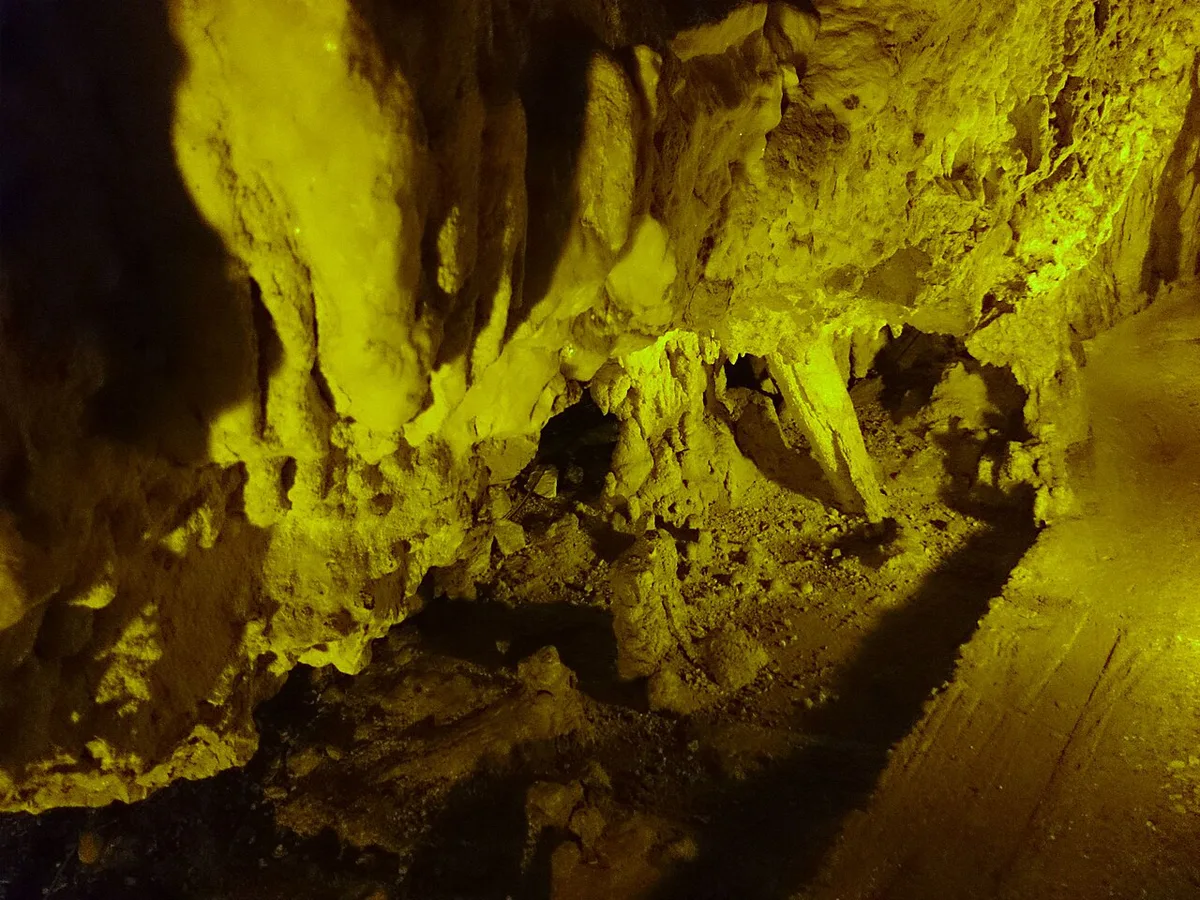
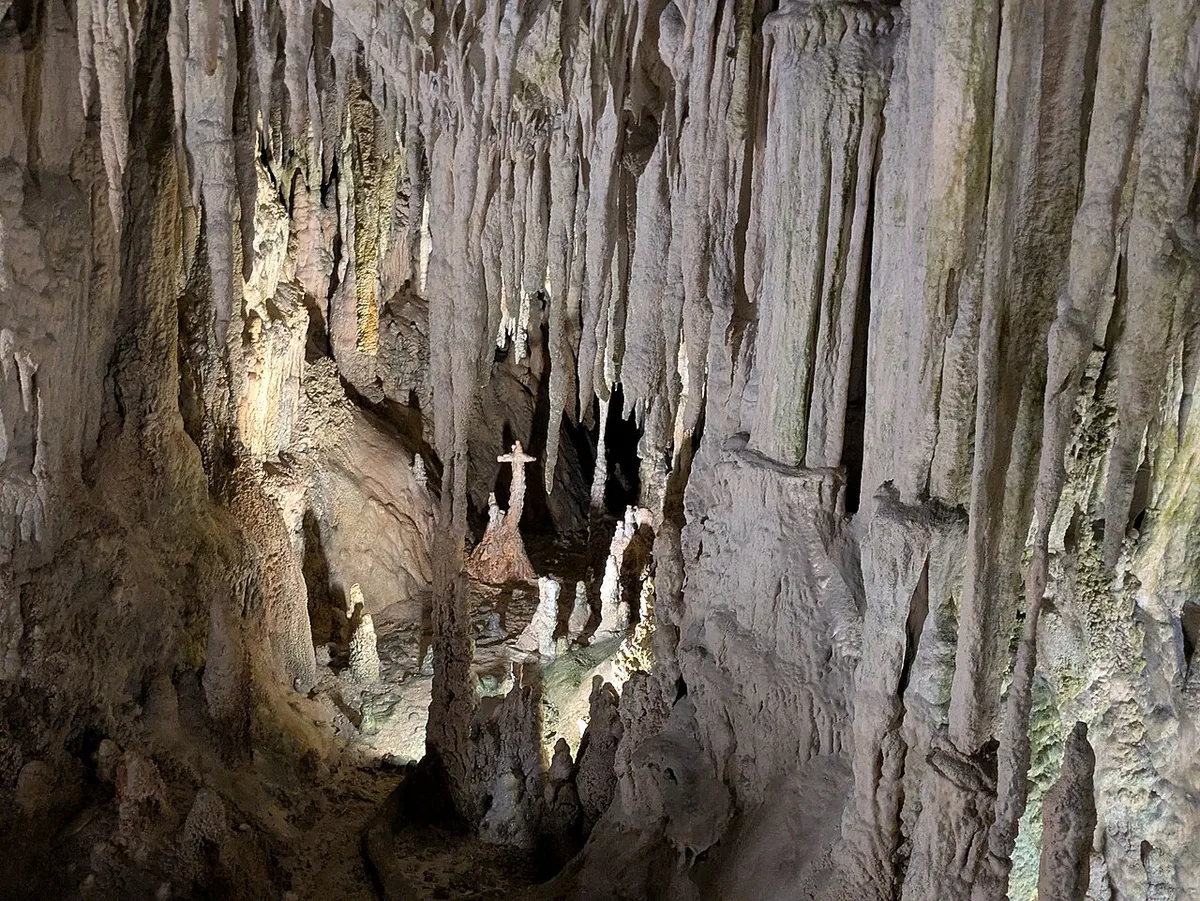
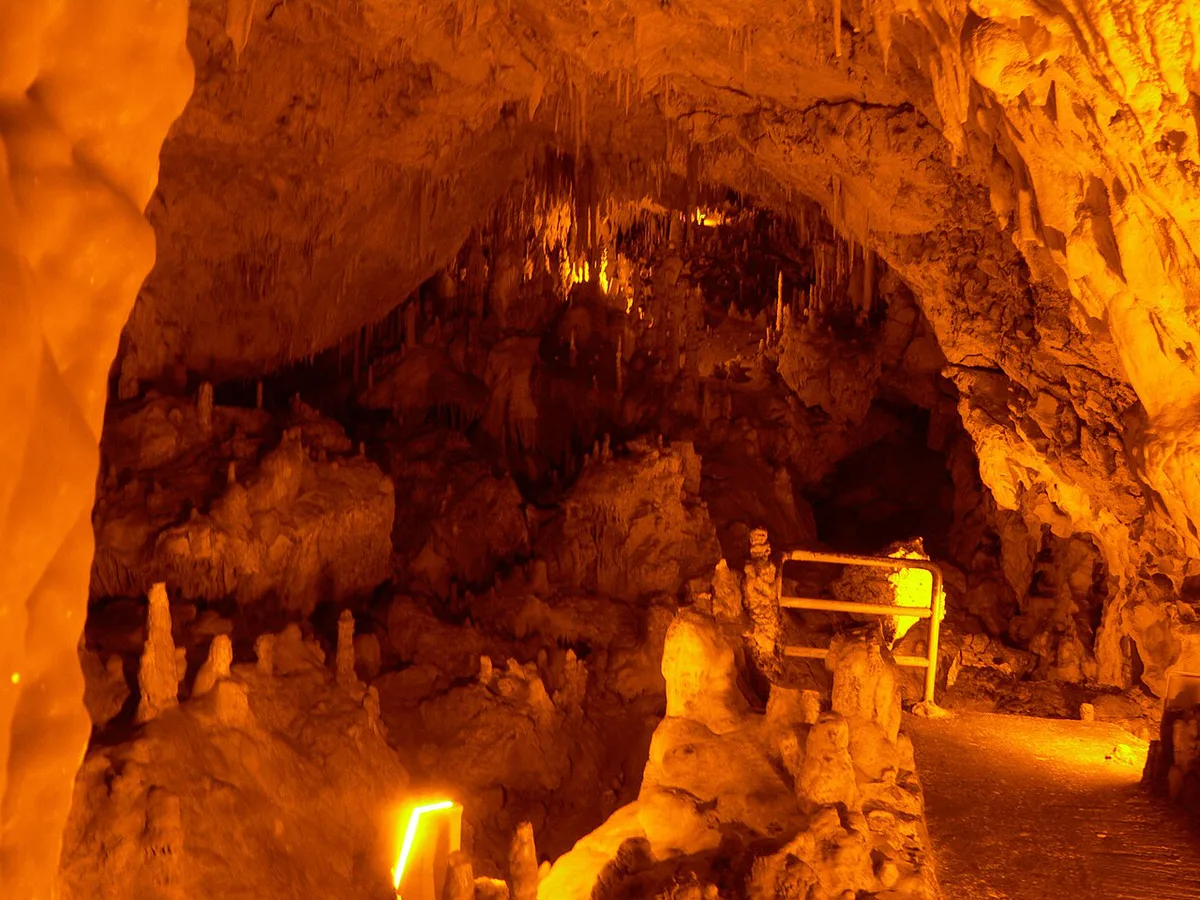
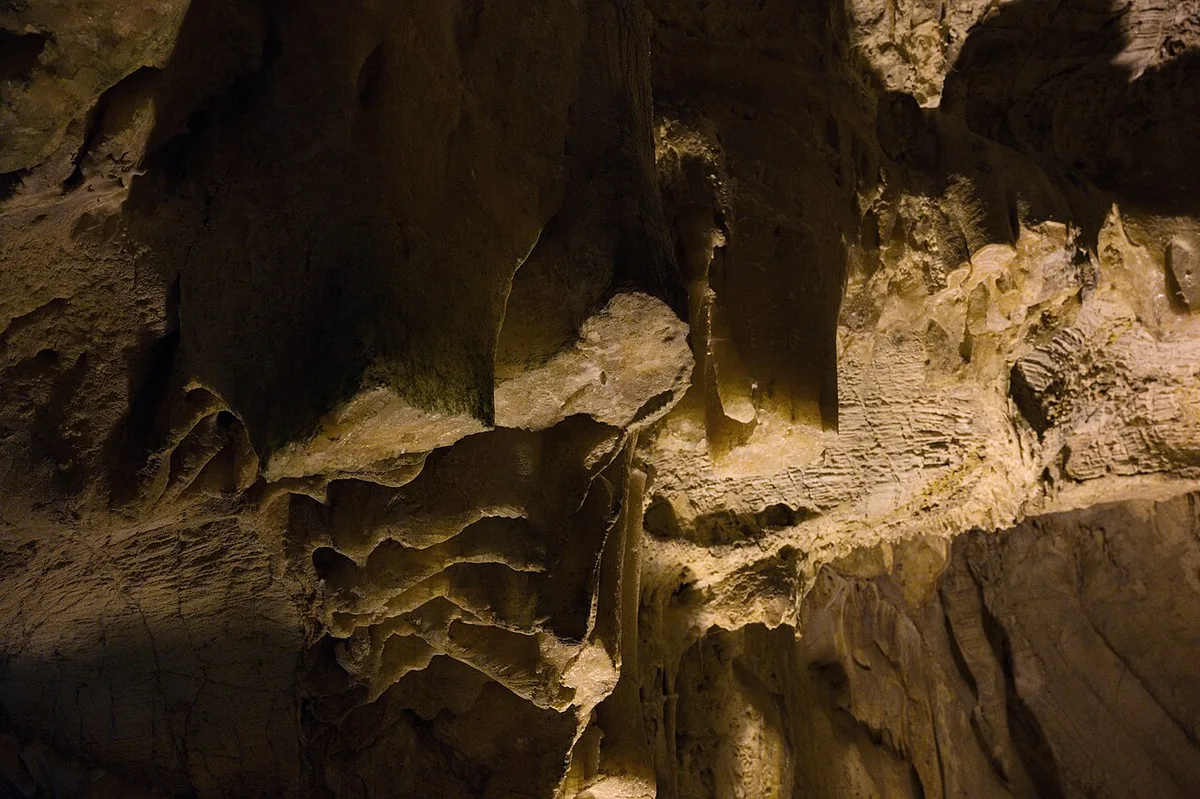
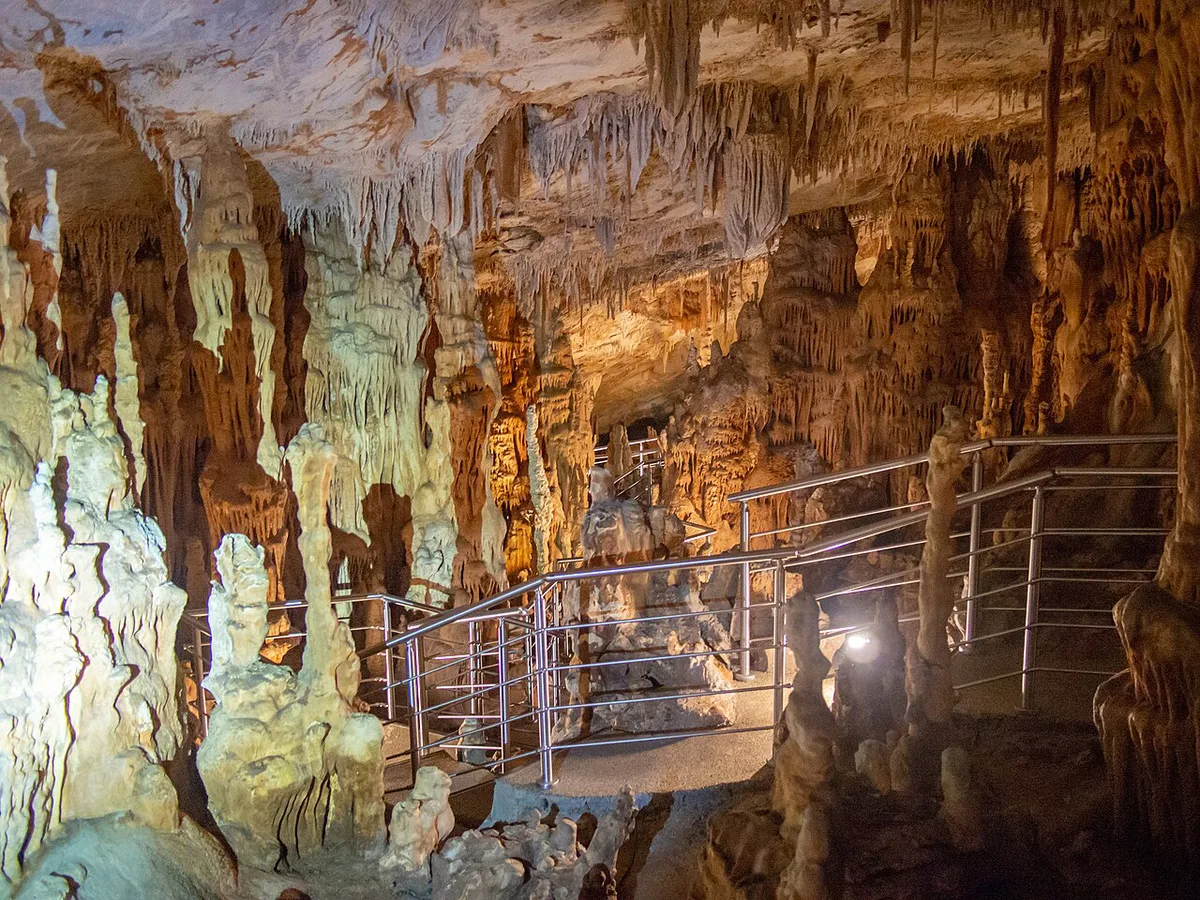
Inside, expect chambers and corridors dressed in stalactites and stalagmites. Descriptions compare the formations to giant cacti, pink pearls, sturdy columns and delicate curtains. Water ponds in places are fed by stalactite material. The cave formed in Jurassic limestone, and its sediments split into several stratigraphic levels. Local accounts say the cave was found by accident in 1959, when someone searching for a spring noticed a cleft in the slope of Mount Katsika. A fossilized skull turned up the following year, stuck to the cave wall about 30 cm (12 in) above the floor.
- Skull age is disputed: the excavation lead estimated about 700,000 years, while other accounts give about 200,000 years.
- Classification is disputed too: independent paleoanthropologists have tended to say Homo erectus, Homo heidelbergensis or Homo neanderthalensis.
- The excavation lead proposed a separate genus name, Archanthropus, which specialists have not widely adopted.
Tickets, opening hours and what to confirm
Ticket prices, opening hours and tour format change by season and are set by the cave's operator. Read the current figures on the official Petralona Cave site before you drive out. Ask whether one ticket covers both the cave and the museum. Check also that the cave is open on your travel day.
- Hours and seasonal changes
- Ticket price and any combined cave and museum ticket
- Guided or self-paced entry, and tour length
- Closure days and weather disruptions
- Stairs, slopes and stroller rules
How to get there from Thessaloniki and around Chalkidiki
Thessaloniki is the usual starting point, about 35 km (22 mi) away by the published figure. Drive time depends on the road you choose, so check a live route map on the day. We could not confirm whether public transport reaches Petralona village. Ask the KTEL Chalkidiki bus operator before you plan around it. From the village, the cave is about 1 km (0.62 mi) east.
At about 35 km (22 mi) from Thessaloniki, a car is the simplest plan, since transit to Petralona village is unconfirmed.
| Option | Effort | Flexibility | Cost level |
|---|---|---|---|
| Rental car | Low once you have the car | High: set your own hours | Mid: fuel and parking |
| Taxi from Thessaloniki | Low | Medium: agree a wait time | Highest per person for solo travelers |
| Organized tour | Lowest | Low: fixed schedule | Varies by operator; ask what is included |
Planning your time and what to bring
Allow a half day if you combine the cave with the Anthropological Museum next door. Inside, the temperature holds near 17 °C (63 °F) all year, so bring a light jacket even in August. Wear shoes with grip, because cave floors are often damp. Photography rules inside are not confirmed, so ask at the ticket desk before you raise a camera. Ask the same desk about stairs and strollers if anyone in your group has limited mobility.
- Light jacket for the constant cool interior
- Closed shoes with good grip
- Water for the drive and the village
- Time for the museum, which shows a selection of objects found in the cave
Sample half-day plan from Thessaloniki by car
Petralona works best as a single, unhurried block rather than a stop squeezed between other sights. The route below assumes a rental car and the published distance of about 35 km (22 mi) from Thessaloniki. The timings are planning estimates, not official figures, so adjust them to the opening hours you confirm.
- Before you leave: check the day's hours and tour format on the official Petralona Cave site, and ask whether one ticket covers both the cave and the Anthropological Museum.
- Morning departure: check a live route map on the day. Drive time depends on the road you choose, and arriving early leaves slack if the cave runs timed entries.
- Cave visit: allow roughly an hour for the corridors and chambers. The interior stays near 17 °C (63 °F), so put the jacket on before you go in, not after you start to feel cold.
- Museum next door: give it another 30 to 45 minutes. This is where to ask what is actually on display from the skull story, since a replica may stand in for the original.
- Late lunch: Petralona village is only about 1 km (0.62 mi) from the cave, so it is the natural place to eat before the drive back.
Why not add more stops
The visit already fills a half day once you include the museum. If you want a longer Chalkidiki day, treat the cave as the fixed morning anchor and pick one coastal stop afterwards, rather than trying to chain several sights on the same drive.
Tip: save the cave's official contact details before you set off. Hours and closure days change by season, and a wasted 35 km drive is the most common way this trip goes wrong.
Is it worth it? Who should go and who should skip
Go if you want fossil history alongside formations, or a cool indoor plan on a hot or wet Chalkidiki day. Skip it if you have no car, no tour and only a few hours. Skip it too if you expect a boat ride through a large cave system, as at Diros. Do not expect to see the skull in place. Ask the museum what is on display, because a replica may stand in for the original.
Expect debate on the skull's age: estimates range from about 700,000 years to about 200,000 years, so treat any date as contested.
- Go: families, archaeology fans, Thessaloniki and Chalkidiki bases
- Skip: travelers without transport, or anyone short on time
- Mistakes to avoid: relying on hotel-page hours, under-dressing, skipping the museum
Other caves in Greece
Petralona is one of several show caves across the country. For a boat-based visit in the Peloponnese, start with Diros Caves Guide: What to Expect and How to Visit. Near Athens, Perama Cave Ioannina: How to Visit & What to Expect is another option. Crete has its own cluster, covered in our guide to Cretan caves. Northern travelers can also look at Alistrati Cave, Greece: Getting There and Visit Tips as a possible pairing.
For trip-planning details, see Visit Greece.
Notes for your next trip underground
Optional updates when we add or revise cave and underground guides.
More guides
More guides you'll find useful