Melidoni Cave, Crete: History, Getting There and Visit Plan
Melidoni Cave near Rethymno, Crete: the 1824 story, what you'll see inside, how to get there, a 30–45 minute visit plan and nearby stops for a half day.
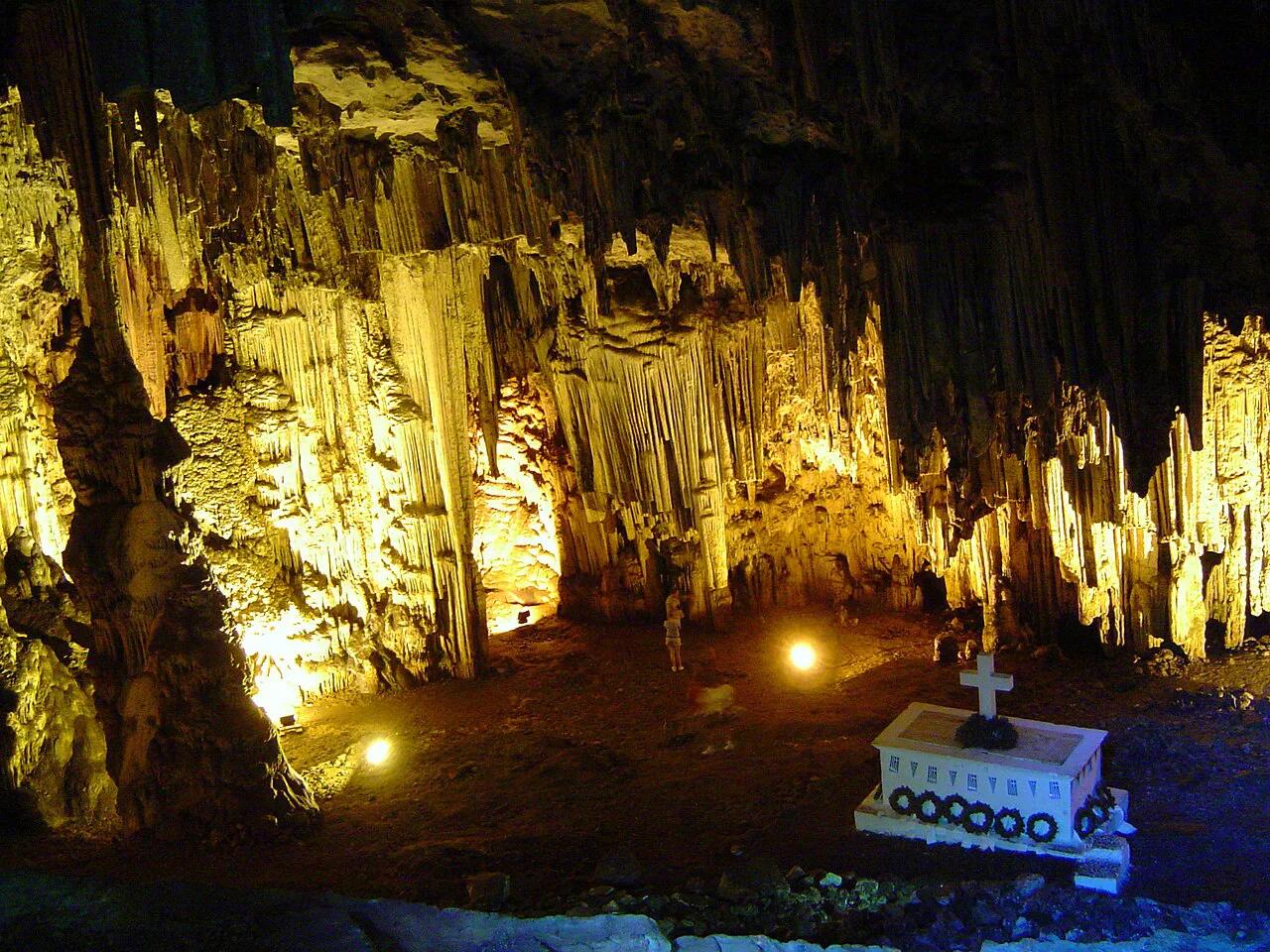
Last updated November 2026: Melidoni Cave, also called Gerontospilios, lies about 1.8 km north-west of Melidoni village in Mylopotamos, Rethymno, Crete. Melidoni village is 23.2 km east of Rethymno and 37.2 km west of Heraklion, and most visits take 30–45 minutes inside. It suits history and remembrance far more than big formations, because the cave holds an ossuary for villagers who died here in 1824.
Featured image: Steffen 962 at de.wikipedia, Public domain, via Wikimedia Commons.
Is Melidoni Cave worth visiting?
Yes, if you want history and a place of remembrance. Formations are modest, and the cave runs only 53 m in length, so compare it with larger show caves before you give it a full day. Allow 30–45 minutes inside, which fits easily into a half-day with nearby stops.
| Traveler | Verdict |
|---|---|
| History buffs | Strong fit: the 1824 story and the ossuary in the main hall are the reason to come |
| Families | Depends on the children's ages: steps, damp surfaces and a sombre story |
| Photographers | Chambers such as the Pashley Room and Chamber of Curtains offer subjects, but expect low light |
| Mobility-limited visitors | Difficult: the descent has steps and can be damp |
| Short on time | Works well: 30–45 minutes inside, plus the drive from Rethymno or Heraklion |
The 1824 story, told briefly
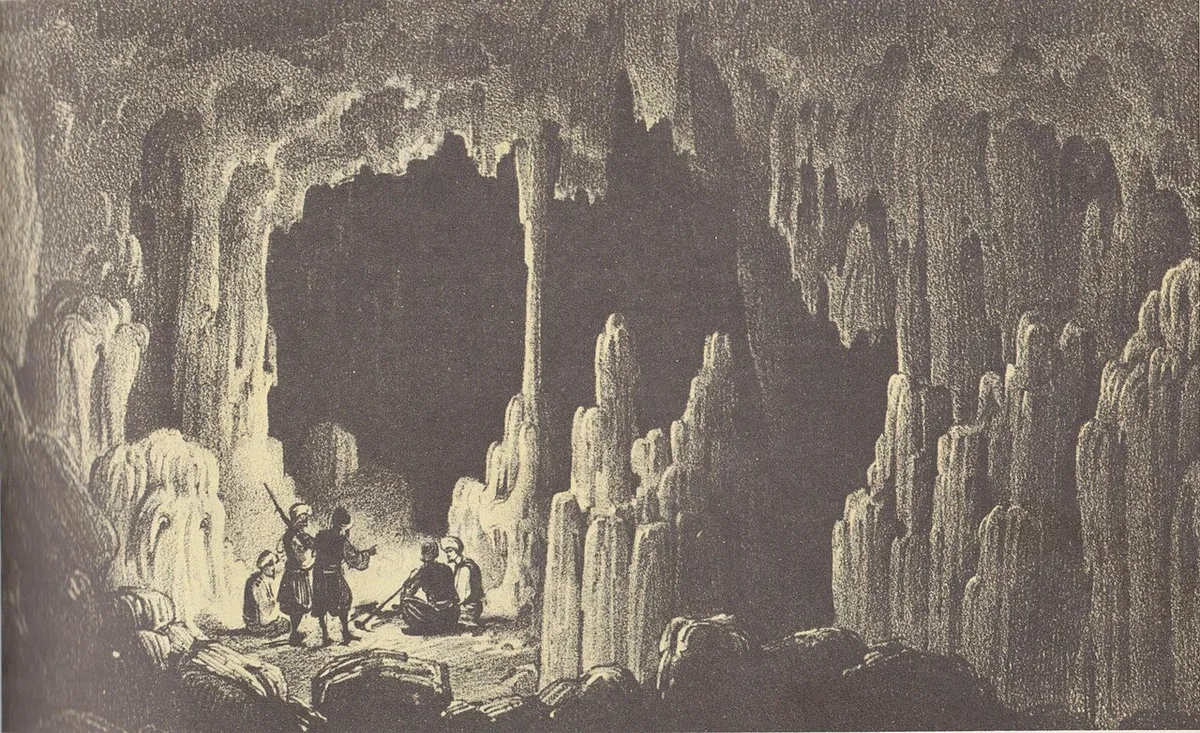
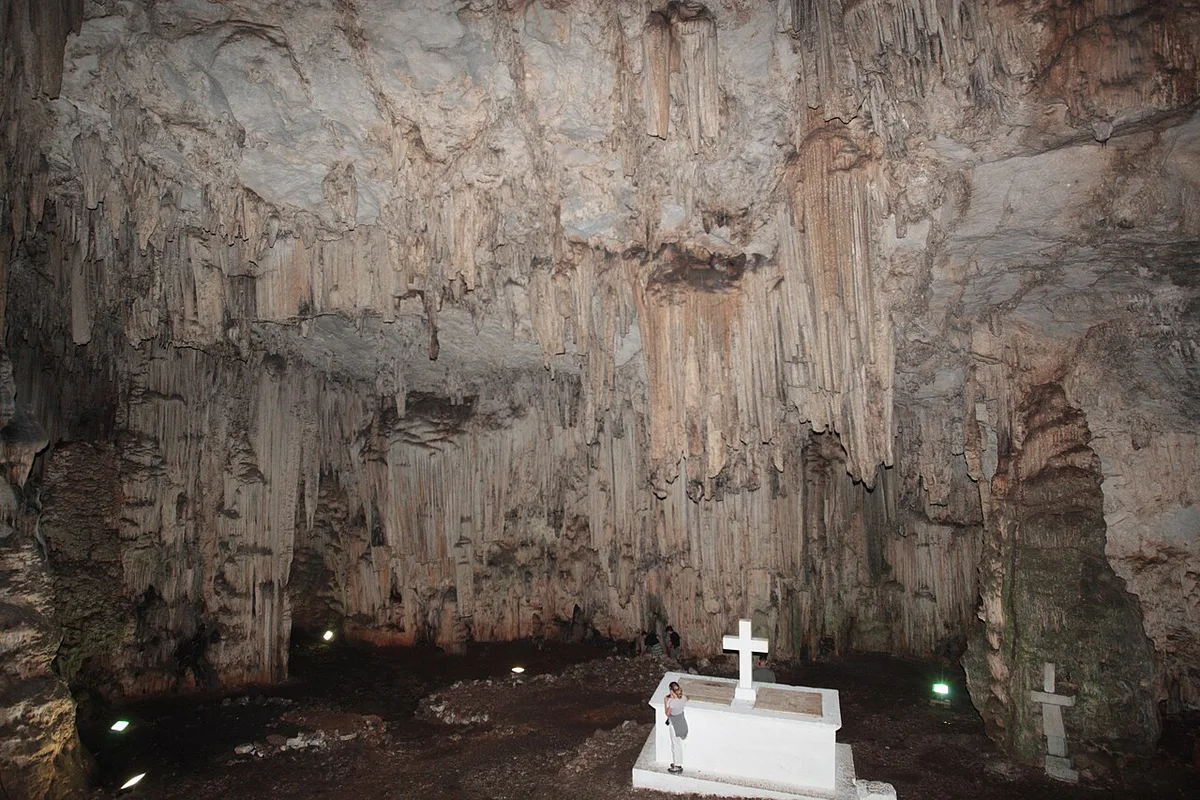
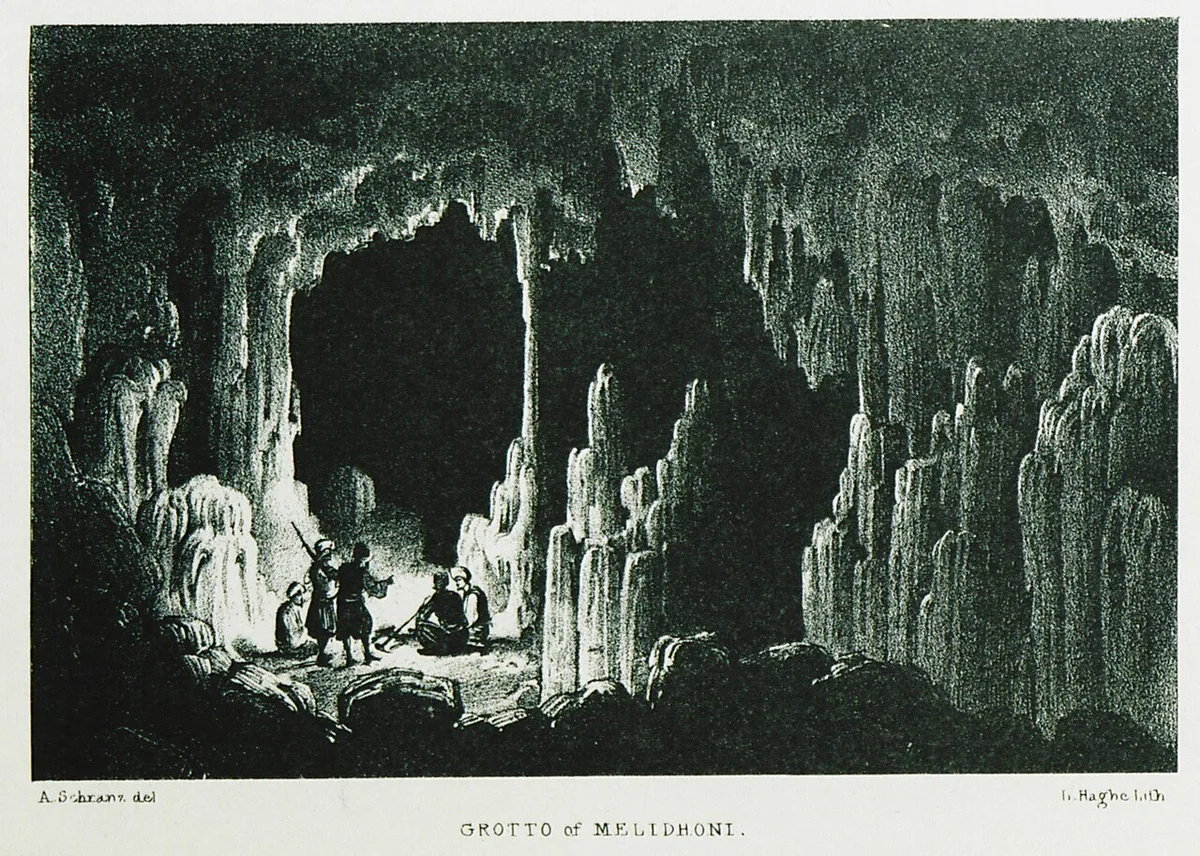
In October 1823, villagers from Melidoni took refuge in the cave to escape Ottoman troops stationed in their village for the winter. Accounts give 340 or about 370 women and children plus 30 men, and some round the total to about 400. Hussein Bey surrounded the cave and demanded surrender. The villagers refused, and several Ottoman attempts to take the cave failed. By January 1824 he had the entrance blocked with branches and other flammable material, then set alight. Everyone inside died from smoke. An ossuary in the central hall now holds their bones. Treat the cave as a grave and a memorial: speak quietly and photograph with restraint.
What you'll see inside Melidoni Cave
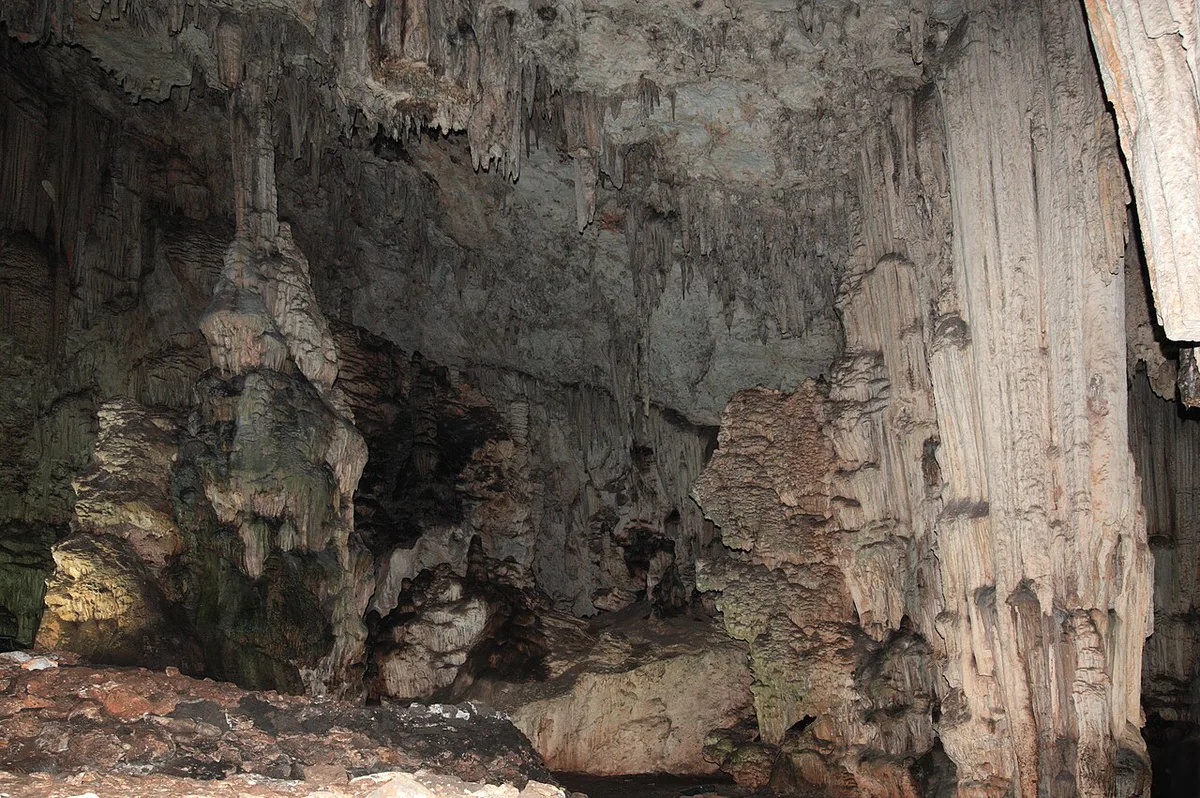
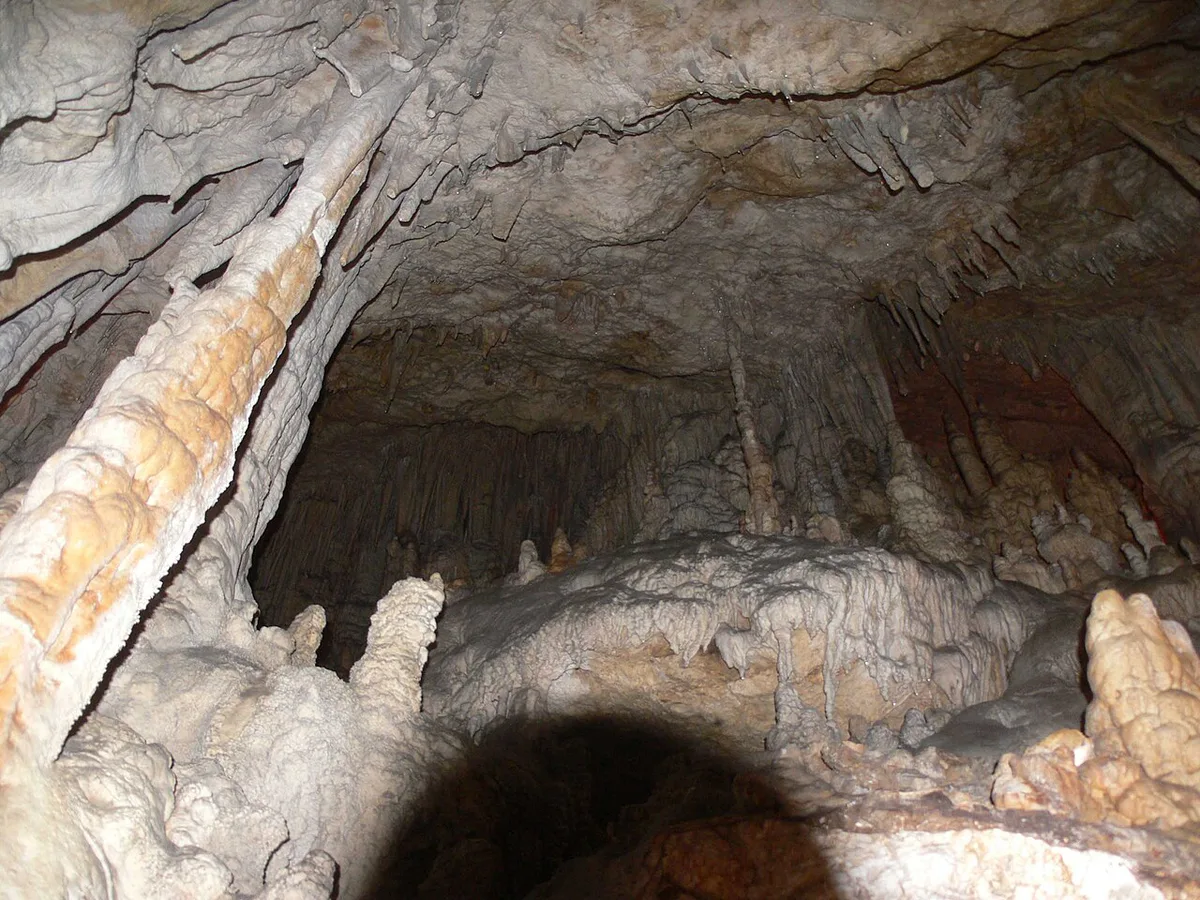
Past the arched entrance you descend into a large hall and then through a sequence of named chambers. Archaeological finds show people used the cave from the Late Neolithic to the Late Roman period, with Neolithic tools found in 1928. It became a place of worship in the Middle Minoan period, from 2100 to 1600 BC, and a copper axe found in 1940 supports that. Local tradition links the cult to Talos, the bronze giant of myth, so treat that as legend. Some finds are held in the Rethymno Archaeological Museum.
- Arched entrance, leading to the first chamber, the Room of Heroes with the Mnemion monument.
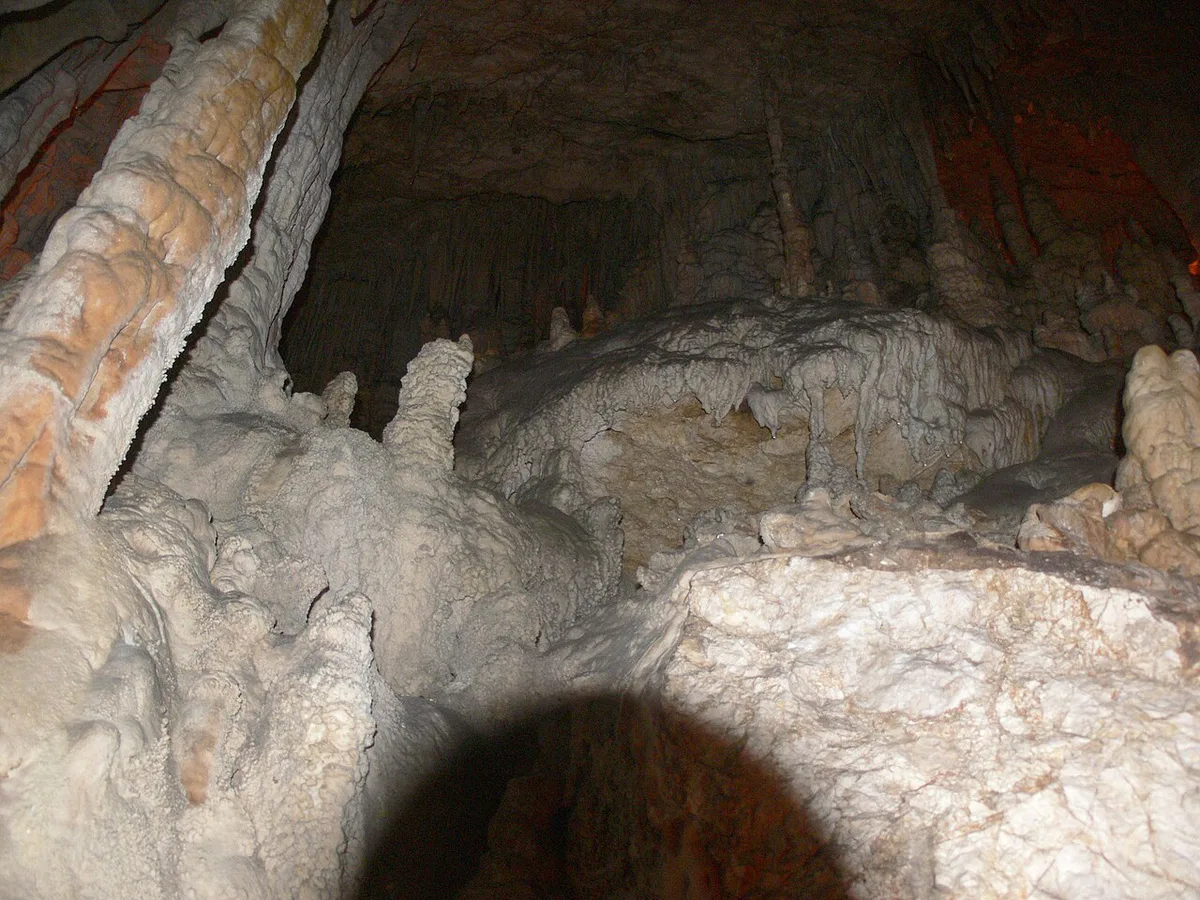
- Stavrodromi, the crossroad, then the right-hand chamber to the Pashley Room with its stalactites and stalagmites.
- Room of the rocks, then a narrow path to the Chamber of Katavothra.
- A right turn to the Iperoon, the gallery.
- Back at Stavrodromi, the left side leads to the Chamber of Curtains, adorned with stalactites and stalagmites.
Getting to Melidoni Cave
Melidoni sits inland from the national road linking Heraklion and Rethymno. Rethymno is 23.2 km west of the village and Heraklion is 37.2 km east. Heraklion airport lies 40.4 km east. Local guides quote about 25 km from Rethymno to the cave, which fits 23.2 km to the village plus the last 1.8 km. A car makes a real difference here, because the nearby beaches, tavernas and villages sit 2.5 km to 6 km out. Bus and taxi options are not documented for this stop, so ask your hotel in Rethymno or Heraklion before you rely on them. For wider regional planning, see Visit Crete's regional guide.
Hours, tickets and what to bring
Opening days, winter and summer hours, and ticket prices are not published in sources we could confirm, so no figure is given here. Ask the Ephorate of Antiquities of Rethymno or the Rethymno tourism office for current times before you drive out.
- Shoes with real grip, because the descent has steps and can be damp.
- A light layer for the cool interior.
- Time for 30–45 minutes inside, plus a slow pace on wet steps.
- A respectful approach to the ossuary in the main hall.
Half-day plans around Melidoni Cave
Three routes work well, all driven from Melidoni village. Arkadi Monastery is a separate site tied to the 1866 events, so keep it apart from the 1824 story told here. Distances below are measured from the village.
| Route | Stops | Distance from village | Best for |
|---|---|---|---|
| Cave only | Melidoni Cave, 30–45 minutes inside | About 1.8 km | Short on time |
| Cave plus honey and stalactites | Apithano honey museum, Perama Stalactite Center, lunch at Thraka | 1.2 km, 2.2 km and 3 km | Easy morning with a car |
| Cave plus pottery village | Margarites domed tomb, then Margarites village | 4.3 km and 6.2 km | Archaeology and crafts |
| Cave plus monastery | Attali Monastery at Bali, or Arkadi Monastery | 4.1 km, or 12 km for Arkadi | History-focused day |
After the cave: beaches and food
Melidoni has no beach of its own. Agios Nikolaos at Bali is nearest at 4.9 km, while Bali's four sandy coves lie 5.7 km away and Panormo's beaches 6.3 km. Eating places are small tavernas rather than a seafront strip. Melidoni works as a base only if you have a car.
- Kampos Taverna, 2.5 km from the village.
- Taverna Veronica, 2.8 km from the village.
- Thraka, a grill house at Perama, 3 km out.
Melidoni Cave versus other caves in Greece
Melidoni's draw is memory, not scale. For another island option, Crete's Sfendoni Cave is worth a look. Travelers who want a coastal contrast can read about the caves at Matala. For a larger mainland system, the larger Diros show caves suit formation hunters. Petralona Cave on the mainland suits visitors who care about prehistory. Our overview of Crete's other caves lays out the island options. For the full national picture, browse caves across Greece.
Mistakes to avoid at Melidoni Cave
A few assumptions cause most disappointments here.
- Expecting a seaside resort: Melidoni has no beach, and the nearest is 4.9 km away.
- Arriving without checking opening times, which vary by season.
- Wearing sandals on damp steps.
- Expecting a Diros-scale cave when this one runs 53 m.
- Treating a mass grave as a spectacle instead of a memorial.
Choosing Between Melidoni Cave and Perama Stalactite Center
Melidoni Cave and Perama Stalactite Center make an easy same-morning pairing, but they offer different reasons to stop. Perama is only 2.2 km from Melidoni village, so a car can connect both without turning the visit into a long detour. Melidoni is the stronger choice for visitors interested in the 1824 memorial and the cave’s earlier history.
Choose Melidoni if you have limited time. The underground route is only 53 m long, and most people spend 30–45 minutes inside. Its modest formations are secondary to the ossuary and the named chambers. Add Perama Stalactite Center if you want another nearby cave-related stop before lunch. Do not confuse it with the Perama Cave near Ioannina on mainland Greece; this is a separate attraction in Crete.
Check access and opening arrangements for each place separately before leaving. Melidoni’s damp stepped descent also means it may not suit every visitor, even on a short itinerary.
Notes for your next trip underground
Optional updates when we add or revise cave and underground guides.
More guides
More guides you'll find useful