Stalactites vs Stalagmites: How to Tell Them Apart
Stalactites hang from the cave ceiling and stalagmites rise from the floor. Learn how to tell them apart and spot them in Europe's show caves.
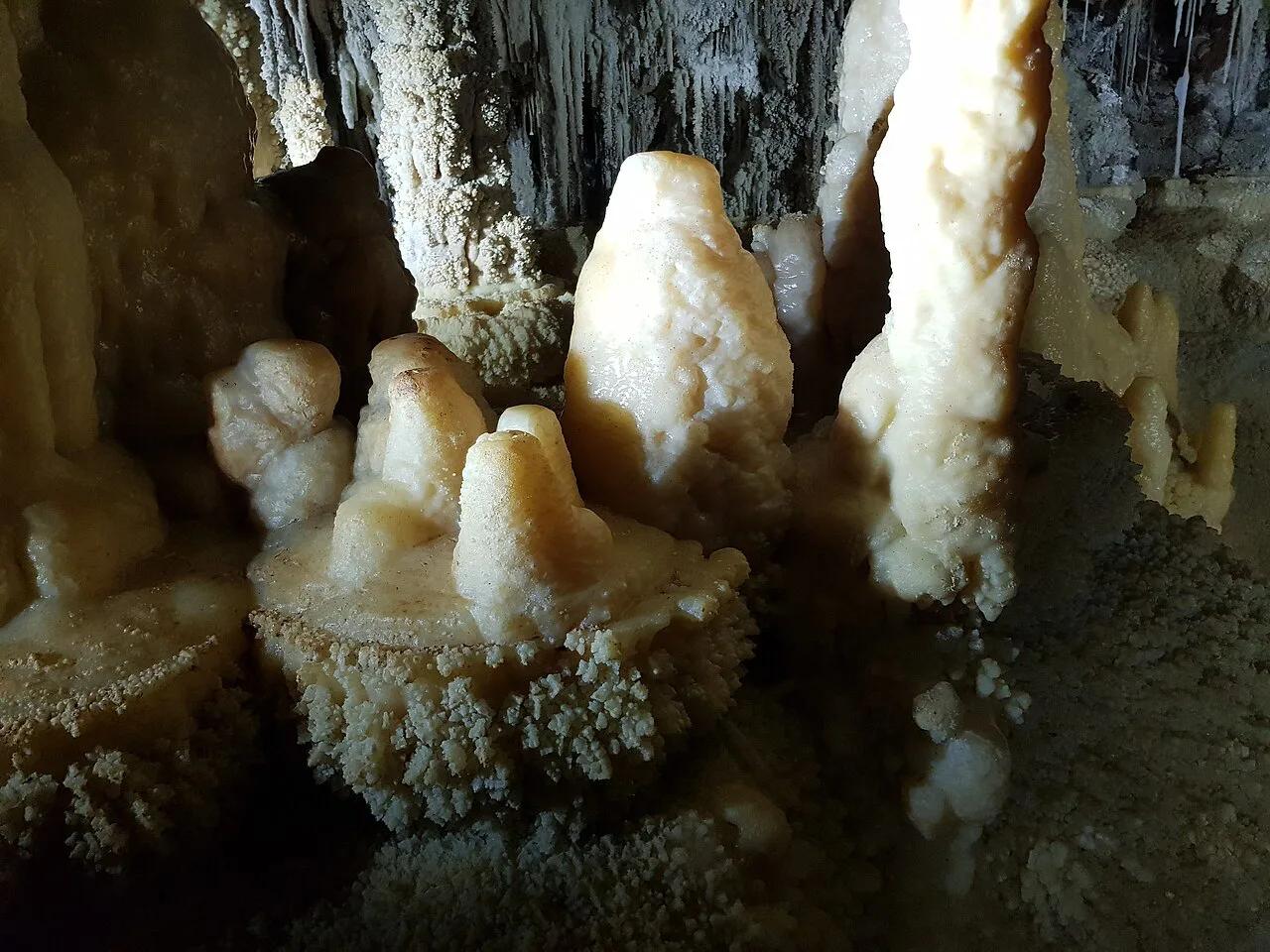
Last updated November 2026. Stalactites vs stalagmites comes down to direction: stalactites hang from the cave ceiling, and stalagmites rise from the floor. When the two meet, they form a column. Use this guide to remember which is which and to recognize each one on a visit to a European cave from our 8 Best Caves in Europe: Show, Painted and Lake Caves guide.
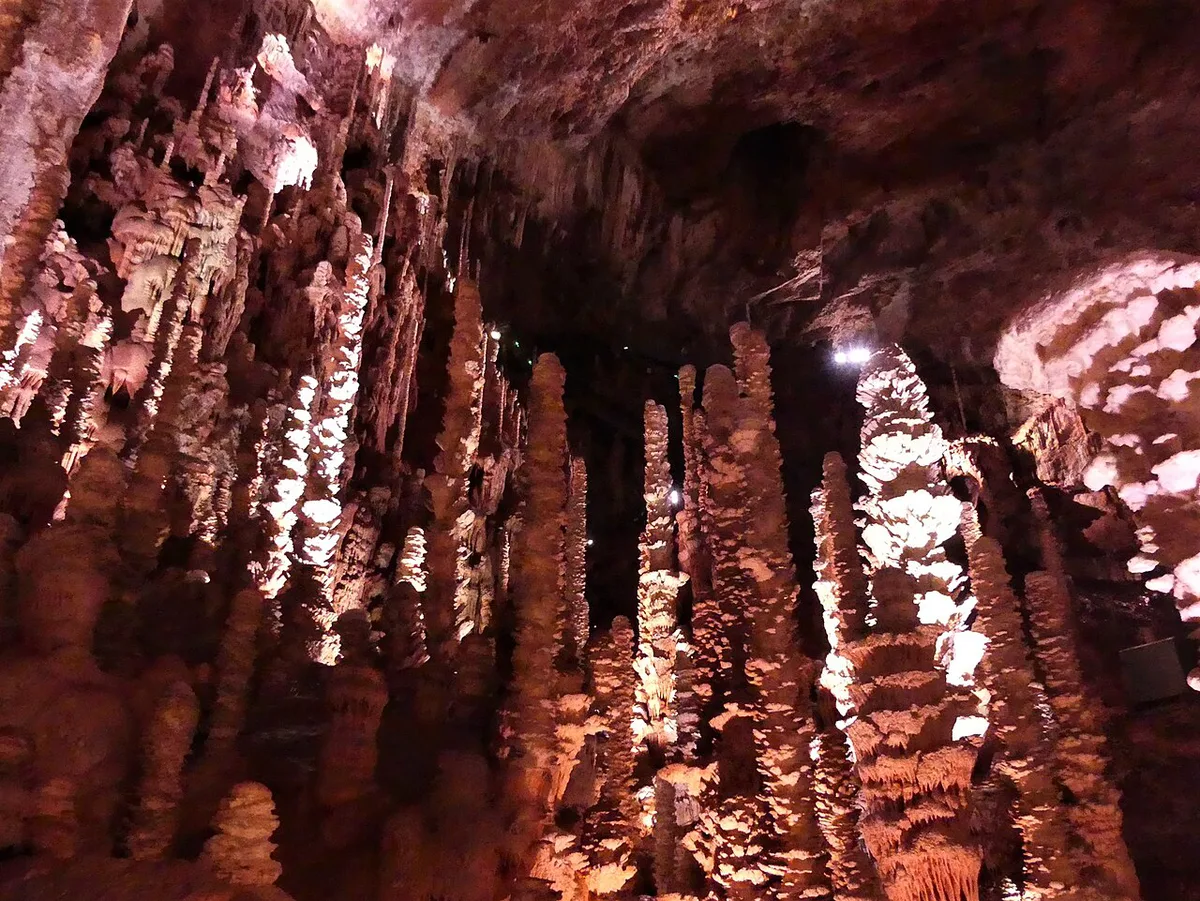
Featured image: Esculapio, CC BY 3.0, via Wikimedia Commons.
Quick Answer: Which Is Which
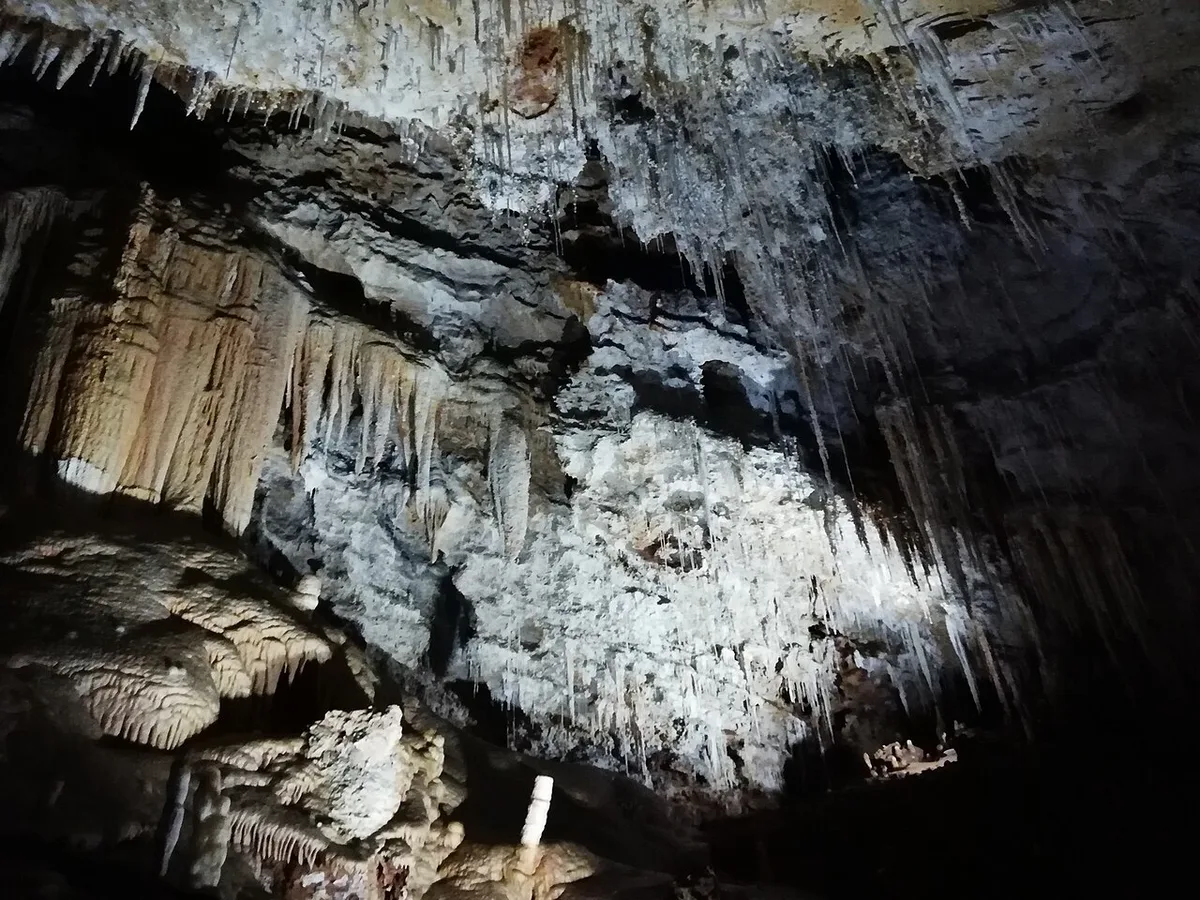
Stalactites grow down from the ceiling. Stalagmites grow up from the ground. Both are dripstone, a type of speleothem, which is the general word for a cave mineral formation.
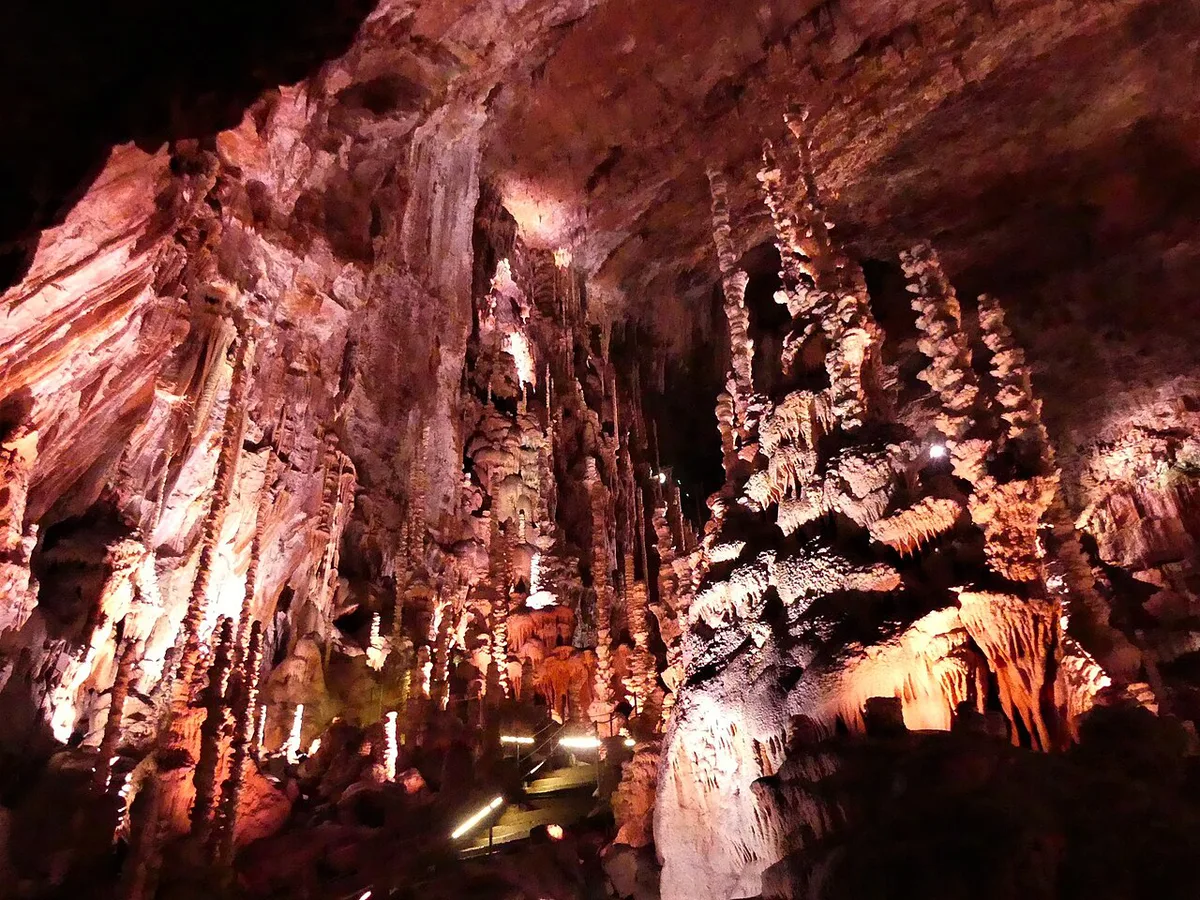
Two memory aids help. The first is "c for ceiling, g for ground": stalactite has a c, and stalagmite has a g. The second is "tites tie on, mites march up": stalactites cling to the roof, while stalagmites climb from the floor. Children tend to remember the second one faster.
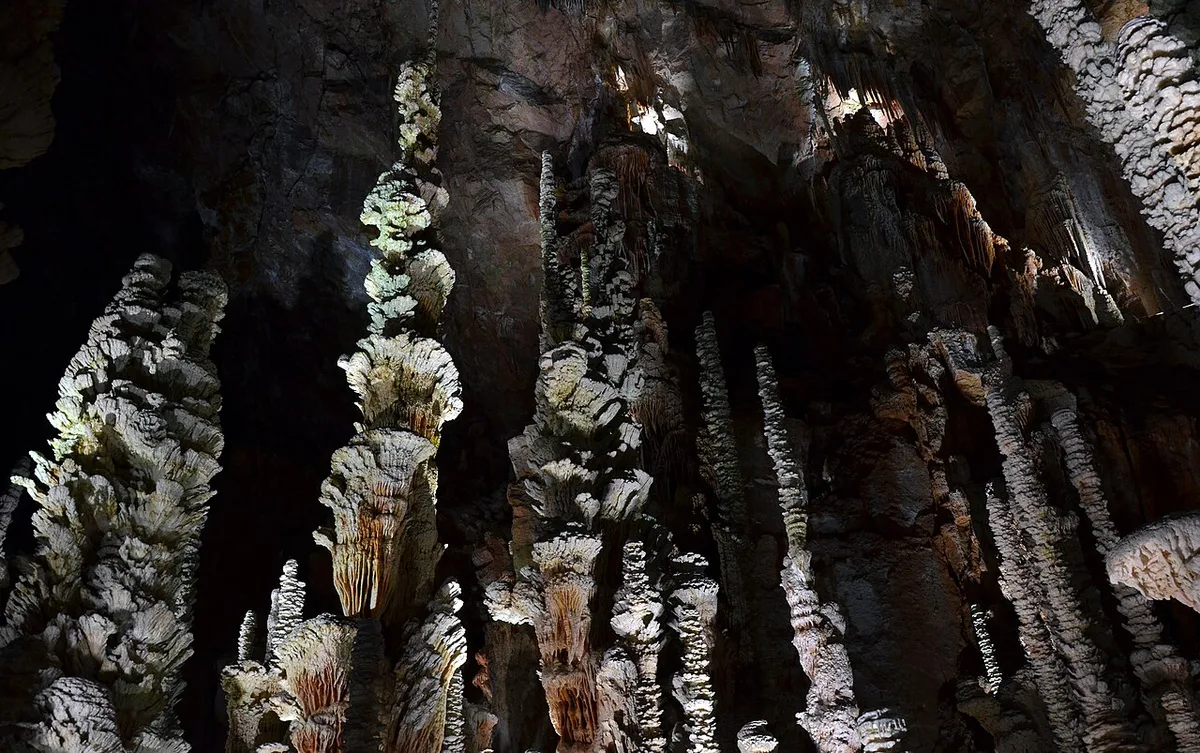
Stalactites vs Stalagmites at a Glance
This table sets the two formations side by side. Columns are included because they are the most common source of confusion.
| Feature | Stalactite | Stalagmite | Column |
|---|---|---|---|
| Position | Hangs from the ceiling | Rises from the floor | Joins ceiling and floor |
| Growth direction | Downward from the drip point | Upward where drops land | Thickens over time |
| Typical shape | Pointed or tapering, like an icicle | Broader, blunter, often rounded at the top | Pillar with a waist or two ends |
| How to spot it | Look for the attachment to the roof | Look for the base on the floor | Check for contact at both ends |
| Touch rules | Do not touch | Do not touch | Do not touch |
How Each One Forms
Rain soaks through soil and limestone and picks up dissolved minerals. When a drop reaches a cave, it loses some carbon dioxide and leaves a trace of calcite behind. Over a very long time, those traces build a formation.
A stalactite starts at the drip point on the ceiling. Its earliest stage is a thin hollow tube called a soda straw. Water runs through the tube and deposits calcite at the tip, so the formation lengthens downward.
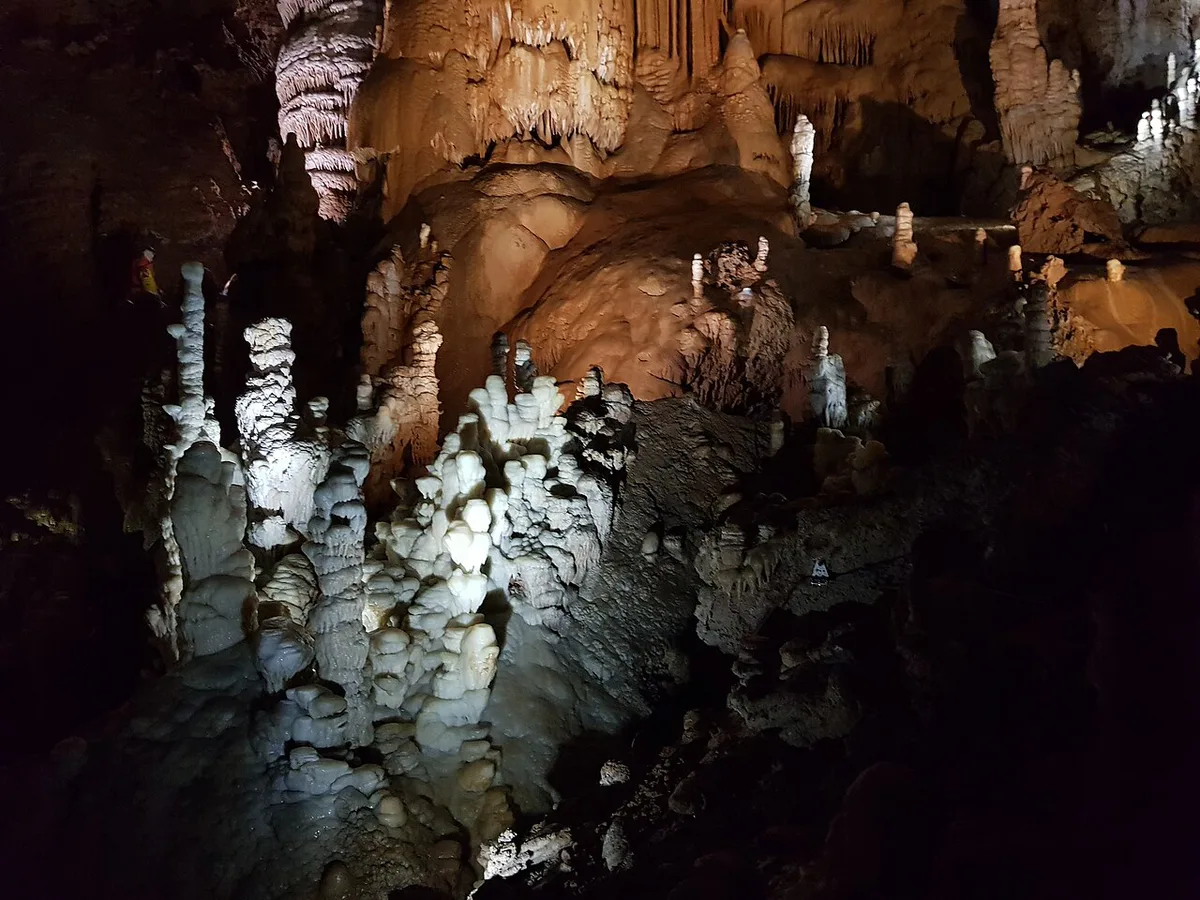
Drops that fall to the floor deposit minerals where they land. That builds a stalagmite upward. If a stalactite and a stalagmite grow toward each other and fuse, they become a column. Growth is slow and varies by cave, so treat any single rate you read online with caution.
How to Tell Them Apart in a Real Cave
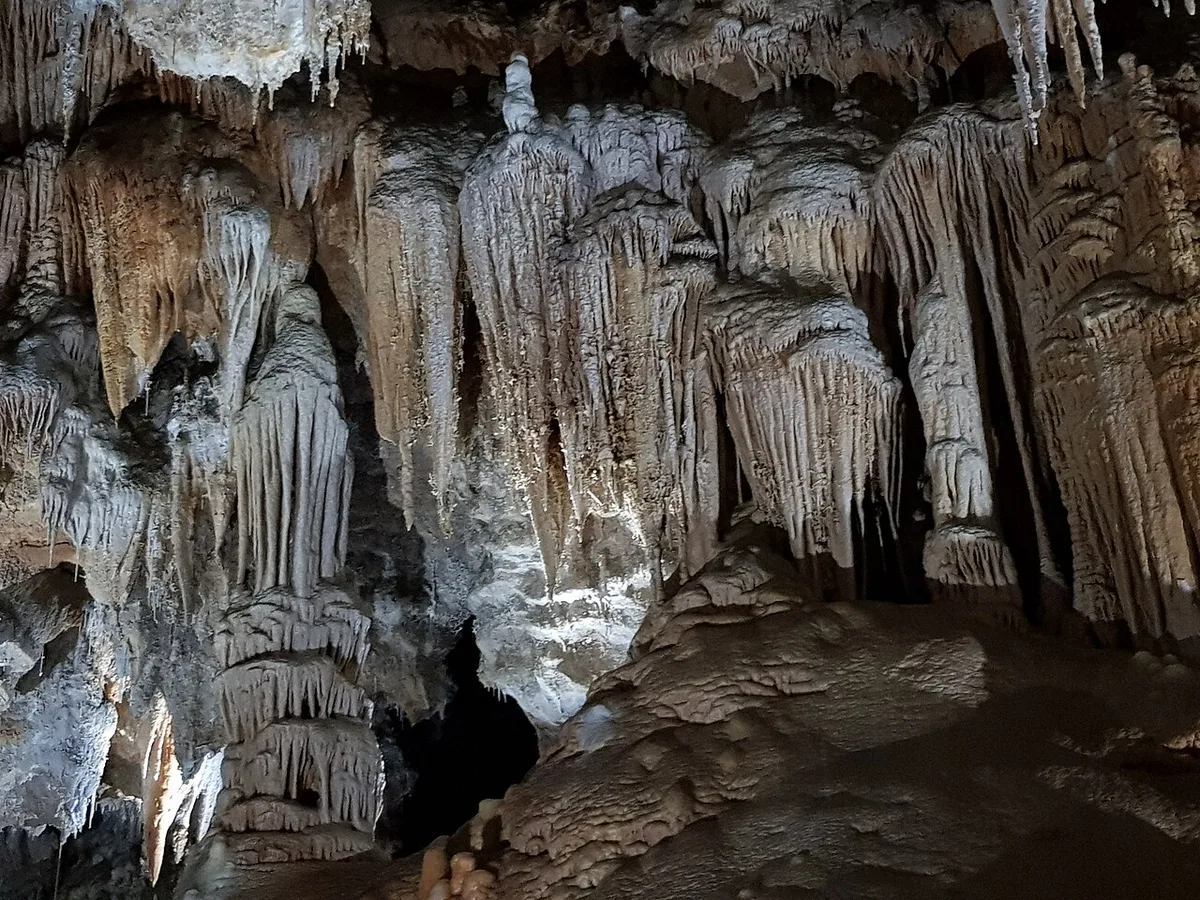
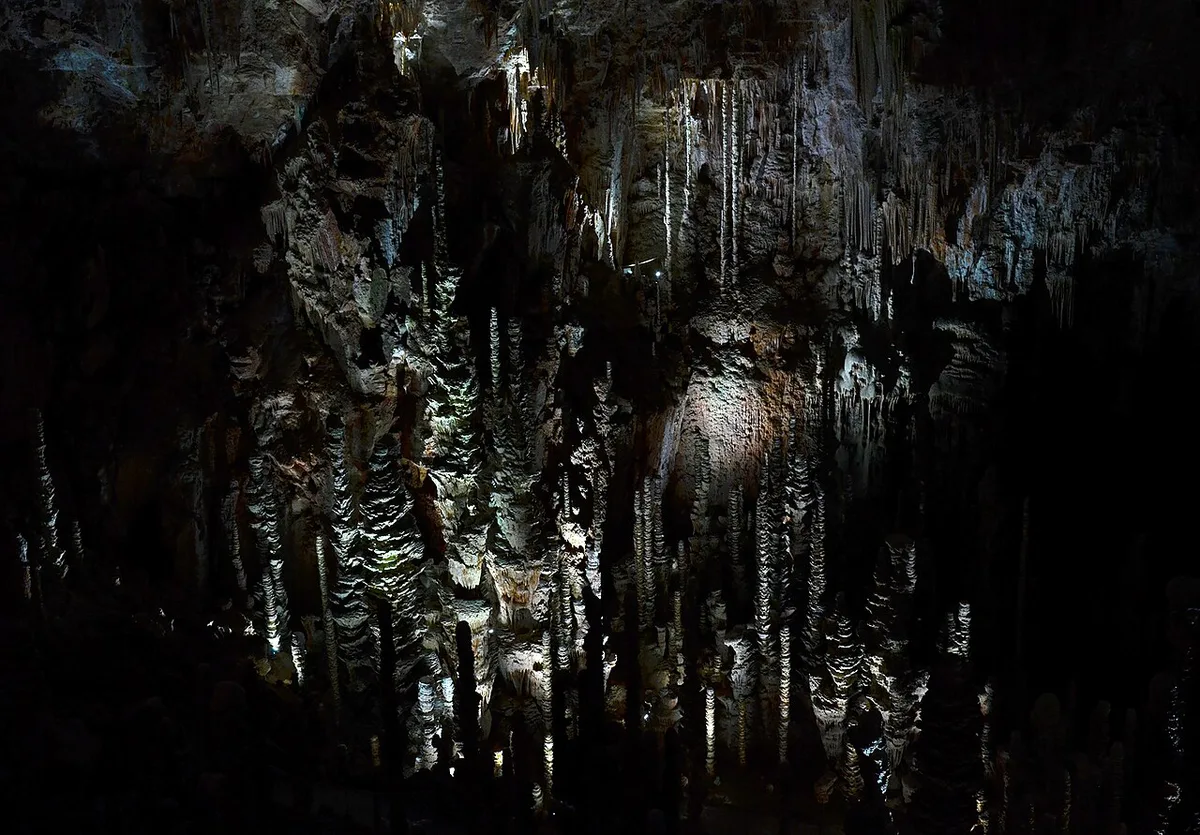
Cave lighting is often coloured and dim, so shape alone can mislead you. Start with the attachment point. If a formation is fixed to the roof, it is a stalactite. If its base sits on the floor, it is a stalagmite.
Next, look at the shape. Stalactites usually taper to a point, while stalagmites tend to be broader and blunter. Pointed does not always mean stalactite, because some stalagmites narrow at the top.
If a formation touches both ceiling and floor, you are looking at a column. Guides in many European show caves point out formations as the tour moves along. Ask them to name what you see.
Other Dripstone Formations Often Mistaken for Them
Stalactites, stalagmites and columns are only part of what lines a show cave. Several other formations are made of the same calcite, and they are easy to confuse with the classic trio when the lighting is dim. Knowing them helps you name what you see on a tour.
| Formation | What it looks like | How it differs from a stalactite or stalagmite |
|---|---|---|
| Soda straw | Thin, hollow tube hanging from the ceiling | The earliest stage of a stalactite. Water runs through the centre instead of down the outside. |
| Flowstone | Smooth, rippled sheets on walls or floors, like frozen waterfalls | Made by water flowing across a surface, not by single drops falling from one point. |
| Drapery (curtain) | Wavy, translucent sheets hanging from a sloping ceiling | Forms when water trickles along an angled roof. Often banded and thin enough to glow when lit from behind. |
| Helictite | Twisting, curling spikes that grow sideways or even upward | Does not follow gravity the way a stalactite does, so direction is no clue to what it is. |
| Cave popcorn | Small, knobby nodules on walls and ledges | Rounded clusters with no pointed tip and no obvious drip point. |
Quick checks in the dark
- Is it hollow at the tip? A very thin tube is a soda straw, not a mature stalactite.
- Is it a sheet rather than a cone? Flat, wavy or banded formations are flowstone or draperies.
- Does it point in an odd direction? Twisting forms that ignore up and down are helictites.
All of these are fragile, and the same rule applies to each: look, do not touch. Guides on show cave tours will usually point out the rarer forms, especially helictites and draperies, so it is worth asking what a puzzling formation is before guessing.
Seeing Them in European Caves: What to Expect
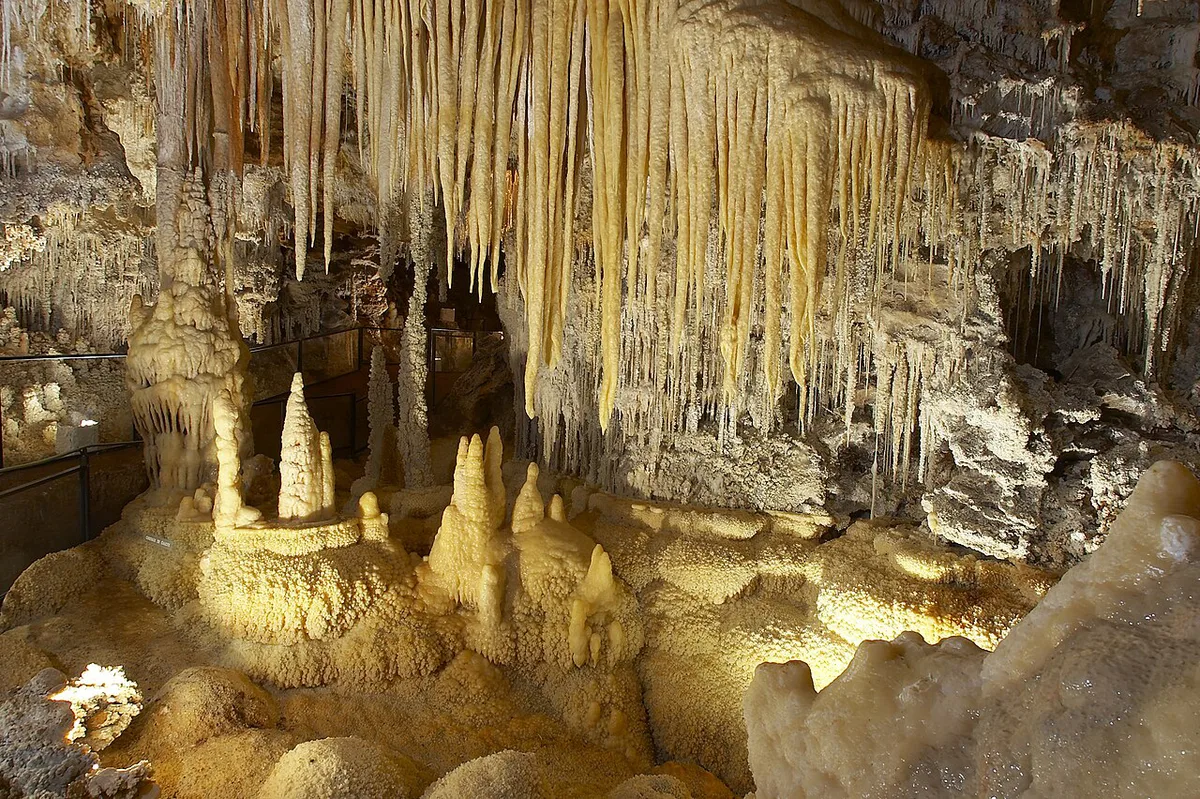
Most visitors see dripstone on a guided show cave tour, with lit paths and railings. Venues such as Han-sur-Lesse publish their tour details, photography rules and accessibility information on their official sites. Check the cave's own page before you go.
A guided wild caving trip costs €50–€150, but the touch ban still applies, so keep hands off formations even in natural light.
Skin oils can interrupt calcite deposition on a formation's surface, so touching is banned almost everywhere. Our What Is a Show Cave? Show Caves vs Wild Caves Explained guide explains the access rules in more detail. For photos, shoot from the path and skip flash wherever it is prohibited.
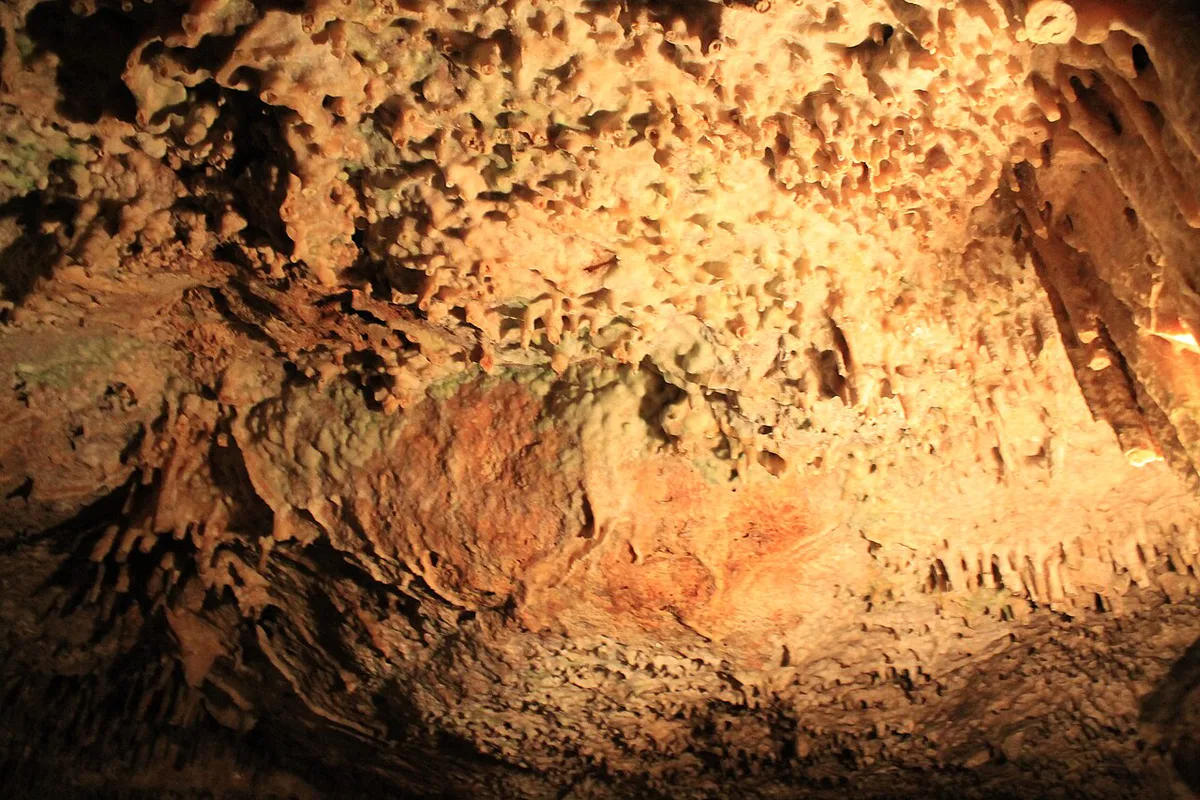
Caves stay cool all year, so read How Cold Is It in a Cave? Temperatures and What to Wear notes and What to Wear in a Cave: Europe Checklist by Cave Type before you pack. Dripstone is not the same as the crystals in Crystal Caves in Europe: Where to See Them, which form differently.
The typical ranges below are editorial estimates for a single adult in 2026. Real prices vary by cave and season.
| Way to see formations | Typical cost | What you see | Physical demand |
|---|---|---|---|
| Guided show cave tour | €10–€30 | Lit stalactites, stalagmites and columns, with commentary | Low; paved or railed paths |
| Self-guided show cave visit | €8–€20 | Same formations, less explanation | Low; read the signs |
| Guided wild caving trip | €50–€150 | Formations in natural light, often close by | High; helmet, lamp and sturdy clothing |
Common Mistakes to Avoid
Four slips come up often. Avoid these on your visit.
- Calling a column a stalagmite. Check whether it reaches the ceiling.
- Labelling anything pointed a stalactite. Look at where it attaches.
- Assuming formations grow fast. They grow slowly, and rates vary.
- Touching a formation for a photo. Even a light touch can leave oils on it.
Where to Go Next
For deeper trips, read our Caving in Europe: Show Caves vs Real Caving Guide guide. If you want other sights in the dark, see Underground Lakes in Europe: Where to See Them. Cave tours with boats are covered in cave boat tours.
For trip-planning details, see Grotte di Castellana official site.
Frequently Asked Questions
What are stalactites and stalagmites?
They are mineral formations made by dripping water in caves. Stalactites hang from the ceiling, and stalagmites build up from the floor. Both are made mostly of calcite in limestone caves.
What is it called when stalagmites and stalactites meet?
A column. It forms when a stalactite and a stalagmite grow toward each other until they fuse. Columns are often the thickest formations in a cave.
Notes for your next trip underground
Optional updates when we add or revise cave and underground guides.
More guides
More guides you'll find useful