Antiparos Cave: Hours, Tickets & How to Visit (2026)
Antiparos Cave guide: 411 steps, seasonal hours, ticket cost, how to get there from Paros, and when to skip it. Verify dates before you go.
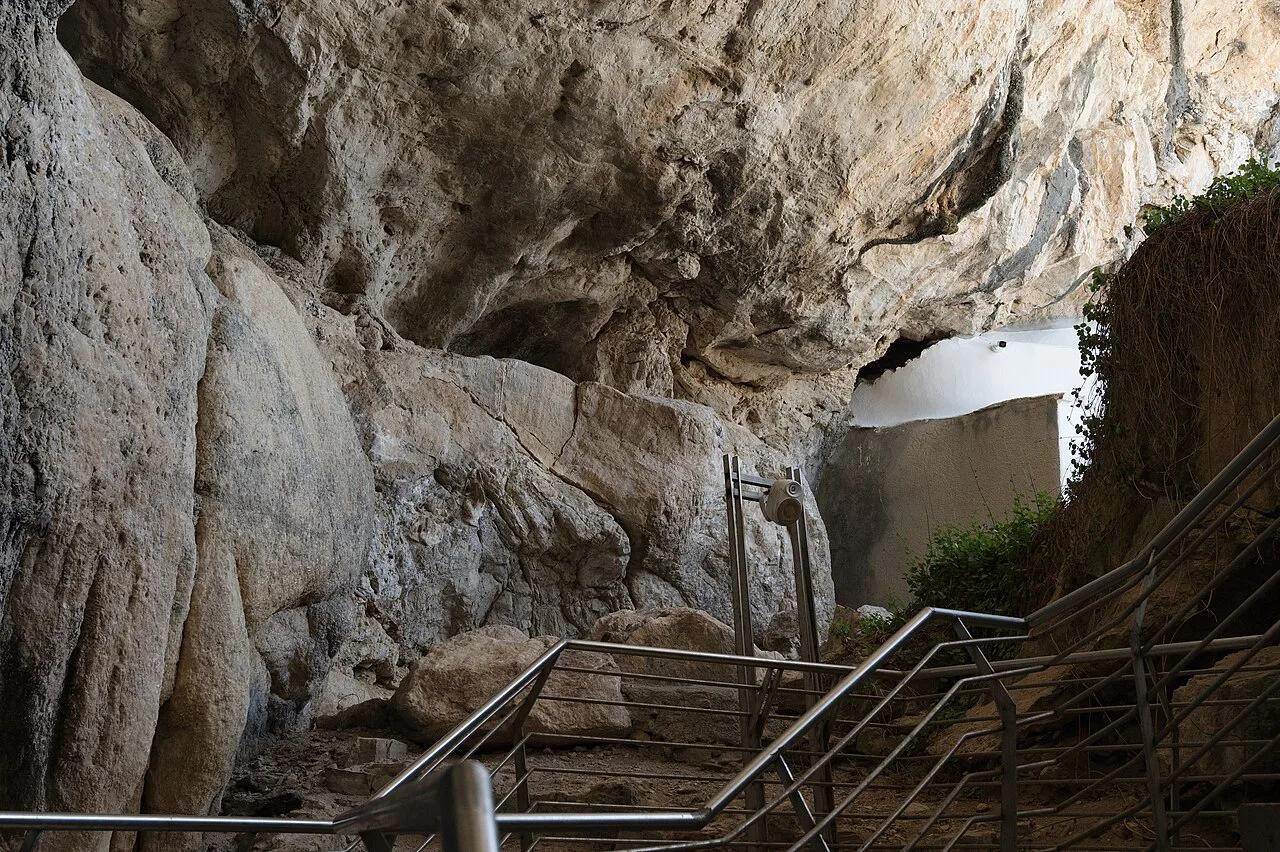
Last updated November 2026. Antiparos Cave is a large stalactite cave about 8 km from Antiparos town, reached by a stairway of roughly 411 concrete steps. It is a seasonal visit, open roughly May to October, with a €6 adult ticket listed for 2026. Published hours differ by about 30 minutes, so call the municipality for the day's hours.
Featured image: Zde, CC BY-SA 4.0, via Wikimedia Commons.
Antiparos Cave at a glance
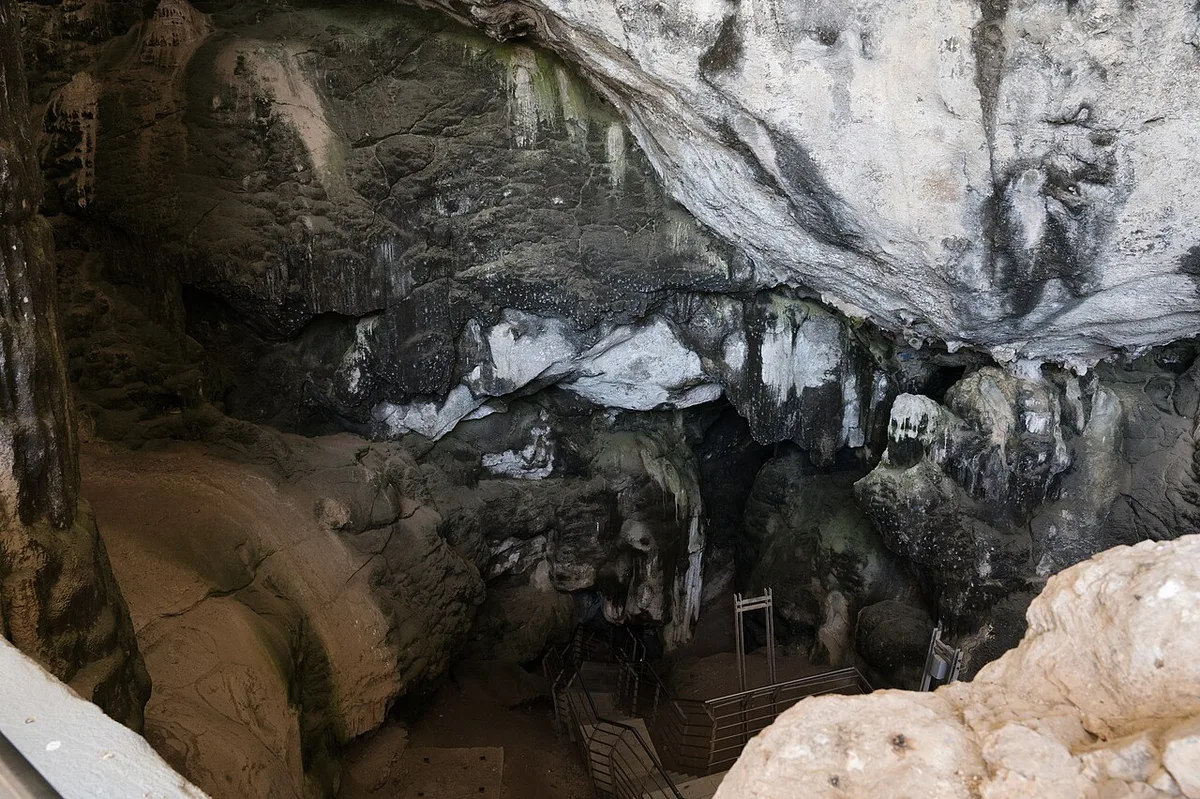
Antiparos Cave, also called the Cave of Agios Ioannis, sits on a hill above the island's southeast coast. Visitors descend about 411 concrete steps with safety railings into a multi-chamber cave. Temperatures inside stay in the mid-teens °C year-round, so the descent feels cold after a summer day outside. Plan about 45 minutes inside, plus roughly 15 minutes at each end for the ticket kiosk and the climb to the entrance. Prices and hours were checked November 2026 against the island's visitor pages.
- Location: about 8 km from Antiparos town, with a large parking area at the cave.
- Season: roughly May to October. Closed or by arrangement off-season.
- Hours: listed as 10:00–16:00 (last entry 15:30) or 10:30–16:30, depending on the source.
- Ticket: €6 adult, €3 ages 6–12, free under 6.
- Effort: 411 steps down and the same back up, in damp air.
- Suits: confident walkers, older children and anyone who wants a cool break from the sun.
Is Antiparos Cave worth it?
For most visitors on Antiparos, yes, provided you arrive in season and have about two hours spare. Few Cyclades attractions let you walk deep underground, and this one comes with a ticket under €10. It is not a quick photo stop, though. The climb back up is tiring, and the cave is not for everyone. Use the checklists below to decide.
- Go if: you can climb 411 steps, you want shade and cool air, and you have a vehicle or a bus slot.
- Go if: you like geology, and you want a morning activity before a beach afternoon at Soros.
- Go early if: you travel in July or August, when the walk from the car park and the climb out are hottest.
- Skip if: you have a heart or breathing condition, because the humidity is high.
- Skip if: you have bad knees, or you are carrying a toddler who cannot manage steps.
- Skip if: you only have a short stop between ferries and cannot spend about 75 minutes door to door.
- Choose a beach instead if: you are in Antiparos for one afternoon and the heat is extreme.
Opening hours, season and tickets
Published hours conflict. One island visitor page lists 10:00–16:00 daily through October 2026, with last entry at 15:30. A second source gives 10:30–16:30 from May to mid-October. Treat the season as roughly May to October and arrive with at least an hour to spare before closing. Off-season, visits are said to be arranged through the Municipality of Antiparos, so do not count on winter access. For current hours, call KEDA, the municipal office, on +30 22840 61640. A standard adult ticket is €6, children aged 6 to 12 pay €3, and children under 6 enter free. Whether the ticket includes the Historical and Folklore Museum of Antiparos is stated by only one source, so ask at the kiosk. Bring cash, since card readers at small kiosks can be unreliable. Official regional information is also available through Visit Greece.
How to get to Antiparos Cave from Paros and Antiparos town
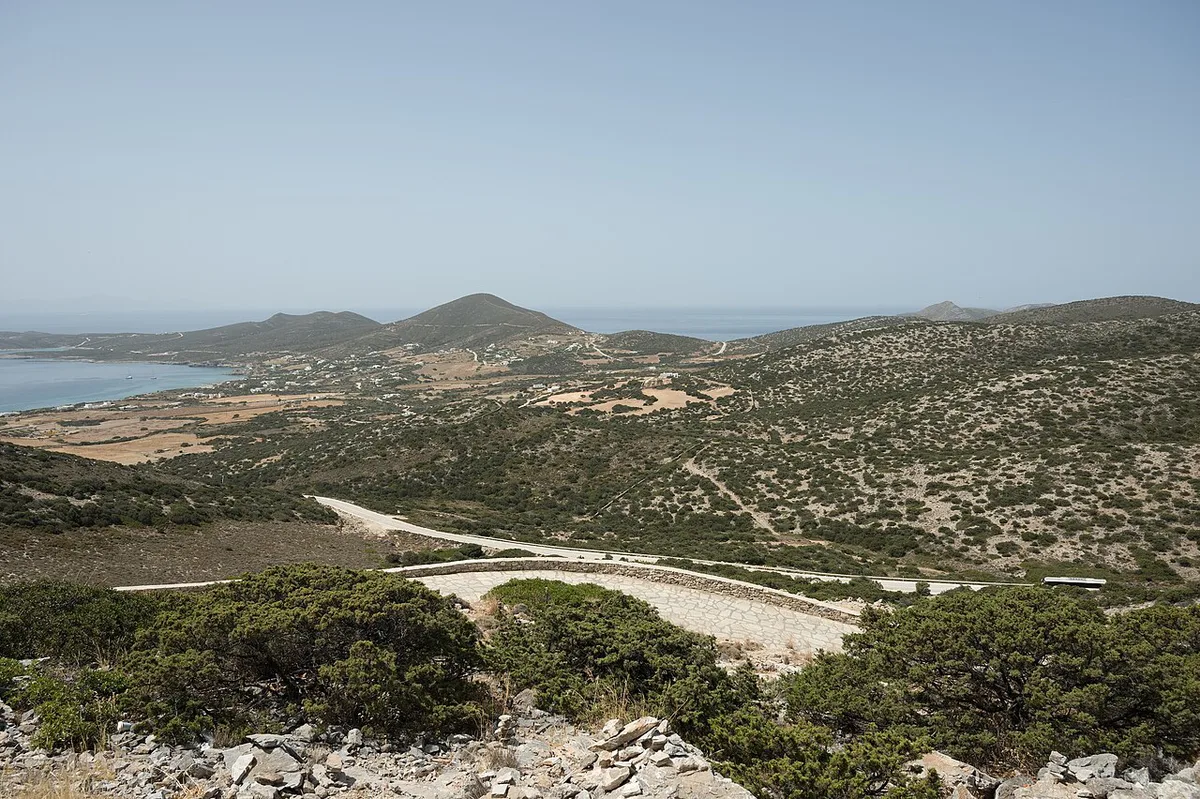
Start with the short ferry crossing from Pounda on Paros to Antiparos harbour. Wikipedia and local sources describe it as under one nautical mile, and passenger ferries also run from Parikia. Winter schedules can be reduced, and the operator sets the timetable. Once on Antiparos, the paved road to the cave starts to the left of where the ferry docks. The cave is 8 km away. Arriving from Athens first? Our guide to Caves Near Athens: Which Are Worth the Trip? covers options before you board the ferry. The modes below trade cost against effort and heat.
| Option | Timing or cost note | Notes |
|---|---|---|
| Walk | About 1.5 hours one way from the port, by one account | Fully exposed to the sun; go early and carry water |
| Bus | Runs hourly from the port in summer, by local accounts | Cheapest option; read the posted timetable first |
| Bike or buggy | Not stated | Flexible; watch the heat on the climb |
| Car or scooter | Not stated | Easiest for combining the cave with Soros beach |
| Taxi | Fares not published | Fastest; agree the price before setting off |
| Ridge path | About 2 hours one way, by one account | High and exposed; optional, arrange pickup |
- Walk: about 1.5 hours one way from the port by one account. Fully exposed to the sun, so go early and carry water.
- Bus: runs hourly from the port in summer, by local accounts. The stop is opposite Agia Marina, where the Paros ferry docks. This is the cheapest option, but read the posted timetable first.
- Bike or buggy: flexible, and the cave has a large, spacious parking lot. Watch the heat on the climb.
- Car or scooter: easiest for combining the cave with Soros beach on the same morning.
- Taxi: fastest, but fares are not published. Agree the price with the driver before you set off.
- Cave-to-town ridge path: about 2 hours one way by one account, high and exposed. Treat it as optional, early or late in the day, and arrange pickup.
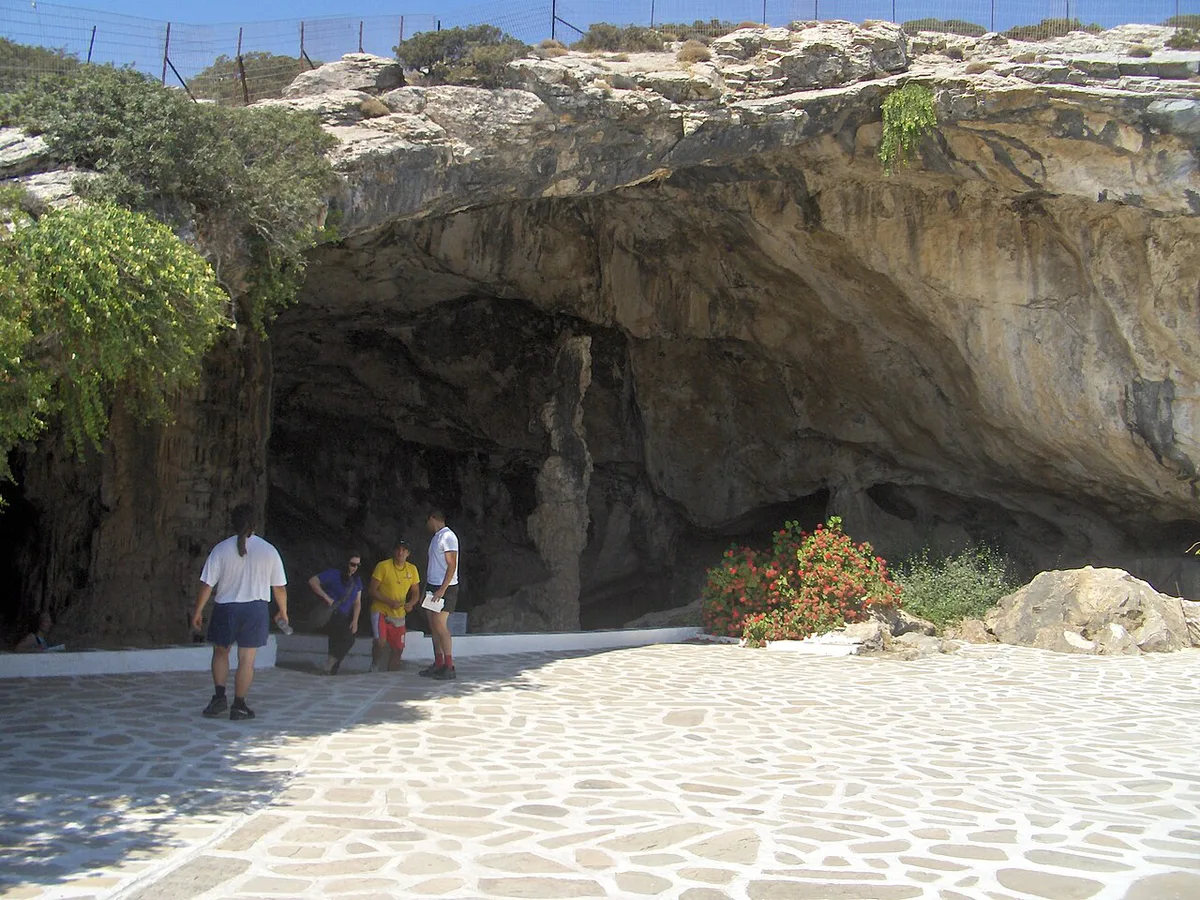
What the visit is like: the 411 steps
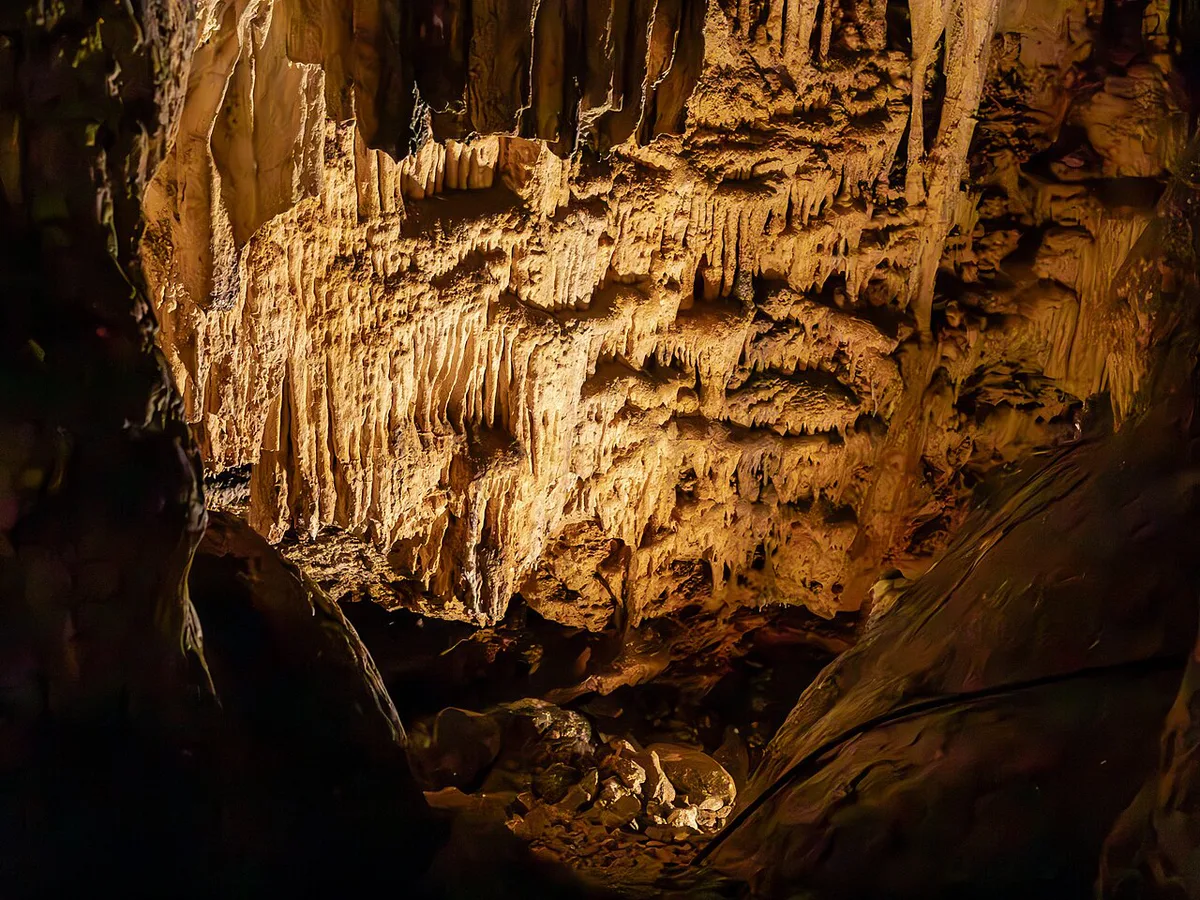
A concrete stairway with metal handrails winds down through the cave, with modern lighting along the route. Temperatures drop to around 15–16°C once you are a short way in, and humidity stays high. Steps can be damp, so wear shoes with grip. Visitors report that large bags are not welcome, and tripods and selfie sticks are not allowed. Phone photography is fine, but flash photography is prohibited. Touching or removing formations and writing on walls are also banned. An audio tour is available in Greek and English, and leaflets at the entrance come in seven languages. There is no shop near the cave, so bring water. Budget about 45 minutes underground and 15 minutes at each end.
- Mistake: going without water. Nothing is sold near the cave, and the climb back is the hard part.
- Mistake: sandals or smooth soles on damp steps.
- Mistake: arriving at midday in July or August, when the car park and the climb out are hottest.
- Mistake: ignoring a heart or breathing condition. High humidity is the stated reason the cave is not recommended for those visitors.
- Mistake: skipping a light layer. Mid-teens °C feels cold after 30°C outside.
Accessibility and who should skip it
There is no step-free route that we know of, so ask KEDA if mobility is a concern. The island's visitor page advises people with respiratory or heart conditions not to enter because of the humidity. Anyone with sore knees should expect the 411-step return climb to be the harder half. Children of about 6 or 7 and older are said to manage the steps and enjoy them, while under-5s are hard work on the way up. Treat that as a rough guide rather than a rule. Families with small children can split the stop: one adult waits in the forecourt, where two small chapels stand at the cave mouth.
History and what you'll see
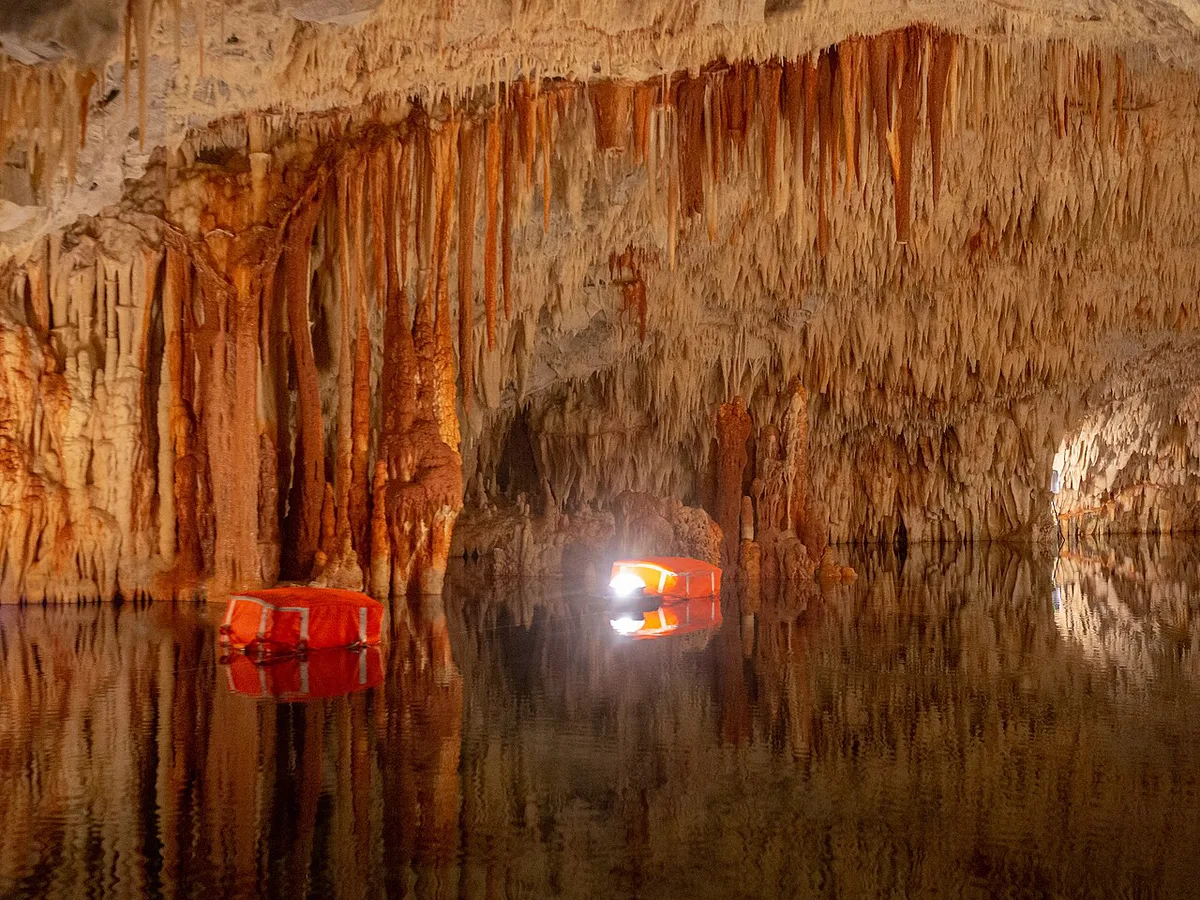
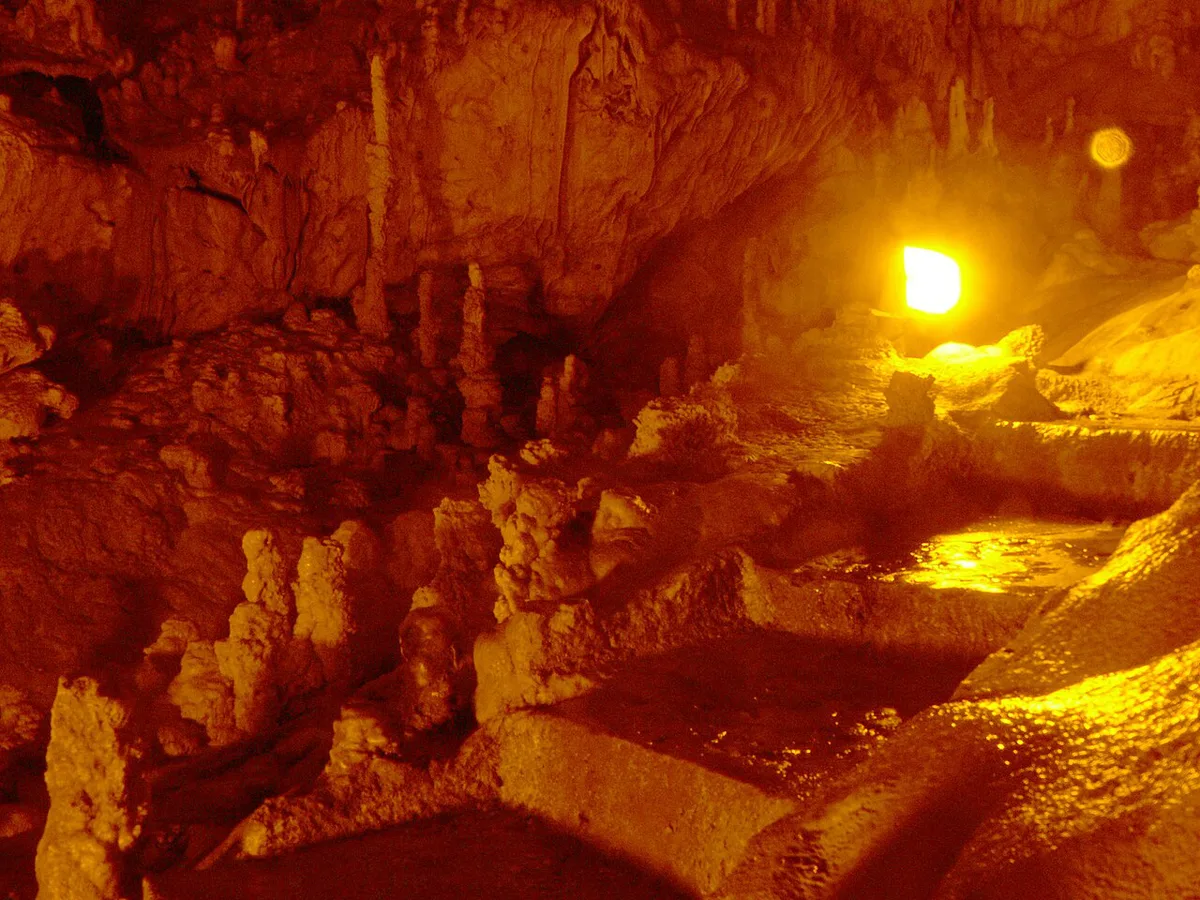
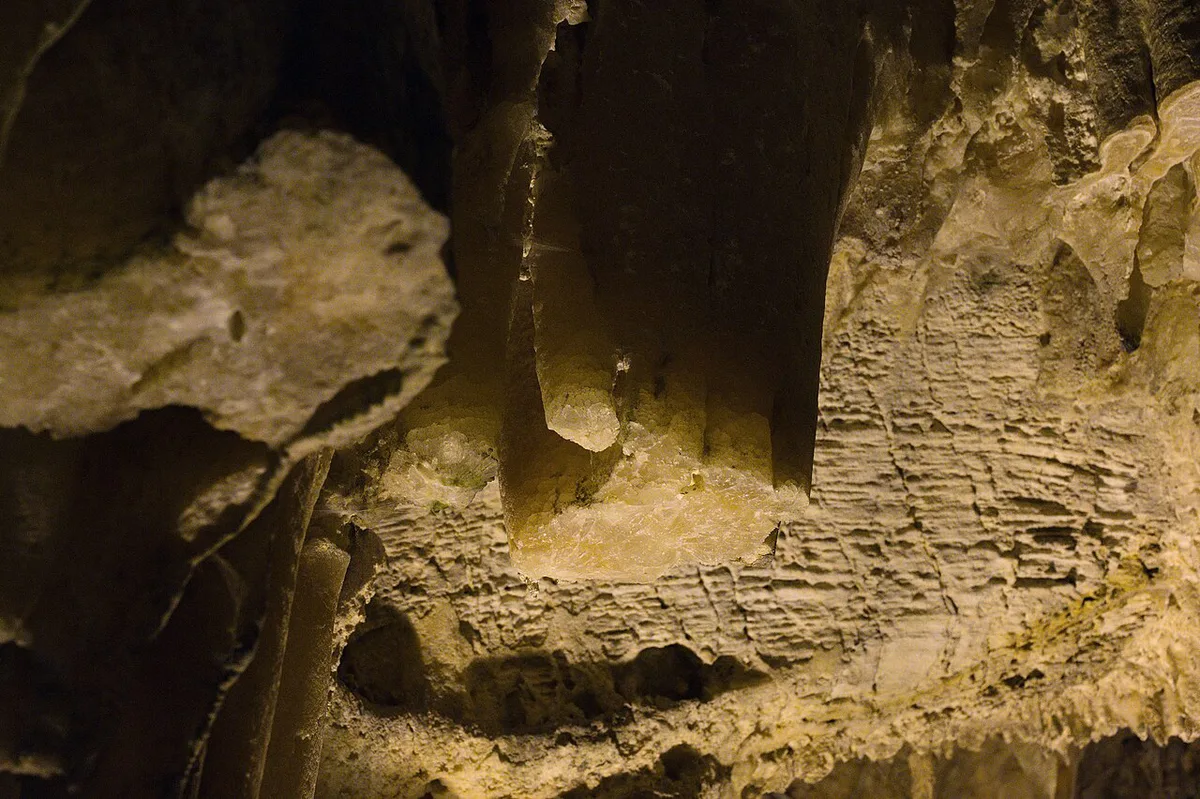
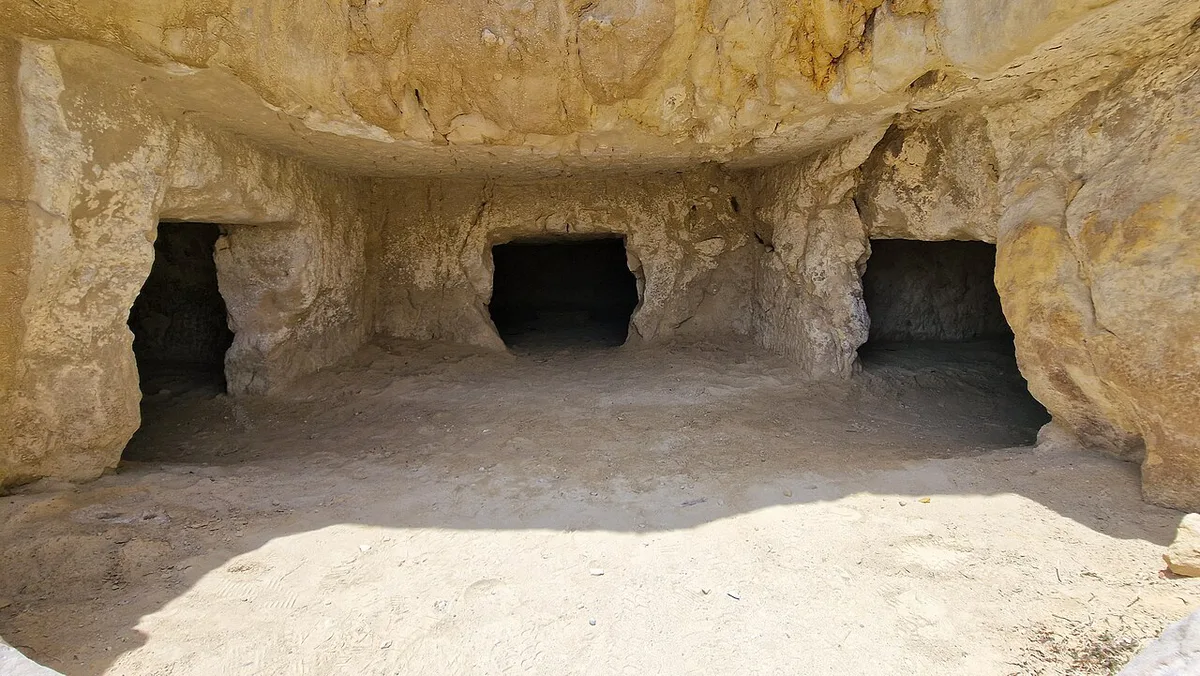
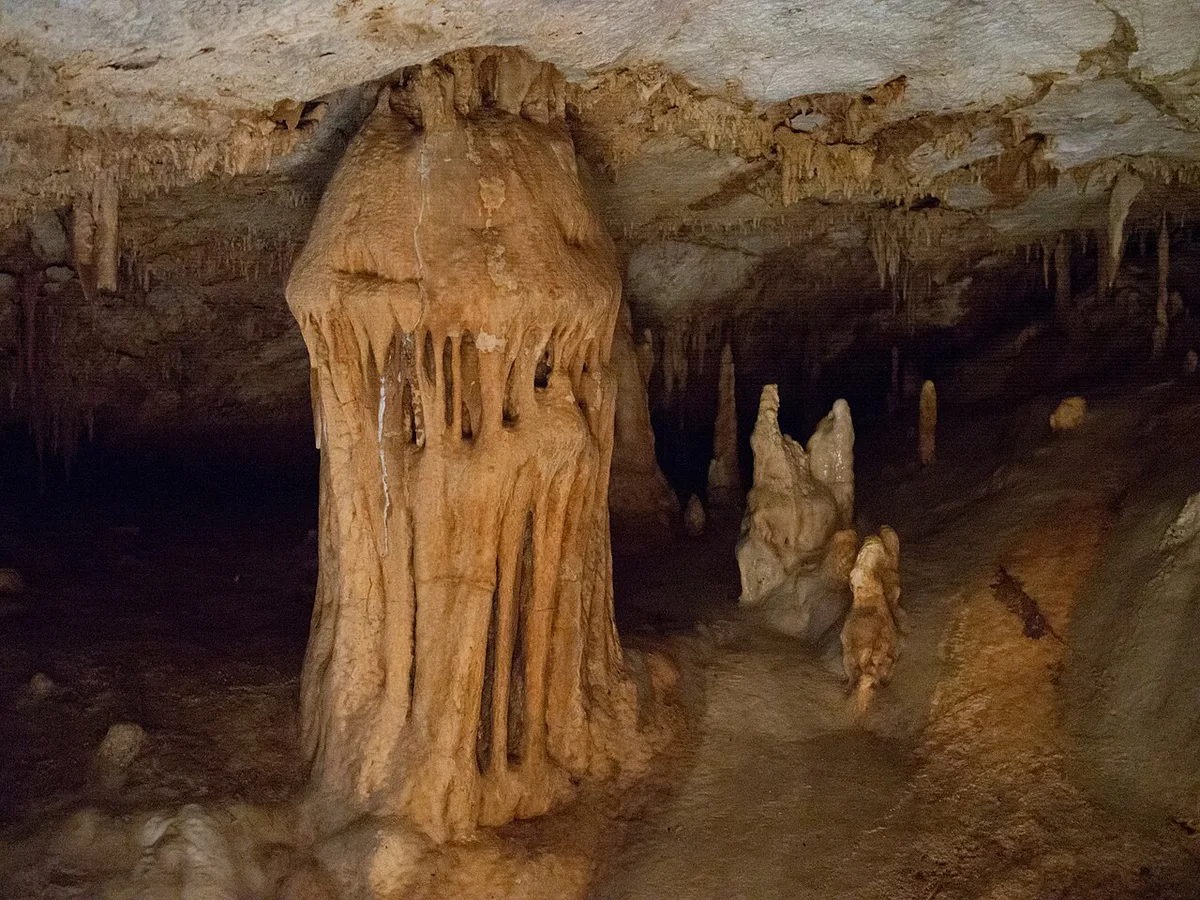
The cave is divided into four named areas: the Antechamber, the Chamber of the Stone Waterfalls, the Chamber of the Cathedral and the Royal Chamber. One local page names the Royal Chamber after a visit by King Otto and Queen Amalia. At the entrance stands a large stalagmite called the Huge Central Column. The municipality's visitor page estimates it at 45 million years old, though that figure comes from a single source. Depth figures also vary, from roughly 70 m to about 85 m depending on the source. The cave is believed to have sheltered people from the Neolithic period and later to have been used for worship of Artemis. Inscriptions record visitors over the centuries, and tradition links names such as Lord Byron and King Otto to carved marks. The French ambassador, Marquis de Nointel, is said to have celebrated Christmas Mass here in 1673. Russian forces who held the island in 1770–74 are said to have removed stalactites, and parts of the cave were damaged during the German occupation. A cement stairway, railings and lighting were added during a later renovation, but the year is uncertain.
Make it a half-day: cave plus Soros, Despotiko or the inland chapels
A cave morning pairs well with a beach afternoon. Treat these times as estimates. Arrive for opening, finish inside by about 11:30, then drive about 15 minutes to Soros beach for lunch and a swim. The cave is hotter and busier by mid-afternoon, and one source says mornings are calmer, which is likely a pattern rather than a measured fact. Despotiko, the uninhabited island southwest of Antiparos, is an archaeological site with Archaic-period finds. It needs its own boat trip, so do not try to combine it with the cave on one short day. Inland, a marked 90-minute round-trip footpath climbs from Agios Georgios past whitewashed chapels to the old kastro ruins. A longer option is the lighthouse at the southwest cape, about 30 minutes from town. Its last 2 km are dirt, and there is no shade or taverna, so go about 45 minutes before sunset and drive back before full dark.
Opening times vary by source, so with a 10:30 start rather than 10:00, aiming to finish inside by about 11:30 leaves little slack.
If the cave is closed
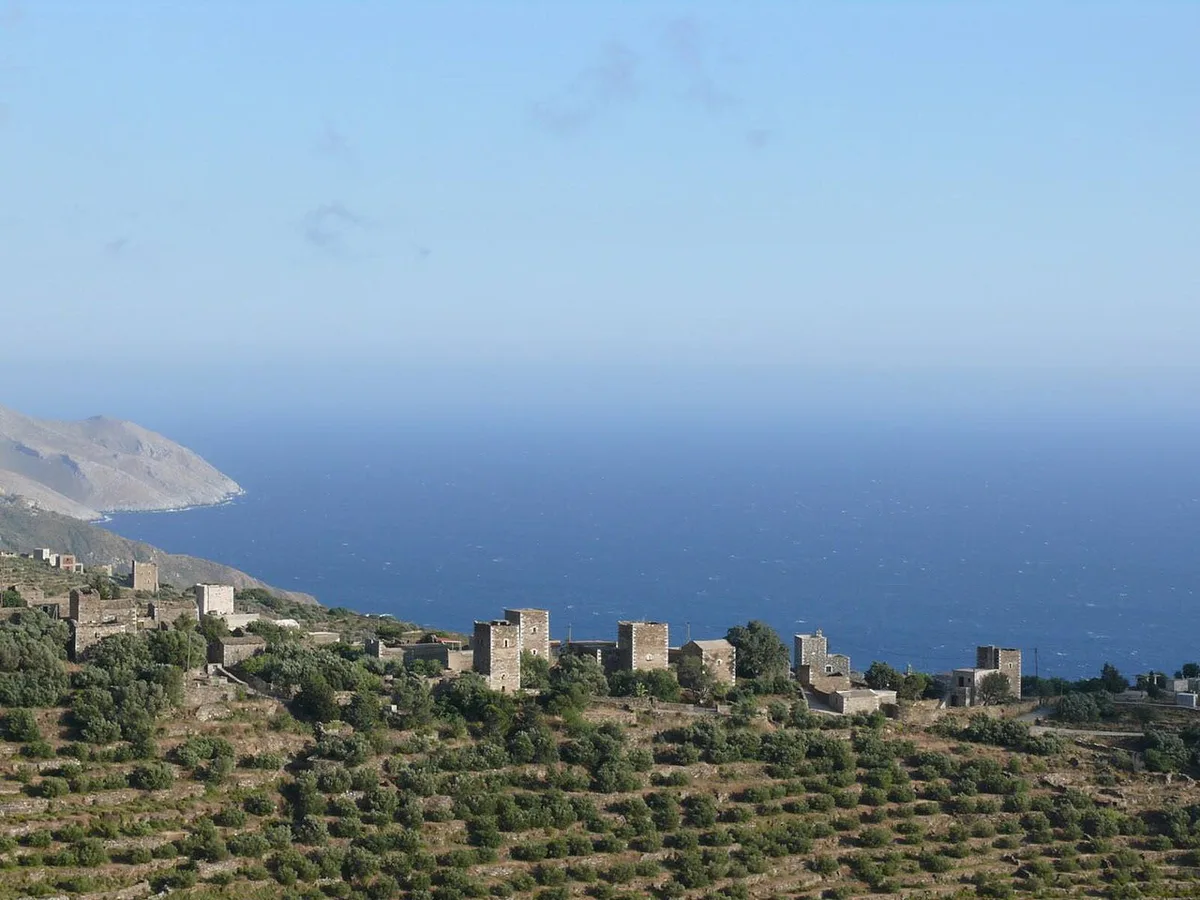
Between roughly November and April, expect the cave to be closed unless the municipality has arranged a visit. Ferries may also run reduced schedules, so settle the crossing before you commit to a day trip. Good fallbacks on Antiparos are the Venetian kastro, built in 1440 by Giovanni Loredan, and a walk through its lanes. Soros beach is a short drive, and the 90-minute chapel walk from Agios Georgios needs only water and sturdy shoes. If you cannot get inside, go for the view instead. The cave forecourt overlooks the Aegean, Soros beach, nearby coves and, on a clear day, Paros in the distance.
Antiparos Cave vs other caves in Greece
Antiparos Cave is a short, steep descent into a single cave, which suits an island day. For a wider comparison, start with our guide to caves in Greece. On the Peloponnese mainland, Diros Caves Guide: What to Expect and How to Visit give a very different, longer experience. Another mainland option is Perama Cave Ioannina: How to Visit & What to Expect. Northern Greece has Petralona Cave Guide: Skull, Formations and How to Visit, which suits a trip on that side of the country. If you also visit Crete, Caves in Crete: Best Caves to Visit and How to Choose and Melidoni Cave, Crete: History, Getting There and Visit Plan make a natural pairing for an island-hopping route. We do not rank these caves against one another, because they differ in access, scale and season.
Notes for your next trip underground
Optional updates when we add or revise cave and underground guides.
More guides
More guides you'll find useful